12 Natural Ways to Make Marble and Tile Floors Shine Like New
Quick Answer: How Do You Make Marble and Tile Floors Shine Naturally?
To make marble and tile floors shine naturally, dust-mop daily, then mop with warm water and a few drops of mild dish soap, rinse with clean water and buff dry with microfiber. Use diluted vinegar only on ceramic or porcelain tile. Never use vinegar or lemon on marble, because acid etches it.
Key takeaways:
- Buffing the floor dry is the single biggest step for a streak-free shine.
- Warm water + mild soap is safe for both marble and tile.
- Vinegar, lemon and steam are for ceramic and porcelain tile only.
- Baking soda works as a stain poultice on both floors and as a grout scrub on tile.
- Seal marble and grout about once a year to keep the shine longer.
Why Do Marble and Tile Floors Lose Their Shine?
Most dull floors are not worn out. They are covered by something, or scratched by something. The usual causes are:
- Grit and sand: dirt carried in on shoes acts like sandpaper and leaves fine scratches, especially on marble.
- Soap residue: too much soap leaves a sticky film that looks cloudy and attracts more dirt.
- Hard water spots: minerals left behind when water dries on the floor.
- Dirty grout: grout is porous, so it soaks up dirt and makes clean tiles look dull.
- Etching (marble only): acidic liquids like vinegar, lemon juice or wine react with marble and burn dull marks into the surface.
What Is Safe to Use on Marble vs Tile Floors?
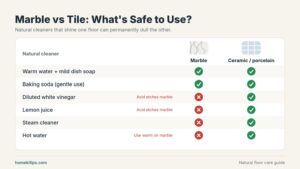
Marble is a natural stone made mostly of calcium carbonate. Acids react with it and cause etching, which removes the shine for good. Ceramic and porcelain tiles have a hard glazed surface that handles mild acids well.
| Natural cleaner | Marble | Ceramic / porcelain tile |
|---|---|---|
| Warm water + mild dish soap | ✔ Safe | ✔ Safe |
| Baking soda (gentle use) | ✔ Safe, rinse well | ✔ Safe |
| White vinegar (diluted) | ✘ Never | ✔ Safe |
| Lemon juice | ✘ Never | ✔ Safe for spots |
| Hydrogen peroxide | ✘ Avoid on polished marble | ✔ Safe on grout |
| Steam cleaner | ✘ Avoid | ✔ Safe |
| Hot water | ✘ Avoid, use warm | ✔ Safe |
Not sure what you have? Put a drop of lemon juice on a hidden corner. If it leaves a dull mark after a few minutes, it is marble or another calcium-based stone.
What Do You Need to Clean Floors Naturally?
- Microfiber dust mop and microfiber cloths
- Two buckets (one for cleaning, one for rinsing)
- Warm water
- Mild, fragrance-free dish soap
- Baking soda
- White vinegar (tile only)
- 3% hydrogen peroxide (tile grout only)
- Soft-bristle brush or old toothbrush
- Plastic wrap and tape (for stain poultices)
- Clean, dry cotton towels for buffing
How to Make Marble and Tile Floors Shine: 12 Natural Ways
1. Dust-Mop Every Day With Microfiber
Best for: marble and tile
Grit is the number one shine killer. A dry microfiber dust mop picks up sand and hair without scratching. Do this daily in entryways and kitchens, and before every wet clean.
2. Mop With Warm Water and a Few Drops of Dish Soap
Best for: marble and tile
This is the safest everyday cleaner for both floors because it is close to pH-neutral.
- Add 3–4 drops of mild dish soap to a bucket of warm (not hot) water.
- Wring the mop until it is only damp.
- Mop in small sections, starting at the far corner and moving toward the door.
Tip: More soap does not mean more shine. Extra soap leaves a cloudy film.
3. Rinse, Then Buff Dry for a Streak-Free Shine
Best for: marble and tile
This is the step most people skip, and it makes the biggest difference. After mopping, go over the floor with clean water from a second bucket. Then buff it dry with a clean microfiber cloth or cotton towel in small circles. Air-drying leaves water spots; buffing leaves a glow.
4. Lift Stains With a Baking Soda Poultice
Best for: marble and tile
A poultice pulls oil and food stains out of porous surfaces instead of scrubbing them.
- Mix baking soda with water into a thick paste, like peanut butter.
- Spread it over the stain about 1/4 inch thick.
- Cover with plastic wrap, tape the edges and leave it for 24 hours.
- Remove, rinse with clean water and buff dry.
Tip: On marble, do not scrub the paste hard. Baking soda is mildly abrasive and can dull a polished finish.
5. Cut Grime With Diluted White Vinegar
Best for: ceramic and porcelain tile only. Never use on marble.
Vinegar cuts grease and everyday film on glazed tile. Add about half a cup of white vinegar to a bucket of warm water, mop, then rinse and buff dry. Always dilute it; strong vinegar can wear down grout over time.
6. Remove Hard Water Spots With Lemon Juice
Best for: ceramic and porcelain tile only. Never use on marble.
Dab a little lemon juice on cloudy water spots, wait 5 minutes, wipe and rinse. It works well around bathroom floors and near sinks.
7. Brighten Grout With a Baking Soda Scrub
Best for: tile grout
Clean tiles still look dull if the grout lines are dark. Make a paste of baking soda and water, apply it to the grout, wait 10 minutes and scrub with a soft toothbrush. Rinse with warm water and dry.
8. Whiten Stubborn Grout With Hydrogen Peroxide
Best for: ceramic and porcelain tile grout. Keep it off polished marble.
For grout that baking soda can’t fix, mix baking soda with 3% hydrogen peroxide into a paste. Apply, wait 10–15 minutes, scrub and rinse well.
9. Steam Clean Tile and Grout
Best for: ceramic and porcelain tile only
Steam loosens deep grime in tile texture and grout with water alone. Skip it on marble, where heat and moisture can damage the sealer and the stone.
10. Stop Dirt at the Door
Best for: marble and tile
Place mats inside and outside every entrance and lift them weekly to clean underneath. A shoes-off rule protects marble from scratches better than any cleaner.
11. Blot Spills Right Away
Best for: marble and tile, especially marble
Marble is porous and absorbs spills fast. Blot (don’t wipe) coffee, juice, wine or oil with a paper towel, then wipe with a damp cloth and dry. Acidic drinks can etch marble within minutes.
12. Seal Marble and Grout to Lock in the Shine
Best for: marble and tile grout
A sealer keeps water and oil from soaking in, so floors stay brighter longer. Test it with water: drop a little on the floor and wait 10 minutes. If it darkens the stone or grout, it is time to reseal. Most homes need this about once a year.
Note: A sealer protects against stains, not against acid etching.
What Mistakes Make Marble and Tile Floors Look Dull?
- Using vinegar or lemon on marble. This is the most common mistake online, and it causes permanent etching.
- Using too much soap. The leftover film looks cloudy and pulls in dirt.
- Letting floors air-dry. Water spots and streaks form as the water evaporates.
- Mopping with dirty water. Change the water as soon as it looks grey.
- Using hot water on marble. Warm water is enough and is gentler on the stone.
- Scrubbing with abrasive pads. Scouring pads and harsh powders scratch the surface.
- Mixing cleaners. Never mix vinegar with peroxide, or bleach with anything.
Marble and Tile Floor Care Schedule
| How often | Marble | Ceramic / porcelain tile |
|---|---|---|
| Daily | Dust-mop high-traffic areas | Dust-mop or sweep |
| Weekly | Warm water + soap mop, rinse, buff dry | Soap or diluted vinegar mop, rinse, buff dry |
| Monthly | Check for stains, poultice as needed | Scrub grout with baking soda |
| Every 6–12 months | Water test, reseal if needed | Steam clean, reseal grout if needed |
Frequently Asked Questions
Can you use vinegar on marble floors?
No. Vinegar is an acid, and marble reacts with acids. Even diluted vinegar can etch the surface and leave dull, cloudy marks that need professional polishing to fix. Use warm water with a few drops of mild dish soap instead.
How do I make dull marble floors shiny again?
Start with a dust-mop, then wash with warm soapy water, rinse and buff dry with microfiber. If the dullness is from light etching, a marble polishing powder can help. Deep etching or scratches need a professional to hone and polish the stone.
How can I make tile floors shine without wax?
Mop with diluted white vinegar or mild soap, rinse with clean water, and buff the floor dry with a microfiber cloth. Clean grout lines with baking soda paste so the whole floor looks bright.
Why do my tile floors look cloudy after mopping?
The most common cause is soap residue from using too much cleaner. Mop again with plain warm water and buff dry. Hard water spots can also cause cloudiness on tile.
Is baking soda safe for marble?
Yes, when used gently. It works well as a poultice for stains. Avoid scrubbing it hard on polished marble, since it is mildly abrasive.
How often should I mop marble and tile floors?
Dust-mop daily and wet-mop once a week for most homes. Kitchens, entryways and homes with pets or kids may need wet cleaning two or three times a week.
Conclusion
Shiny floors come from good habits, not harsh chemicals. Keep grit off the floor, clean with warm water and mild soap, and always buff dry. Save vinegar and lemon for ceramic and porcelain tile, and keep them far away from marble. Follow these 12 natural methods and your marble and tile floors will shine like new for years.