Home Repair & Maintenance Guide
Most home repairs fall into seven groups: hot water, plumbing, heating and cooling, electrical, roof and basement, doors and security, and floors and finishes. Fix safety and water problems first (no hot water, leaks, tripped breakers, smoke alarms), then energy and comfort issues. Many small jobs are safe DIY tasks, but gas, main electrical panels and sewer lines usually need a licensed pro.
The shower turns cold on a Monday morning, the AC quits in a heat wave, or an outlet goes dead before guests arrive. Knowing what is wrong, and whether you can fix it yourself in 20 minutes, can save you hundreds of dollars.
In this guide
- Which Home Repairs Should You Fix First?
- Why Is My Hot Water Not Working?
- How Do You Fix Common Plumbing Problems?
- Why Is My AC Not Cooling the House?
- Is a Pellet Stove Better Than a Wood Stove?
- What Electrical Fixes Can You Do Safely?
- How Do You Keep Water Out of Your Roof and Basement?
- How Can You Upgrade Doors, Locks and Garage?
- What Should You Know About Floors, Ceilings and Kitchens?
- FAQ
- Start Your Home Repair Plan Now
This home repair and maintenance guide is your starting point for every common problem in a house, with simple explanations, real numbers to check and links to detailed step-by-step guides.
Which Home Repairs Should You Fix First?
Fix problems in this order: safety the same day (smoke alarms, burning smells, gas), water within 24–48 hours (leaks, no hot water, sewer backups), then comfort within 1–2 weeks, and upgrades when your budget allows.
Key insight: Water causes more hidden damage than almost any other home problem. A slow drip can rot a subfloor or rim joist in a few months. Learn how to find a hidden water leak.
Why Is My Hot Water Not Working?
Problems like no warm water in house, hot water not working, water not getting hot and why is my hot water not working usually point to one of four causes:
- Power or gas problem: a tripped breaker (electric) or a pilot light that went out (gas).
- Bad heating element or thermostat: the most common reason a water heater not working still has power.
- Sediment build-up: minerals settle at the bottom and block heat, especially in hard-water areas.
- Undersized tank: if your water heater working no hot water after 2 showers, the tank may be too small for your family.
A water heater leaking from bottom is more serious. Check the drain valve and the pressure-relief valve first. If the tank itself is leaking, it cannot be repaired. When a hot water heater leaking from bottom is 8 to 12 years old, plan to replace it. If your water heater is leaking from the bottom, turn off the power or gas, close the cold-water supply valve, and drain it to stop water damage. The U.S. Department of Energy says water heating is about 18% of a typical home’s energy use.
How Do You Fix Common Plumbing Problems?
Your home plumbing system has two sides: the pressurized supply lines that bring clean water in, and the drain-waste-vent lines that carry used water out by gravity.
Why is my water pressure low?
If you are asking why is my water pressure low, check whether it is one fixture or the whole house. One fixture usually means a clogged aerator or showerhead. Whole-house low pressure can mean a partly closed main valve, a failing pressure regulator or a hidden leak. Normal home water pressure is 40 to 80 psi.
What are the signs of a main sewer line clog?
A main sewer line clog shows up when several drains back up at once, toilets gurgle, or water rises in the lowest floor drain or shower. A drain camera inspection shows a plumber exactly where roots, grease or a broken pipe sit.
How do toilets, showers and sinks work?
- How does a toilet bowl work: pressing the handle lifts the flapper, water rushes from the tank into the bowl, and siphon action pulls waste down the trap. Basic toilet anatomy (fill valve, flapper, overflow tube) knowledge fixes most running toilets.
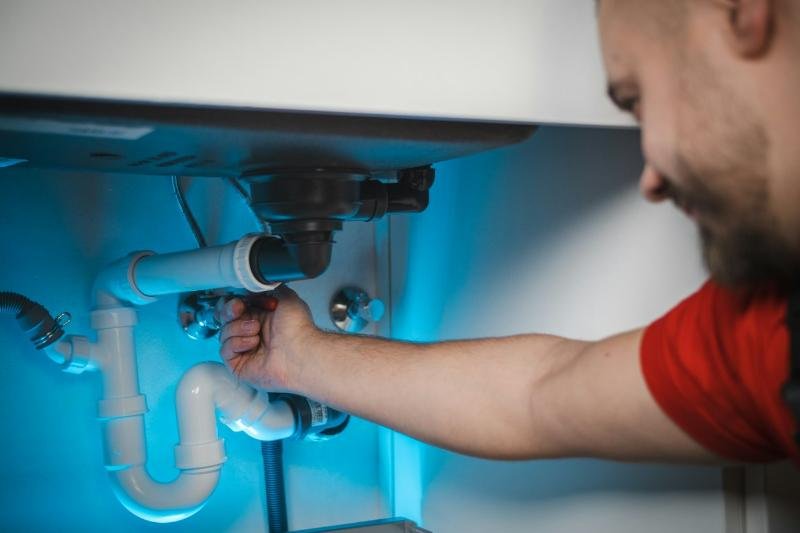
- Shower drain diagram: the main parts of a shower are the valve, the showerhead, the drain body, the strainer and the P-trap under the floor.
- Kitchen sink sizes: the most common double-bowl sink is 33 x 22 inches, with single-bowl sinks from 24 to 36 inches wide and 8 to 10 inches deep.
- Garburator leaking: a leaking garburator (garbage disposal) usually leaks from the sink flange, the dishwasher hose or the drain connection.
How do you test water hardness?
How to test water hardness: use a test strip or a home test kit. The USGS classifies water above 121 mg/L as hard and above 180 mg/L as very hard. If your water is hard, a softener helps. The main water softener parts are the resin tank, brine tank, control valve and bypass valve. Hard water also leaves white crust on taps, so see how to remove hard water stains from a kitchen faucet.
Why Is My AC Not Cooling the House?
When your AC unit not cooling house properly, start with the easy checks: thermostat set to “cool,” a clean air filter, and an outdoor unit free of leaves. A healthy system blows air about 15 to 20°F cooler than the air going in.
- AC freezing up: ice on the lines usually means a dirty filter, blocked airflow or low refrigerant. Turn it off and run only the fan for 2 to 4 hours to thaw.
- Changing capacitor on AC: a bad capacitor causes a humming outdoor unit that will not start. Capacitors hold a dangerous charge, so cut power at the disconnect and discharge it first.
- Air conditioner contactor repair: a burnt or stuck contactor stops the compressor from turning on or off.
A central air conditioner system cools the whole house through ducts, while a room with AC uses a window, portable or mini-split unit for one space. To learn how to maximize ventilation in homes, run kitchen and bath exhaust fans, open windows on opposite sides, and read the EPA guide to improving indoor air quality. Better airflow also helps you reduce moisture in your home and stay cool without a high electricity bill.
Is a Pellet Stove Better Than a Wood Stove?
In the pellet stove vs wood stove debate, pellet stoves win on convenience: a hopper feeds compressed wood pellets automatically, and one 40 to 60 lb load can run about 24 hours on low. Wood stoves need no electricity.
- Pellet stove installation: needs a proper vent pipe, a non-combustible floor pad and an electrical outlet.
- Installing a pellet stove yourself is possible if you follow the maker’s clearances exactly.
- Pellet stove cleaning: empty the ash pan and burn pot often, and do a full cleaning of the vent and heat exchanger about once per ton of pellets.
What Electrical Fixes Can You Do Safely?
Always turn off the breaker and test wires with a non-contact tester before touching anything.
- Outlet stopped working: check for a tripped GFCI outlet nearby and reset it.
- Tripped breaker: a breaker that keeps tripping means an overloaded circuit, a short or a ground fault. Unplug devices, reset once, and call an electrician if it trips again.
- How many outlets on a 15 amp circuit: a common rule is 8 to 10 outlets, keeping continuous load under 80% (12 amps, about 1,440 watts).
- 3 way light switch wiring diagram: two 3-way switches control one light from two places, using a common terminal and two “traveler” wires between switches.
- Standard light switch height: about 48 inches from the floor to the center of the box.
- How to reterminate wires when there’s little wire left: the electrical code asks for at least 6 inches of free wire in a box. If you have less, add a short pigtail with a wire connector instead of stretching the old wire.
- Daisychain a telephone wall jack: run new cable from an existing jack and connect the same color pairs (usually red and green) in parallel.
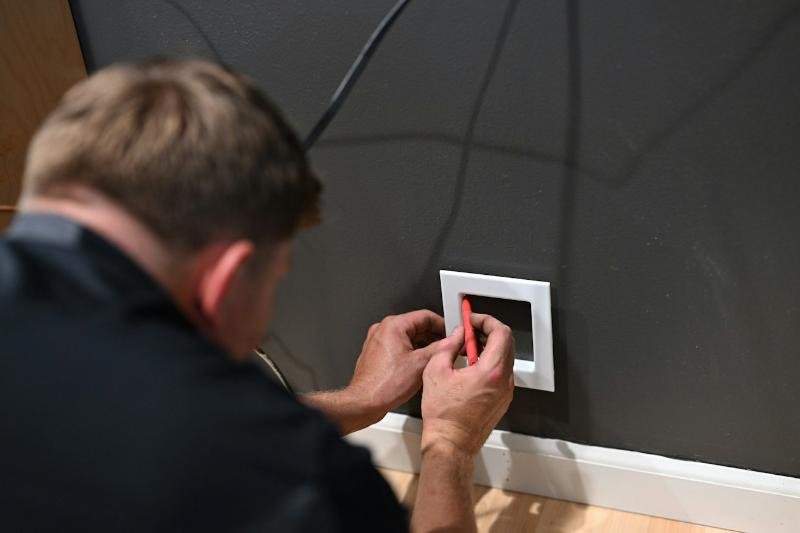
Smoke detector battery replacement is the easiest safety job in the house. To learn how to change smoke detector battery units: twist the alarm off its base, swap the battery, and press test. The NFPA recommends testing alarms every month and replacing the whole alarm every 10 years.
How Do You Keep Water Out of Your Roof and Basement?
- Basement crawl space waterproofing: start with gutters and grading that move water at least 6 feet from the house. Waterproofing crawlspace areas usually adds a thick vapor barrier, sealed vents and sometimes a sump pump. Good crawlspace waterproofing also keeps out pests, so seal cracks and gaps at the same time.
- What is a rim joist: it is the board that runs around the edge of the floor frame, sitting on the foundation. It is a common spot for air leaks and rot, so insulate and seal it.
- Chimney flashing repair: leaks around a chimney usually come from cracked sealant or loose step and counter flashing.
- Built up roof repair: flat built-up roofs (layers of felt, tar and gravel) are patched by cleaning the area and adding new layers over blisters or cracks.
- Patio roof sheathing and pergola sheathing: plywood or OSB of 1/2 to 5/8 inch thickness is common under shingles or metal.
- Replacing vinyl siding: a siding zip tool unlocks panels so you can swap one damaged piece.
- Window frame repair: small soft spots in wood frames can be dug out and filled with epoxy wood filler, then painted.
How Can You Upgrade Doors, Locks and Garage?
- How to improve home security with better locks: use a Grade 1 deadbolt and replace short strike-plate screws with 3-inch screws that reach the wall framing.
- Doorknob parts: knob, rose, spindle, latch and strike plate.
- Threshold door and door thresholds: a worn threshold lets in drafts, water and bugs.
- Door for soundproofing: solid-core doors with full weatherstripping and a door sweep block far more noise than hollow-core doors.
- Garage screen doors: roll-up screens keep bugs out while the garage door stays open.
- Garage opener installation: after installing, test the auto-reverse by placing a 2×4 board flat under the door. It must reverse when it touches the board.
What Should You Know About Floors, Ceilings and Kitchens?
- Setting tile with thinset: use a notched trowel, comb the thinset in straight lines, and back-butter large tiles for full coverage.
- Underlayment for tile: cement board or an uncoupling membrane keeps tiles from cracking when the floor moves.
- Cork flooring materials: cork is made from the bark of cork oak trees, which grows back.
- Best ceiling materials for dream house: drywall is the budget choice, while wood planks, coffered beams and tin tiles add character.
- How to hang cabinets: find the studs, screw a ledger board at the right height, and set upper cabinets about 54 inches above the floor.
- Fridge ice maker repair: check the water valve, replace the filter (about every 6 months), and keep the freezer at 0°F.
- How to clean brass hardware: a paste of vinegar, salt and flour removes tarnish from solid brass.
Quick win this week: Spend 30 minutes on a “safety walk”: test every smoke alarm, press the test button on every GFCI outlet, and look under every sink for drips.
The cheapest repair is the one you catch early.
The cheapest repair is the one you catch early.
Frequently Asked Questions
Why is my water heater working but there is no hot water?
The most common causes are a failed lower heating element, a bad thermostat, a broken dip tube or heavy sediment. Test the elements with a multimeter after turning off the power.
Start Your Home Repair Plan Now
- Do the 30-minute safety walk: smoke alarms, GFCI outlets and under-sink checks.
- Write down every problem you find and rank it: safety, water, comfort, upgrade.
- Fix all safety items today and all water items within 48 hours.
- Change HVAC filters every 1 to 3 months and clean around the outdoor unit.
- Inspect the roof, chimney flashing, siding and crawlspace every spring and fall.
- Call a licensed pro for gas, main sewer, electrical panel and refrigerant work.
A well-kept home is built one small fix at a time. Start this week.