Bedroom Decorating Ideas: 25 Easy Ways to Style It
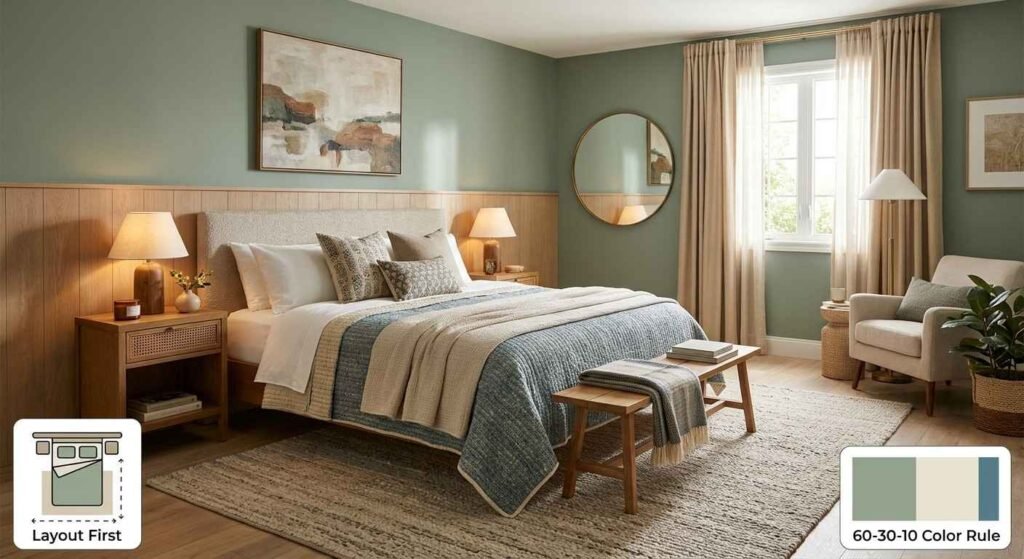
Quick Answer: The best bedroom decorating ideas start with the layout, not the shopping. Place the bed on the longest solid wall and choose a calm colour using the 60-30-10 rule. Then layer bedding, three types of light, a correctly sized rug and a few personal pieces. Plan the room on screen first with a free bedroom decorator tool so every item fits before you buy it.
Key Points at a Glance
- Layout first: Anchor the bed and leave at least 60 cm (2 ft) of walking space around it.
- Colour rule: 60% main colour, 30% secondary colour, 10% accent colour.
- Focal wall: The wall behind the bed gets the most attention, such as a headboard, panelling or art.
- Layered comfort: Mix sheets, a quilt, a throw and cushions in different textures.
- Three types of light: Ceiling light, warm bedside light (about 2700K) and blackout curtains.
- Rug size: The rug should extend 45 to 60 cm beyond each side of the bed.
- Less is more: 20 to 25 well-chosen items beat a crowded room every time.

A beautiful bedroom is not about spending a lot. It is about making a few smart choices in the right order. Most people do the opposite. They buy a bed they love, then a wardrobe, then a rug, and only later find that the wardrobe blocks the window and the rug looks like a doormat. This guide gives you 25 practical bedroom decorating ideas that work for small rooms and large master bedrooms, for tight and generous budgets, and for modern, classic or cosy styles.
The ideas are grouped in the same five layers interior designers follow: layout and furniture, colour and walls, bedding and textiles, lighting, and decor. Work through them in order and your room will come together without wasted money.
How to Decorate a Bedroom: Start With a Plan
Before you look at a single cushion, answer three questions:
- What happens in this room? Sleeping only, or also reading, working, dressing or praying? Every extra activity needs its own small zone.
- What are the real measurements? Write down the length, width, window position, door swing and every plug socket.
- How should the room feel? Pick one mood word, such as calm, cosy, fresh or luxurious, and test every purchase against it.
Next, try the layout on screen. Our free bedroom decorator tool starts with an empty room and lets you add 25 essential items one click at a time. It places each item in the correct order and gives a tip for each one. It also lets you test four wall colours, so you see problems on screen and not after delivery.
Layer 1: Bedroom Layout and Furniture Ideas
1. Anchor the bed on the longest solid wall
The bed is the biggest piece and decides where everything else goes. Place it against a solid wall, ideally with a clear view of the door but not directly in line with it. Avoid placing it under a window, where draughts and street light disturb sleep.
2. Protect the walking paths
Leave at least 60 cm (2 ft) on both sides of the bed and in front of the wardrobe. If drawers or doors open into a path, allow 90 cm. If you cannot walk around the bed easily, the room has one item too many.
3. Make the headboard a statement
A tall upholstered, cane, wooden or painted headboard turns a plain bed into the focal point of the room. In a rented home, a fabric panel hung from a rail gives the same effect without drilling large holes.
4. Skip the matching furniture set
Designers rarely buy a full bedroom set. Instead, keep one thread in common, such as the same wood tone or the same height, and let the pieces differ. Two different bedside tables with matching lamps look collected, not random.
5. Choose furniture that works twice
A storage bed with drawers or a lift-up base hides spare quilts and winter clothes. A bench at the foot of the bed becomes a place to sit and dress. A floating desk can double as a dressing table. These pieces are the backbone of good small bedroom ideas.
Layer 2: Bedroom Colour and Wall Ideas

6. Use the 60-30-10 colour rule
Give 60% of the room to your main colour (walls), 30% to a secondary colour (bedding, curtains, large furniture) and 10% to an accent (cushions, art, a vase). This simple rule keeps any bedroom colour scheme balanced.
7. Pick calming base colours
Cream feels warm and pairs well with wood. Grey looks modern with white bedding. Light blue keeps hot rooms feeling cool. Sage green feels natural and restful. You can test all four on the walls of the room decorator tool before you buy a sample pot.
8. Try colour drenching
Colour drenching means painting the walls, skirting, doors and even the ceiling in one shade, or in two close shades. It removes harsh lines, makes small rooms feel larger and gives a calm, wrapped-up feeling that suits a bedroom well.
9. Go dark and cosy in a small room
Many people think a small bedroom must be white. A deep blue, forest green or charcoal can actually make the walls seem to disappear at night and create a cosy, cocooning space. Balance it with light bedding and warm lamps.
10. Build a feature wall behind the bed
This is the first wall you see when you walk in, so give it your best effort. Options include wood or MDF panelling, a painted half-wall, limewash, a mural or patterned wallpaper. Keep the other three walls quiet so the feature wall stands out.
11. Remember the fifth wall
The ceiling is the surface you look at most while lying in bed. A soft tint of the wall colour, a painted border or a simple wooden beam adds interest that most bedrooms miss.
Layer 3: Bedding, Rugs and Textile Ideas
12. Layer bedding like a hotel
Start with good sheets, add a quilt or duvet, fold a throw across the bottom third of the bed and finish with pillows and two or three cushions. A simple, reliable formula: white or plain bedding, patterned pillow covers and one textured throw.
13. Mix at least three textures
Combine smooth cotton with chunky knit, linen with velvet, or wood with rattan and metal. Texture is what makes a room look expensive, even when every piece is affordable.
14. Buy the right rug size
A small rug is the most common bedroom mistake. For a queen bed, a 6 x 9 ft (180 x 270 cm) rug under the lower two-thirds of the bed works well. For a king bed, go to 8 x 10 ft. Your feet should land on something soft every morning.
15. Layer the window treatments
Pair blackout curtains for sleep with sheer curtains for soft daylight. Hang the rail 10 to 15 cm above the window frame and let the curtains reach the floor. This makes the ceiling look higher.

Layer 4: Bedroom Lighting Ideas
16. Plan three types of light
Every bedroom needs ambient light (ceiling light for cleaning and dressing), task light (bedside lamps for reading) and mood light (a dim lamp, LED strip or fairy lights for winding down). One bright ceiling light alone makes a bedroom feel like an office.
17. Use wall sconces in tight spaces
Plug-in or wired wall sconces free up bedside table space and work well where there is room for only a small shelf next to the bed. Mount them about 60 to 75 cm above the mattress.
18. Choose warm, dimmable bulbs
Use bulbs around 2700K for a warm glow, and add a dimmer or smart bulb where you can. LED bulbs also cut running costs. See our guide on why your electricity bill is rising for more ways to save.
Layer 5: Bedroom Decor and Finishing Ideas
19. Hang art at the right height
The centre of art above the bed should sit about 20 to 25 cm above the headboard. A single large piece or a group of three frames looks calmer than many small ones scattered across the wall.
20. Add an oversized mirror
A large mirror placed opposite or beside a window bounces daylight around the room and makes it feel bigger. Avoid placing it where it reflects the bed directly if that disturbs you at night.
21. Bring in one or two plants
A snake plant, pothos or peace lily grows well in low light and needs little care. One floor plant in a corner and one small pot on a shelf is enough.
22. Create a reading corner
If the room allows, a small armchair, a floor lamp and a side table turn an empty corner into a reading nook. In a small room, a wall shelf with a floor cushion does the same job.
23. Hide clutter and cables
Under-bed boxes, a lidded laundry basket and a closed bedside drawer keep surfaces clear. Put a charging socket near the bed so wires do not cross the floor. A tidy room looks better designed than a crowded one. Our checklist to deep clean your bedroom in under an hour helps keep it that way.
24. Refresh with small seasonal swaps
Change only the 10% accent layer each season: cushion covers, a throw, a vase of flowers or a new print. Use linen and light colours in summer, and wool and deeper tones in winter. The room feels new for very little money.
25. Decorate for all five senses
Think beyond looks. Add soft textures to touch, a gentle scent such as lavender, quiet with thick curtains or a rug, and a cool temperature for sleep. A bedroom that feels good works better than one that only looks good.

Small Bedroom Decorating Ideas
- Choose a bed with legs or drawers. Seeing floor under furniture makes a room feel larger.
- Use wall-mounted shelves and sconces instead of large bedside tables.
- Keep one colour family on walls, curtains and bedding so the eye does not stop.
- Hang curtains high and wide to make the window and ceiling look bigger.
- Remove the chair and the dressing table if they block movement. A mirror on the wardrobe door can replace a dressing table.
Budget Bedroom Decorating Ideas
- Paint first. One tin of paint changes the room more than any single purchase.
- Upgrade the bedding. New pillow covers and a throw cost little and refresh the whole bed.
- Rearrange before you buy. Moving the bed to a better wall is free.
- Swap the lampshades and bulbs. Warm light makes old furniture look better.
- Frame what you already have. Family photos, fabric or children’s drawings make personal art.
Common Bedroom Decorating Mistakes
| Mistake | Why it hurts | Easy fix |
|---|---|---|
| Rug too small | Makes the bed look like it is floating | Extend 45 to 60 cm past each side of the bed |
| Only a ceiling light | Harsh light before sleep | Add warm bedside lamps or sconces |
| Art hung too high | Feels disconnected from the bed | Centre it 20 to 25 cm above the headboard |
| Wardrobe blocks the window | Less daylight, smaller feel | Move storage to a side wall |
| Too much furniture | Cramped and hard to clean | Keep 60 cm walkways, remove one item |
| Buying before measuring | Pieces that do not fit or match | Plan the room in the decorator tool first |
Your 5-Step Bedroom Makeover Plan
- Measure the room, window, door and sockets.
- Open the free bedroom decorator tool, pick a wall colour and place the bed first.
- Add furniture, bedding, lighting, the rug and decor in that order, and remove anything that blocks a path.
- Write your shopping list from the items you kept, then buy the big pieces first.
- Finish with the 10% accents, such as cushions, art and a plant, once everything else is in place.

Frequently Asked Questions
What is the first step in decorating a bedroom?
Measure the room and plan where the bed goes. The bed is the largest item, and every other piece is placed around it.
What colour is best for a bedroom?
Soft, calm colours such as cream, warm grey, light blue and sage green suit most bedrooms. Deep colours like navy or forest green work well if you want a cosy, cocooning feel.
How can I make my bedroom look expensive on a budget?
Mix textures, use warm layered lighting, choose a rug that is large enough, hang curtains high and keep surfaces clear. These changes cost little but make the biggest visual difference.
How do I decorate a small bedroom?
Use a storage bed, wall-mounted lights and shelves, one colour family and floor-length curtains. Keep only the furniture you use every day.
How do I decorate a kids’ bedroom?
Choose washable paint, low open storage and furniture fixed to the wall for safety, and let the child choose the 10% accent colours. Our kids’ room cleaning guide shows how to keep it tidy.
Can I plan my bedroom online for free?
Yes. The HomeKiTips bedroom decorator tool is free, needs no sign-up and works on mobile, tablet and desktop.
Final Thoughts
The best bedroom decorating ideas follow a simple order. Fix the layout, choose a calm colour, layer the bedding, plan three types of light and finish with a few personal pieces. Leave space to breathe, because a calm bedroom helps you rest. Start this week by measuring your room and placing your bed in the bedroom decorator tool. Your new bedroom is closer than you think.

Muhammad Amjad Butt
Founder of HomeKiTips
Muhammad Amjad Butt is the founder of HomeKiTips. He writes practical guides on home repair, maintenance, cleaning and decor. Each guide is built from manufacturer instructions, building standards and current cost data, then turned into clear steps that anyone can follow. For structural work, he always recommends a qualified tradesperson.
You may also like
Remove Hard Water Stains From Kitchen Faucet Naturally
Remove hard water stains from your kitchen faucet with vinegar, lemon, or baking soda. Safe natural methods for chrome, nickel,…