Do Spider Plants Like to Be Root Bound? (When to Repot and When to Wait)
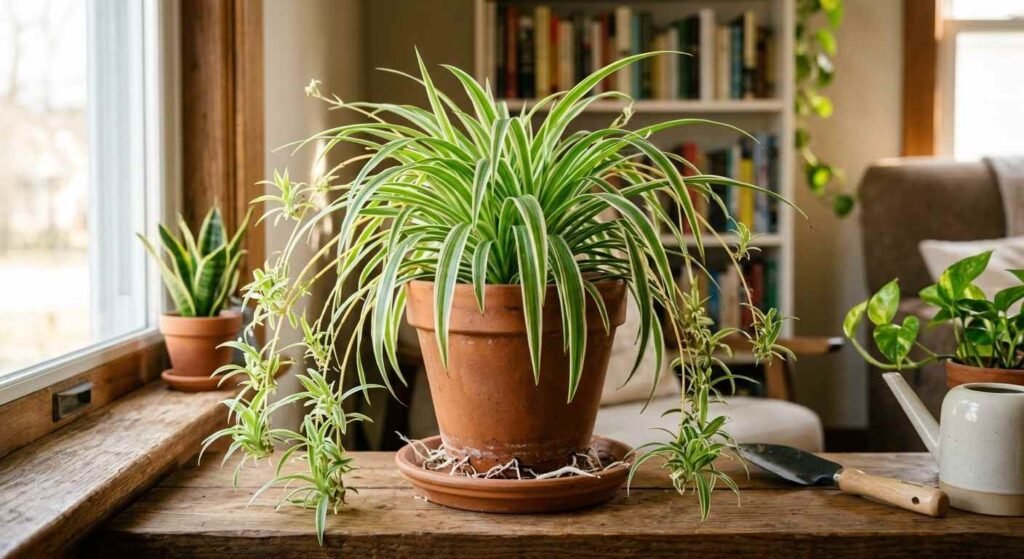
Quick Answer: Yes, spider plants like to be slightly root bound. Their thick, water-storing roots handle a snug pot well, and a crowded pot often encourages more flowers and baby plantlets. Repot only when roots push out of the drainage holes, water runs straight through, or the pot bulges or cracks. Then move up just 1 to 2 inches in pot size, ideally in spring.
A plant is root bound (also called pot bound) when its roots fill the pot so completely that they circle the inside and leave little room for soil. For many houseplants that is a problem. For spider plants (Chlorophytum comosum) it is usually fine, until the pot becomes so crowded that the plant cannot get enough water and nutrients. This guide explains why spider plants tolerate tight pots, how to spot the point where they need more room, and how to repot them safely.
Do Spider Plants Really Like Being Root Bound?
Spider plants do not just tolerate a snug pot, they often do better in one. There are three main reasons.
- Thick roots store water. Spider plant roots are fleshy and tuberous, so they hold moisture and nutrients. This is why the plant survives a missed watering better than many houseplants.
- A snug pot encourages babies and flowers. When the roots fill the container, spider plants are more likely to send out long stems with flowers and plantlets (spiderettes).
- Extra soil is a risk. A pot that is much bigger than the root ball holds wet soil for a long time. That raises the risk of root rot, and the plant may die back in response.
In short, a snug fit keeps the soil drying at a healthy pace. That is why growers often wait until the plant clearly needs more room.
Is It Okay to Leave a Spider Plant Root Bound?
Yes, for a while. A healthy spider plant can stay in the same pot for a year or two, sometimes longer, as long as it is watered properly and still growing.
The problem starts when the pot is packed. At that stage there is little soil left to hold water or nutrients, so the plant starts to struggle. That is the moment to repot or divide it, not before.
Signs Your Spider Plant Is Too Root Bound
A slightly crowded plant is fine. Watch for these signs that it has moved from snug to struggling:
- Roots growing out of the drainage holes. This is the clearest and easiest sign to check.
- Thick white roots on the soil surface. The tubers are running out of space and pushing upward.
- A bulging or cracked pot. Strong roots can split thin plastic pots.
- Water running straight through. If water pours out of the bottom almost immediately, there is more root than soil.
- Soil that dries out very quickly or feels hard and compacted. You may find yourself watering every few days.
- The plant lifting out of the pot. Roots can push the whole root ball upward.
- Stunted growth, pale or yellowing leaves. If the plant stops producing new leaves in spring and summer despite good light, crowding may be the cause.
A note on brown tips: Brown leaf tips are common on spider plants, but a crowded pot is rarely the only cause. Fluoride or chlorine in tap water, dry air and uneven watering are more common. Check these first before assuming the plant needs repotting.
What Do Healthy and Unhealthy Spider Plant Roots Look Like?
When you slide the plant out of the pot, the roots tell you a lot.
| Healthy roots | Unhealthy roots | |
|---|---|---|
| Color | White to cream | Dark brown or black |
| Texture | Firm and plump | Mushy, slimy or stringy |
| Smell | Fresh, earthy | Sour or rotten |
| Behavior | Hold together | Break off easily |
Healthy white roots packed tightly together mean the plant is just root bound and can be repotted. Brown, mushy roots mean rot, usually from overwatering or soil that stays wet. Trim those off with clean scissors before repotting.
When Is the Best Time to Repot a Spider Plant?
The best time is spring or early summer, when the plant is actively growing and recovers quickly from the move. Most spider plants need repotting about every 1 to 2 years.
Avoid repotting in winter unless the plant is in real trouble, because growth is slow and roots heal more slowly. If your plant shows only mild signs now (for example, a few roots at the drainage holes), you can usually wait until spring.
How to Repot a Root Bound Spider Plant
What you need: a pot 1 to 2 inches wider than the current one with drainage holes, fresh well-draining potting mix, and clean scissors.
- Water the plant a day before. Moist roots slide out more easily and break less.
- Remove the plant gently. Tip the pot on its side and ease the plant out. If it is stuck, squeeze the pot or run a knife around the edge. Do not pull it by the leaves.
- Check the roots. Healthy roots are firm and white to cream. Trim any that are brown, black or mushy.
- Loosen the root ball slightly. Tease the outer roots apart with your fingers. Try not to tear healthy roots.
- Add fresh soil. Place a layer of potting mix in the new pot, set the plant in at the same depth as before, and fill around the sides.
- Water well and let it drain. Keep the plant in bright, indirect light and the soil lightly moist for the next couple of weeks.
Spider Plant Roots Coming Out of the Pot: What to Do
Roots coming out of the drainage holes mean the plant is searching for more space. Do not cut off healthy roots poking out of the bottom. Repot into a slightly larger pot, or divide the plant (below) if you would rather keep the same size.
Do Not Choose a Pot That Is Too Big
It is tempting to move a crowded plant into a much larger pot, but this often backfires. A large amount of wet soil sits around a small root ball for a long time, which can cause root rot and make the plant die back. Going up only 1 to 2 inches gives the plant room without the risk.
Another Option: Divide the Plant
If you do not want a bigger pot, divide the plant instead. Remove it from the pot, then gently pull or cut the root ball into two or three sections, each with healthy roots and leaves. Pot each section in fresh soil. You get new plants, and the original stays a manageable size. You can also pot up the baby plantlets, which root easily in water or soil.
Do Other Houseplants Like Being Root Bound?
Some do. Plants that grow slowly or store water, such as snake plants, jade plants, kalanchoe and hoya, often prefer a snug pot. Many of them are also prone to root rot if given too much wet soil. African violets and Christmas cactus tolerate snug pots too, and may flower better that way.
Not every plant is the same, though. Fast-growing plants usually need repotting more often, so check each plant’s signs rather than relying on a rule. Looking for more easy plant advice? Browse our other garden and plant tips.
How to Keep a Root Bound Spider Plant Healthy
A snug spider plant needs a little extra attention, because there is less soil to hold water and nutrients.
- Water when the top inch of soil feels dry. Water slowly so it soaks in instead of running straight out.
- Give bright, indirect light. Direct sun can scorch the leaves.
- Feed lightly in spring and summer. Use a diluted, balanced fertilizer, since old, crowded soil runs low on nutrients.
- Use filtered or rainwater if brown tips keep appearing.
- Check the roots once a year, so you catch a very crowded pot early.
Getting your pots and garden ready for colder weather? Follow our fall garden checklist to prep for winter.
Frequently Asked Questions
Do spider plants like small pots?
They tolerate them well. A pot that is a little snug is fine and can encourage baby plantlets. Move up only when the warning signs above appear.
Does being root bound cause brown tips on a spider plant?
It can contribute, but water quality, dry air and uneven watering are more common causes. Check those first.
How often should I repot a spider plant?
Usually every 1 to 2 years, in spring or early summer, depending on how fast it grows.
What size pot should I use for a spider plant?
Choose a pot 1 to 2 inches wider than the current one, with drainage holes. A much larger pot holds too much wet soil.
Should I cut the roots coming out of the bottom of the pot?
No, not healthy ones. Repot into a slightly bigger pot or divide the plant. Only trim roots that are brown, black or mushy.
Can I repot a spider plant in winter?
It is better to wait until spring. Repot in winter only if the plant is in real trouble, such as rotting roots or a cracked pot.
Can I leave a spider plant root bound forever?
Not forever. A mildly root bound plant can stay happy for a long time, but eventually the roots run out of room and nutrients, and growth slows. Repot or divide when you see the warning signs.
Why is my spider plant not making babies?
Spider plants make plantlets when they are mature, get plenty of bright light and are slightly root bound. A very young plant or a plant in low light may not.
Final Thoughts
Spider plants are forgiving, and being a little root bound does not bother them. Look for roots at the drainage holes, a bulging pot or water that runs straight through, and then repot into a pot only 1 to 2 inches larger, or divide the plant. Otherwise, enjoy the plantlets that a snug spider plant is likely to give you.
If you like growing plants for a purpose, see whether mosquito repellent plants really work before you buy any.

Muhammad Amjad Butt
Founder of HomeKiTips
Muhammad Amjad Butt is the founder of HomeKiTips. He writes practical guides on home repair, maintenance, cleaning and decor. Each guide is built from manufacturer instructions, building standards and current cost data, then turned into clear steps that anyone can follow. For structural work, he always recommends a qualified tradesperson.
You may also like
Small Balcony Garden Ideas for Apartments: Zone-by-Zone Guide
Small balcony garden ideas for apartments, sorted by zone: railing, wall, ceiling and corner. Includes a sunlight test, 3 starter…
How to Bring Potted Plants Indoors for Winter (Safely)
Bring potted plants indoors for winter the right way. Learn the 50°F rule, a pest check, a 14-day acclimation plan…

Do Mosquito Repellent Plants Really Work? The Truth
Do mosquito repellent plants really work? Science says a potted plant gives little protection. Learn which plants help a bit…
Questions and tips from readers (1)