Button Batteries and Magnets: A Hidden Danger to Kids
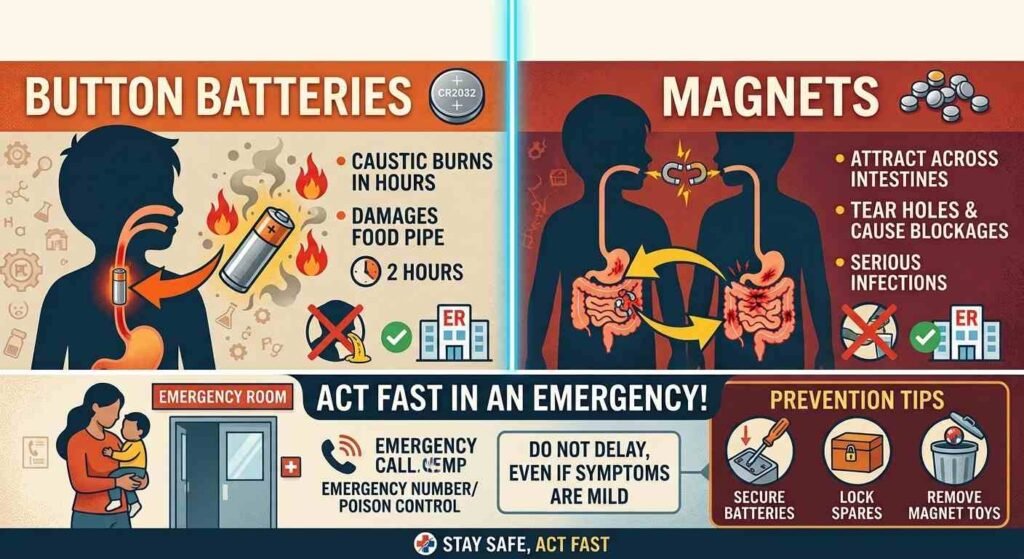
Button batteries and magnets are a hidden danger because, when a child swallows them, they can cause serious internal injury within hours. A button battery reacts with saliva and can burn through the food pipe in as little as two hours, while two or more magnets can pull together through the intestines and tear holes in them. If you suspect either has been swallowed, go to the emergency room immediately, even if your child seems fine.
Key Points
- Fast damage: A swallowed button battery can start burning tissue within 2 hours.
- Magnets attract inside the body: Two or more swallowed magnets can trap and cut off blood supply to the bowel.
- Silent symptoms: Many children show no signs at first, or the signs look like a stomach bug.
- Highest risk age: Babies and children under 6 are most at risk because they explore by mouth.
- Act immediately: Go to the ER, do not make the child vomit, and take the product packaging with you.
- Prevention works: Secure battery compartments, store spares out of reach, and remove high-powered magnet toys from homes with young kids.
A tiny silver battery from a TV remote or a small shiny magnet from a desk toy looks harmless. To a curious toddler, it looks like a sweet or a toy. Every year thousands of children around the world end up in emergency rooms after swallowing these objects, and some suffer life-changing injuries. This guide explains why button batteries and magnets are so dangerous, where they hide in your home, which symptoms to watch for, and exactly what to do in an emergency.
What Are Button Batteries?
Button batteries, also called coin batteries, coin cells or lithium coin batteries, are small round batteries used to power everyday devices. They range from the size of a fingernail to the size of a large coin. The 20 mm lithium coin cell (such as the CR2032) is the most dangerous because it is powerful and just the right size to get stuck in a young child’s throat.
Where Button Batteries Hide in Your Home
- TV remote controls and car key fobs
- Kitchen and bathroom scales
- Musical greeting cards and singing toys
- Watches, calculators and digital thermometers
- Hearing aids
- Flameless candles and LED fairy lights
- Light-up shoes, novelty toys and festive decorations
- Small trackers and smart home sensors
Party and holiday items are a special risk. Light-up costumes, flashing toys and novelty gadgets often use loose batteries. Our guide to Halloween safety tips for kids covers more hazards to watch for during the festive season.
Why Swallowed Button Batteries Are So Dangerous
A button battery does not need to be broken or leaking to cause harm. When it touches saliva or the moist lining of the throat, an electrical current flows and creates a strongly alkaline chemical, similar to caustic soda. This chemical burns the surrounding tissue.
If the battery lodges in the esophagus (food pipe), the burn can start within two hours. It can eat through the wall of the food pipe and damage the windpipe or major blood vessels nearby. The damage can continue even after doctors remove the battery. Some children need repeated surgeries, feeding tubes or long hospital stays.
Important: Even “dead” or used batteries still hold enough charge to cause serious burns. Never assume an old battery is safe.
Batteries in the Nose or Ears
Children sometimes push button batteries into their nose or ears. This is also an emergency. The same chemical reaction can burn through tissue, damage hearing or cause lasting injury to the nose. Get medical help right away.
Why Swallowed Magnets Are Just as Dangerous
One small, weak magnet will often pass through the body without problems. The real danger comes from high-powered magnets, usually small neodymium (rare-earth) magnets, and from swallowing two or more magnets, or a magnet plus a metal object.
Once inside, the magnets can attract each other through separate loops of the intestine. They squeeze the bowel walls together so tightly that blood supply is cut off. Within hours this can cause holes (perforations), blockages, serious infection and, in severe cases, the need to remove part of the bowel.
Common Sources of Strong Magnets
- Magnetic ball sets and “stress relief” desk toys
- Magnetic building kits and construction toys
- Fridge magnets with small parts that break off
- Fake magnetic tongue, nose and lip piercings popular with older kids and teens
- Magnetic jewelry, phone accessories and cabinet catches
Teenagers are at risk too. Many swallow magnets by accident while using them as fake piercings. Talk to older children about this danger as well.
Button Battery and Magnet Ingestion Symptoms
Symptoms are often mild, delayed or missing completely. Many parents first mistake them for a cold, teething or a stomach bug. Watch for:
- Drooling or trouble swallowing
- Gagging, coughing or choking
- Vomiting, especially if it contains blood
- Refusing food or drink
- Stomach pain or a swollen belly
- Chest pain or noisy breathing
- A hoarse voice or change in crying
- Unusual tiredness, fever or irritability
- Black or bloody stools
Do not wait for symptoms. If you find an empty battery compartment, missing magnets or a child playing with a product that contains them, treat it as an emergency.
What to Do If a Child Swallows a Button Battery or Magnet
- Go to the emergency room immediately. Call your local emergency number (911 in the US, 999 in the UK, 112 in Europe) if your child is struggling to breathe.
- Do not make your child vomit. Vomiting can cause more damage to the food pipe.
- Do not give food or drink, unless a doctor or poison center tells you to.
- Take the packaging or the device with you. It helps doctors identify the battery type or magnet strength.
- Call your poison center on the way. In the US, call Poison Control at 1-800-222-1222. Some poison centers advise giving honey to children over 12 months while traveling to hospital, as it can slow tissue damage from batteries. Follow their instructions only.
An X-ray quickly shows where the object is. Doctors may remove it with a thin camera tube (endoscopy) or, in some cases, with surgery.
How to Protect Your Child: Practical Prevention Tips
Button Battery Safety
- Choose products with a battery compartment that needs a screwdriver or a child-resistant lock.
- Check every remote, toy and gadget. Tape loose covers shut with strong tape, or throw the product away.
- Store spare batteries in their original child-resistant packaging, high up and locked away.
- Dispose of used batteries straight away. Put tape over both sides and recycle them safely.
- Never let children play with batteries or change them.
- Remind grandparents and caregivers to keep hearing aids and spare batteries secure.
Magnet Safety
- Keep high-powered magnet sets out of homes with young children.
- Check magnetic toys regularly for cracks or loose pieces.
- Buy toys from trusted sellers that meet local safety standards. Cheap online products may not.
- Count magnets in sets after play so you notice if any go missing.
- Warn older children and teens never to put magnets in their mouths.
Do a Quick Hidden Hazard Sweep
Take ten minutes once a month and look at your home from a toddler’s height. Check under sofas and beds, inside toy boxes, on low shelves and in drawers. Lost batteries and magnets often roll under furniture. A regular living room cleaning checklist is a good chance to spot loose batteries around remotes and decor.
Children’s rooms need extra attention. While tidying, sort through toys, remove broken magnetic pieces and check battery covers. Our kids’ room cleaning guide makes this part of your normal routine.
Your Monthly Safety Checklist
- All battery compartments are screwed shut
- Spare and used batteries are locked away
- No strong magnet toys within a child’s reach
- Floors and furniture gaps checked for small objects
- Visitors’ bags, with medicines, key fobs and hearing aids, stored out of reach
- Emergency and poison center numbers saved in your phone
Laws and Safety Standards
Many countries now treat these products as a serious safety risk. In the United States, Reese’s Law requires products with button or coin batteries to have secure battery compartments, child-resistant packaging and clear warning labels. The US, UK, EU and Australia also have safety rules for small high-powered magnets in toys. Still, unsafe products are sold online, so always check labels and buy from reputable brands.
Frequently Asked Questions
How long does it take a button battery to cause damage?
Serious burns can begin within about two hours if the battery gets stuck in the food pipe. That is why every suspected case needs urgent medical care.
Will a swallowed button battery pass on its own?
Some do pass, but you cannot know without an X-ray. Never wait at home to see what happens.
Is swallowing one magnet dangerous?
A single weak magnet often passes safely, but a high-powered magnet or more than one magnet can be life-threatening. See a doctor in every case.
Which age group is most at risk?
Children under 6, especially those aged 1 to 4, are at highest risk. Teens are also at risk from magnetic fake piercings.
Are dead batteries safe?
No. Used batteries can still carry enough charge to burn tissue. Store and dispose of them safely.
Final Thoughts
Button batteries and magnets are small, but the danger they pose is huge. The good news is that most injuries can be prevented with a few simple habits: secure every battery compartment, lock away spares, keep strong magnets away from young children, and act fast if you ever suspect one has been swallowed. Share this guide with family members, babysitters and grandparents, because keeping kids safe is a job for everyone in the home.
This article is for general information only and is not medical advice. Always contact a doctor, poison center or emergency service if you think a child has swallowed a battery or magnet.

Muhammad Amjad Butt
Founder of HomeKiTips
Muhammad Amjad Butt is the founder of HomeKiTips. He writes practical guides on home repair, maintenance, cleaning and decor. Each guide is built from manufacturer instructions, building standards and current cost data, then turned into clear steps that anyone can follow. For structural work, he always recommends a qualified tradesperson.
You may also like

How to Childproof Sharp Brick Hearth Edges Without Drilling
Worried about toddlers falling on sharp fireplace bricks? Learn how to childproof sharp brick hearth edges without drilling using heat-safe…
How to Make a Bathroom Slip-Proof for Seniors Without Remodeling
Learn how to make a bathroom slip-proof for seniors without remodeling. Discover budget-friendly anti-slip tile sprays, zero-drill grab bars, dark…

How to Prevent Falls at Home for Seniors
Learn how to prevent falls at home for seniors with a room-by-room checklist, CDC-backed numbers, simple balance tests and a…
Questions and tips from readers (1)