Remove Hard Water Stains From Kitchen Faucet Naturally
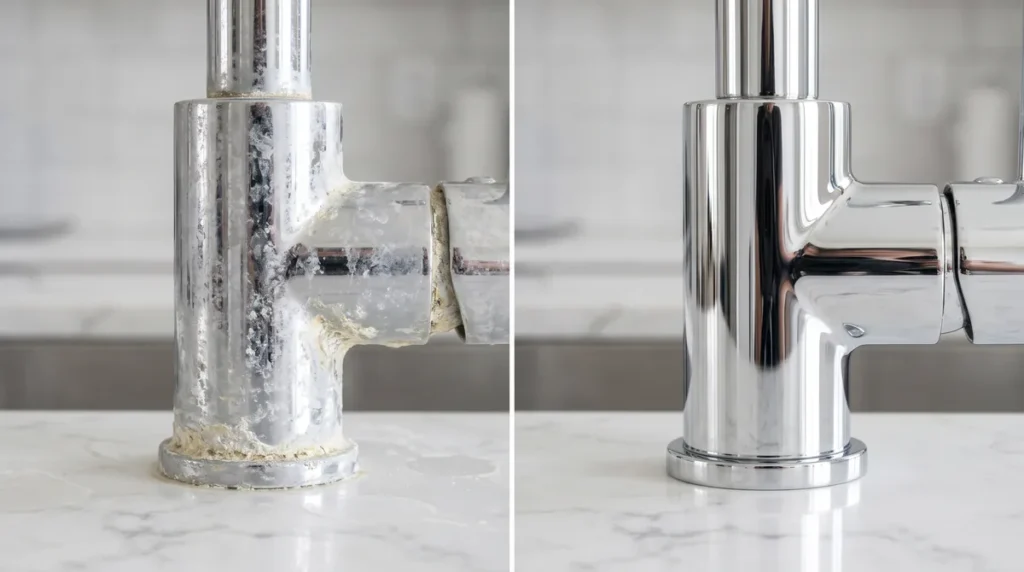
Quick Answer: To remove hard water stains from a kitchen faucet naturally, wrap the stained areas in a cloth soaked with white vinegar for 15 to 60 minutes, then scrub gently with a soft toothbrush, rinse and dry. The safe strength and time depend on your finish: full-strength vinegar suits chrome and stainless steel, diluted vinegar or lemon suits brushed nickel and matte black, and oil-rubbed bronze or lacquered brass should be cleaned with mild soap only.
Main Points
- Hard water stains are white, chalky mineral deposits of calcium and magnesium.
- Natural acids like white vinegar and lemon juice dissolve these minerals.
- Your faucet finish decides how strong the cleaner can be and how long it stays on.
- Oil-rubbed bronze and lacquered brass can be damaged by acids, so skip vinegar on them.
- The aerator at the spout tip hides scale and needs its own soak.
- Drying the faucet daily is the simplest way to stop stains from returning.
Why Hard Water Stains Build Up on Kitchen Faucets
Hard water carries dissolved calcium and magnesium. When drops of water dry on your faucet, the water evaporates but the minerals stay behind. Each layer is thin, but after a few weeks they turn into white spots, cloudy patches and crusty rings around the base, the handle and the tip of the spout.
The kitchen faucet suffers more than any other fixture because it is splashed dozens of times a day. Even homes with a water softener can see spots, because many softeners reduce hardness without removing every mineral, and soap residue mixes with what is left to form a dull film.
Mineral scale is alkaline. That is why a mild acid, such as vinegar or lemon juice, breaks it down without harsh chemicals.
What You Need
- White distilled vinegar
- Fresh lemons or bottled lemon juice
- Baking soda
- Mild dish soap
- Microfiber cloths or paper towels
- A soft old toothbrush and a wooden toothpick
- Rubber bands and a small zip-top plastic bag
- Rubber gloves

Avoid steel wool, green scouring pads and gritty powder cleansers. They remove scale, but they also scratch the surface, and scratched metal collects new stains faster.
Step 1: Identify Your Faucet Finish Before Cleaning
This is the most important step, and it is where most people go wrong. Vinegar is harmless on chrome, but it can dull, discolor or strip softer and coated finishes. Many people only discover the problem after the soak has already changed the color of their faucet.
Check your faucet box, the brand’s website, or the care card that came with it. If you still are not sure, test your cleaner on a hidden spot, such as the back of the base, for five minutes before cleaning the whole faucet.

| Faucet Finish | Safest Natural Cleaner | Maximum Contact Time | Risk Level |
|---|---|---|---|
| Chrome | Full-strength white vinegar | Up to 60 minutes | Safe |
| Stainless steel | Full-strength white vinegar | Up to 30 minutes | Safe |
| Brushed nickel | Vinegar and water, 1:1 | Up to 15 minutes | Careful |
| Matte black | Mild soap first, then vinegar and water 1:3 if needed | Up to 5 minutes | Careful |
| Unlacquered brass | Lemon juice and baking soda paste | Quick wipe only | Careful |
| Lacquered brass | Mild dish soap and warm water | No acids | Avoid acid |
| Oil-rubbed bronze | Mild dish soap and warm water | No acids | Avoid acid |
Method 1: The No-Scrub Vinegar Wrap (Chrome, Stainless Steel, Brushed Nickel)
This method lets the vinegar soften the minerals while you do something else. It is the best choice for heavy spots on chrome and stainless steel, and it works on brushed nickel with diluted vinegar and a shorter time.
- Protect the counter: Lay a dry towel around the faucet base. Vinegar can etch granite, marble and other natural stone, so do not let it drip onto the countertop.
- Soak the cloth: Put on gloves and soak a microfiber cloth or a few paper towels in vinegar. Use diluted vinegar for brushed nickel.
- Wrap the stains: Press the wet cloth around the base, handle and spout so it touches every white spot.
- Hold it in place: Secure the cloth with rubber bands so it stays in contact with the metal.
- Wait: Leave it for the time shown for your finish in the table above, and never longer than one hour.
- Scrub and rinse: Remove the cloth, brush away loosened scale with a soft toothbrush, and use a wooden toothpick along seams and joints. Rinse with warm water and dry with a clean microfiber cloth.
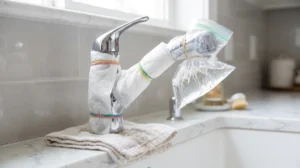
Tip: Fill a small zip-top bag with vinegar, slip it over the end of the spout so the tip sits in the liquid, and tie it with a rubber band. This cleans the spray holes while the wrap works on the rest of the faucet.
Method 2: Lemon for Light Stains and Delicate Finishes
Lemon juice contains citric acid. It works more slowly than vinegar, but it is gentler for quick cleaning and leaves a fresh smell instead of a sour one. It is a good choice for light, recent spots and for unlacquered brass.
- Cut a lemon in half.
- Rub the cut side over the white spots, squeezing a little juice as you go.
- Leave the juice on for 2 to 5 minutes.
- Wipe with a damp cloth, rinse and dry completely.
Lemon is still an acid, so keep the contact time short on matte black and brushed nickel, and do not use it on oil-rubbed bronze or lacquered brass.
Method 3: Baking Soda Paste for Thick, Crusty Buildup
People often ask whether baking soda should be added to vinegar. The honest answer is that the fizz does not make the cleaner stronger, because the two neutralize each other. What baking soda adds is a very soft scrubbing action that lifts softened scale without scratching most finishes.
- First, soften the scale with the vinegar wrap from Method 1.
- Mix 2 tablespoons of baking soda with a few drops of water into a thick paste.
- Apply it to the crusty areas with a soft toothbrush.
- Scrub gently in small circles for a minute or two.
- Rinse well and dry.
For very old buildup, repeat the soak and the paste two or three times. Several gentle rounds are safer than one hard scrub.
Clean the Aerator: The Hidden Scale Trap
The aerator is the small screw-on cap at the end of the spout. It holds a fine mesh screen that catches minerals. If your faucet sprays sideways, splashes or has weak water flow, the aerator is almost always clogged.
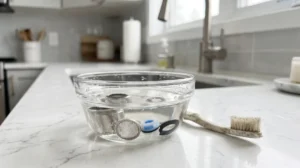
- Turn off the faucet and put a towel over the drain so small parts cannot fall in.
- Unscrew the aerator by hand. Wrap it in a cloth if you need more grip.
- Lay out the parts in the order you removed them.
- Soak them in a bowl of white vinegar for 30 to 60 minutes.
- Brush the screen with an old toothbrush and clear any blocked holes with a toothpick.
- Rinse, reassemble in the same order, and run the water for 30 seconds.
Some faucets have a recessed aerator that needs a small key from the manufacturer. If yours will not turn by hand, use the zip-bag soak instead.
Safety Tips Before You Start
- Protect stone countertops: Vinegar and lemon etch granite, marble and quartz-look natural stone. Keep a towel around the base and wipe up drips at once.
- Wear gloves: Vinegar leaves a strong smell on the skin and can dry out your hands.
- Never mix cleaners: Do not mix vinegar with bleach, and do not combine vinegar and hydrogen peroxide in one container.
- Patch-test first: Always try your cleaner on a hidden area if you are unsure about the finish.
- Watch the clock: Never leave an acid on any faucet for more than one hour.
What If Vinegar Does Not Remove the Stains?
Many people say they have tried everything and still see spots. Before replacing the faucet, check these points:
- Warm the vinegar: Heat it until warm, not boiling. Warm vinegar works noticeably faster on old scale.
- Repeat the soak: Thick layers often need two or three rounds, with a rinse in between.
- Check what the mark really is: Green or blue marks mean corrosion. Dark or faded patches on bronze or black faucets usually mean the finish itself has worn away. Cleaning cannot fix either one.
- Know when to replace: If the coating is peeling, the metal underneath is showing, or the faucet still drips after cleaning, a replacement is the better option.
How to Keep Hard Water Stains From Coming Back
- Keep a microfiber cloth by the sink and wipe the faucet dry after heavy use, especially at night.
- Once a week, spray chrome or stainless steel with a 1:1 vinegar and water mix, then wipe dry. On delicate finishes, use soapy water instead.
- Soak the aerator every two to three months, or monthly if your water is very hard.
- If you have a softener and still see spots, check that its salt is topped up and its settings match your water hardness.
- Apply a thin coat of car wax or a faucet-safe protectant to chrome once a month so water beads and rolls off.
A clean faucet makes the whole sink area look new. While you are cleaning, our guide on how to remove grease from kitchen cabinets and appliances covers the next job.
Frequently Asked Questions
Will vinegar remove the finish on an oil-rubbed bronze faucet?
It can. Oil-rubbed bronze has a living or coated finish that reacts with acid, and a vinegar soak can leave lighter or blotchy patches. Clean bronze with mild dish soap and warm water, then dry it completely.
Is vinegar safe on brushed nickel faucets?
Yes, if it is diluted and used briefly. Mix vinegar and water 1:1, leave it on for no more than 15 minutes, then rinse and dry. Never use full-strength vinegar for a long soak on brushed nickel.
Should I add baking soda to vinegar?
Mixing them does not create a stronger cleaner, since they neutralize each other. Use vinegar first to dissolve the scale, then use a baking soda paste as a gentle scrub.
Can vinegar damage my granite countertop?
Yes. Vinegar and lemon juice can etch granite, marble and other natural stone, leaving dull spots. Place a towel around the faucet base and wipe away any drips immediately.
How long should I leave vinegar on a faucet?
Leave it up to 60 minutes on chrome, 30 minutes on stainless steel, 15 minutes on brushed nickel and about 5 minutes on matte black. Do not use it at all on oil-rubbed bronze or lacquered brass.
How do I get rid of the vinegar smell on my hands?
Wear rubber gloves while cleaning. If your hands still smell, wash them with dish soap and rub a little lemon juice or baking soda over your skin before rinsing.
Why do I still get spots even with a water softener?
Softeners reduce hardness but rarely remove every mineral, and soap residue can also dry into spots. Wiping the faucet dry daily and checking your softener’s salt level usually solves it.
Have a Question? Ask Us
Type your question below and get an instant answer.
Questions From Readers
Q: Should I add baking soda to vinegar
A: Mixing them does not make a stronger cleaner because they neutralize each other. Use vinegar first to dissolve the scale, then use a baking soda paste as a gentle scrub.

Muhammad Amjad Butt
Founder of HomeKiTips
Muhammad Amjad Butt is the founder of HomeKiTips. He writes practical guides on home repair, maintenance, cleaning and decor. Each guide is built from manufacturer instructions, building standards and current cost data, then turned into clear steps that anyone can follow. For structural work, he always recommends a qualified tradesperson.
You may also like

Bedroom Decorating Ideas: 25 Easy Ways to Style It
25 bedroom decorating ideas for every size and budget: layout, colour, bedding, lighting and decor tips, plus a free tool…