How to Clean a Non-Stick Pan Without Ruining the Coating
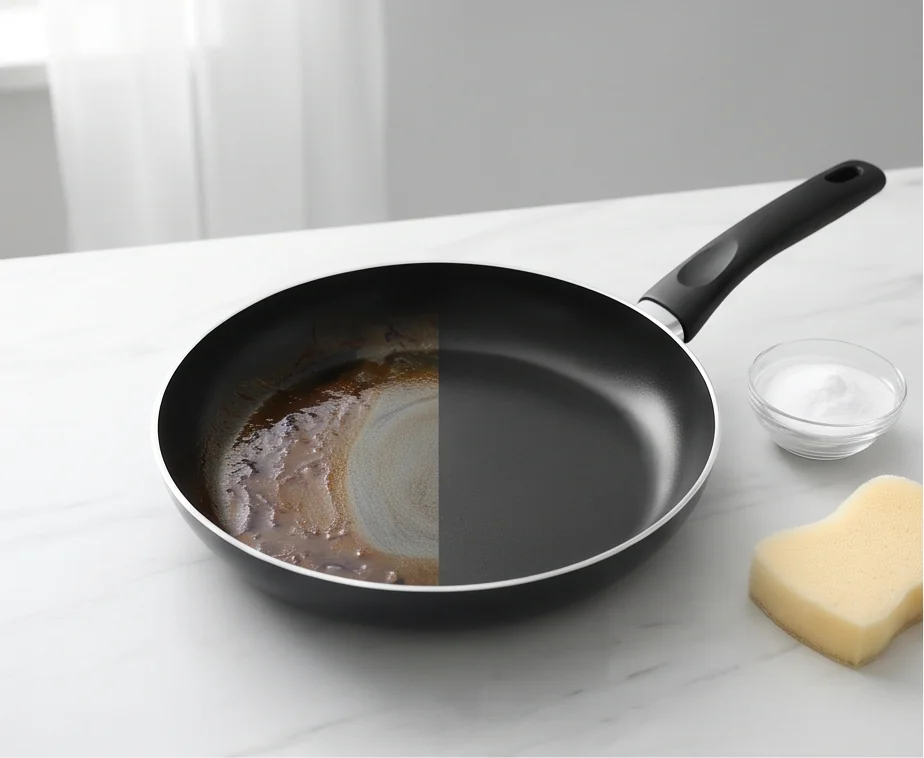
Quick Answer: To clean a non-stick pan without ruining the coating, let it cool, then wash it with warm water, dish soap and a soft sponge. For burnt food, simmer water with 1 tablespoon of baking soda for 5 to 10 minutes and wipe it out with a wooden or silicone spatula. Never use steel wool, metal scrapers or harsh scouring pads, and avoid heating the pan empty on high heat.
Main Points
- Warm water, mild dish soap and a soft sponge are all a non-stick pan needs day to day.
- Burnt food lifts off with a gentle simmer of water and baking soda, not scrubbing.
- A sticky, brownish film is usually built-up oil or cooking spray, not a ruined coating, and it can be cleaned.
- Steel wool, green scouring pads, knives and credit cards can scratch the coating.
- Most damage comes from high heat, especially heating the pan while it is empty.
- Replace the pan if the coating is flaking, peeling or worn down to the metal.
Is Your Non-Stick Pan Ruined or Just Dirty?
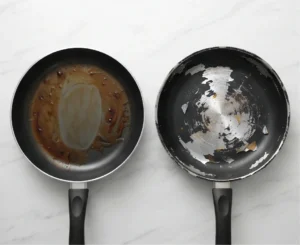
Many people throw away a pan that only needs a proper deep clean. When food starts sticking, the coating is often fine. The real problem is an invisible layer of cooked-on oil or cooking spray that has hardened on top of it. Use this quick test before you decide.
- Look under bright light. Shiny metal showing through, deep scratches, peeling or flakes mean the coating is damaged.
- Feel the surface. Run a clean fingertip across the cooking area. A tacky, rough or slightly sticky feel points to residue, not damage.
- Try the water drop test. Sprinkle a few drops of water on the cool, dry pan. On a clean coating they bead up and roll. If they spread out flat in some areas, there is residue on the surface.
- Deep clean, then test with an egg. Use the sticky residue method below, then fry an egg on medium-low heat with a little butter. If it slides, your pan was just dirty. If it still sticks badly, the coating is worn out.
| What You See | What It Means | What to Do |
|---|---|---|
| Sticky, tacky or brownish film | Built-up oil or cooking spray | Deep clean with baking soda |
| White, chalky spots | Hard water minerals | Wipe with diluted vinegar |
| Dull surface, coating intact | Normal wear or light residue | Deep clean and test |
| Light surface scratches | Minor wear | Keep using with care |
| Flaking, peeling or bare metal | Damaged coating | Replace the pan |
| Warped base that rocks on the stove | Heat damage | Replace the pan |
Know Your Coating: PTFE or Ceramic?
Most non-stick pans have one of two coatings, and they need slightly different care. Check the box, the bottom of the pan or the brand’s website.
- PTFE (often sold as Teflon): Very slippery and long-lasting with gentle use. It is sensitive to high heat, so keep it at low to medium heat.
- Ceramic non-stick: A mineral-based coating that handles heat a little better, but it loses its non-stick surface faster when oil and residue build up. Ceramic pans especially dislike cooking sprays and sudden temperature changes.
The cleaning methods below are safe for both types.
How Do You Clean a Non-Stick Pan Every Day?
Wash it by hand with warm, soapy water and a soft sponge after every use. This simple habit prevents most sticky buildup.
- Let it cool. Putting a hot pan in cold water can warp the base and stress the coating. Wait until it is warm, not hot.
- Remove grease. Wipe out leftover oil with a paper towel. Do not pour grease down the drain.
- Wash gently. Use warm water, a few drops of dish soap and the soft side of a sponge or a dishcloth.
- Clean the whole surface. Pay attention to the edges and the area where the side meets the base, since oil collects there.
- Rinse and dry. Rinse well and dry with a towel before storing.
What about the dishwasher? Even if your pan is labeled dishwasher-safe, hand washing makes the coating last longer. Dishwasher detergents and high heat slowly wear it down.
How Do You Remove Burnt Food From a Non-Stick Pan?
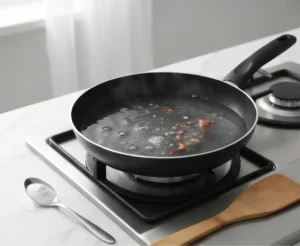
Let heat and water do the work. A gentle simmer loosens burnt food so it wipes away without scrubbing.
- Fill the pan with enough water to cover the burnt area.
- Add 1 to 2 tablespoons of baking soda.
- Bring it to a gentle simmer on medium-low heat for 5 to 10 minutes.
- Turn off the heat and let it cool until warm.
- Push the loosened food away with a wooden or silicone spatula.
- Wash with soapy water, rinse and dry.
For small burnt spots, make a paste of 2 tablespoons of baking soda and a little water. Leave it on for 15 minutes, then rub gently with a soft sponge. Repeat instead of scrubbing harder.
How Do You Get Sticky Residue Off a Non-Stick Pan?
This is the most common reason a good pan stops working. Cooking sprays contain additives that bake into a thin, tacky film, and oil left after washing hardens the same way over time. Soap alone will not remove it.
- Sprinkle a generous layer of baking soda over the cool pan.
- Add a few drops of water and dish soap to make a thick paste.
- Leave it on for 20 to 30 minutes.
- Rub in small circles with a non-scratch sponge, the type made for non-stick cookware.
- Rinse, then repeat the water drop test. If water still spreads in patches, repeat the process.
Very old buildup may need two or three rounds. After that, stop using cooking spray on the pan and wipe it out well after each use.
How Do You Remove White Spots From a Non-Stick Pan?
White, chalky spots are minerals from hard water, not damage. Wipe the cool pan with a cloth dipped in a mix of equal parts white vinegar and water, leave it for a few minutes, then wash, rinse and dry. For more on mineral spots, see our guide to removing hard water stains naturally.
How Do You Clean the Outside Bottom of a Non-Stick Pan?
The outside often gets brown grease stains from the burner. Turn the pan upside down so nothing drips inside, spread a thick baking soda and water paste over the stains and leave it for 30 minutes. Scrub with a non-scratch pad and rinse. Keep oven cleaner away from non-stick pans, because the strong chemicals can damage the coating if they reach the inside.
Safe and Unsafe Tools for Non-Stick Pans
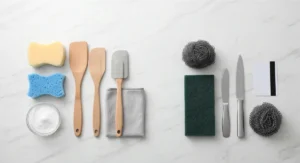
Many popular cleaning tips actually scratch the coating. Use this list before you reach for a tool.
| Safe to Use | Avoid |
|---|---|
| Soft sponge or dishcloth | Steel wool |
| Non-scratch sponge made for non-stick | Green scouring pads |
| Wooden or silicone spatula | Knives, metal spatulas and metal scrapers |
| Baking soda paste | Credit cards or hard plastic cards used as scrapers |
| Mild dish soap | Chain mail scrubbers |
| Diluted white vinegar | Oven cleaner and bleach |
| Microfiber cloth for drying | Gritty powder cleansers |
Why Do Eggs Stick to a Non-Stick Pan?
Eggs usually stick because of residue on the surface, a pan that is too hot or too cold, or not enough fat. Try this:
- Deep clean the pan first to remove any invisible film.
- Warm the pan on medium-low heat for about a minute with a small amount of butter or oil already in it.
- Add the eggs once the butter foams gently.
- Leave them alone until the edges set. Moving them too early makes them stick.
Heat Rules That Protect the Coating
Heat damages more non-stick pans than scrubbing does. Follow these rules:
- Never heat an empty pan on high. An empty non-stick pan can get dangerously hot in a few minutes. Always add oil or food first.
- Cook on low to medium heat. Non-stick pans are built for gentle cooking, not searing.
- Match the burner size to the pan so flames do not climb up the sides.
- Do not use non-stick pans under the broiler unless the manufacturer says it is safe.
Is a Non-Stick Coating Safe?
Used correctly, non-stick pans are considered safe for everyday cooking. PTFE coatings begin to break down when they get too hot, at around 500°F (260°C). At that point they can release fumes that cause temporary flu-like symptoms, and these fumes are especially dangerous to pet birds. Normal cooking on low to medium heat stays well below this level.
PFOA, a chemical that was once used to make PTFE, has been phased out of non-stick cookware production. To stay safe, avoid high heat, keep the kitchen ventilated, and replace pans with a flaking or peeling coating. You can read more in this nonstick cookware safety overview from Healthline.
How to Store Non-Stick Pans Without Scratching Them
- Place a paper towel, a soft cloth or a pan protector between stacked pans.
- Hang pans on hooks if you have space.
- Do not stack heavy cast iron or metal pots inside a non-stick pan.
When Should You Throw Away a Non-Stick Pan?
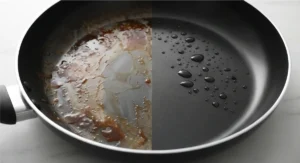
Replace your pan when cleaning no longer helps. Clear signs include:
- The coating is flaking, peeling or bubbling.
- Deep scratches show the metal underneath.
- Food sticks badly even after a full deep clean.
- The base is warped and rocks on the stove.
Grease builds up on more than just pans. If your stove area needs attention too, read our guides on removing grease from kitchen cabinets and appliances and cleaning a greasy range hood filter.
Frequently Asked Questions
Can I use steel wool on a non-stick pan?
No. Steel wool scratches the coating and can remove it completely. Use a soft or non-scratch sponge instead.
Is the blue non-scratch Scotch-Brite sponge safe for non-stick pans?
Sponges labeled non-scratch and made for non-stick cookware are generally safe when used gently. The green heavy-duty scouring pads are too abrasive.
Can I use vinegar on a non-stick pan?
Yes. A mix of equal parts white vinegar and water safely removes white mineral spots. Rinse and dry the pan afterward.
How do I get cooking spray residue off a non-stick pan?
Cover the pan with a thick paste of baking soda, water and a drop of dish soap, leave it for 20 to 30 minutes, then rub with a non-scratch sponge. Repeat for heavy buildup, and stop using cooking spray on that pan.
Why is my non-stick pan suddenly sticky?
Most often, a thin layer of cooked-on oil or cooking spray has built up on the surface. A baking soda deep clean usually restores it.
Is it safe to cook with a scratched non-stick pan?
Light surface scratches are usually not a problem. If the coating is flaking, peeling or worn down to the metal, replace the pan.
Can I soak a non-stick pan overnight?
A short soak of an hour or two in warm, soapy water is fine. Long soaks are not needed and can affect the handle and rivets over time.
Do I need to season a non-stick pan?
Most modern non-stick pans do not need seasoning. Check your manufacturer’s instructions, as a few brands recommend a light oil wipe before first use.
How long does a non-stick pan last?
It depends on the quality of the pan and how you use it. Gentle heat, hand washing and soft tools can help a good pan last for years.
Have a Question? Ask Us
Type your question below and get an instant answer.
Questions From Readers

Muhammad Amjad Butt
Founder of HomeKiTips
Muhammad Amjad Butt is the founder of HomeKiTips. He writes practical guides on home repair, maintenance, cleaning and decor. Each guide is built from manufacturer instructions, building standards and current cost data, then turned into clear steps that anyone can follow. For structural work, he always recommends a qualified tradesperson.
You may also like
15-Minute Kitchen Closing Shift Routine (2026 Guide)
Learn the 15-minute kitchen closing shift routine. Clean counters, reset your sink, stop morning odors, and wake up to a…

How to Choose the Best Riobel Kitchen Faucet for Your Sink
Choose the right Riobel kitchen faucet for your sink. Check holes, deck thickness, clearance and reach, then compare types, collections…

How Do You Decorate a Blue and White Kitchen? 24 Pieces You Need
Blue and white kitchen decor works best when you build it in layers: one matching floral fabric set (window curtains,…