Clean a Greasy Range Hood Filter Without Removing It
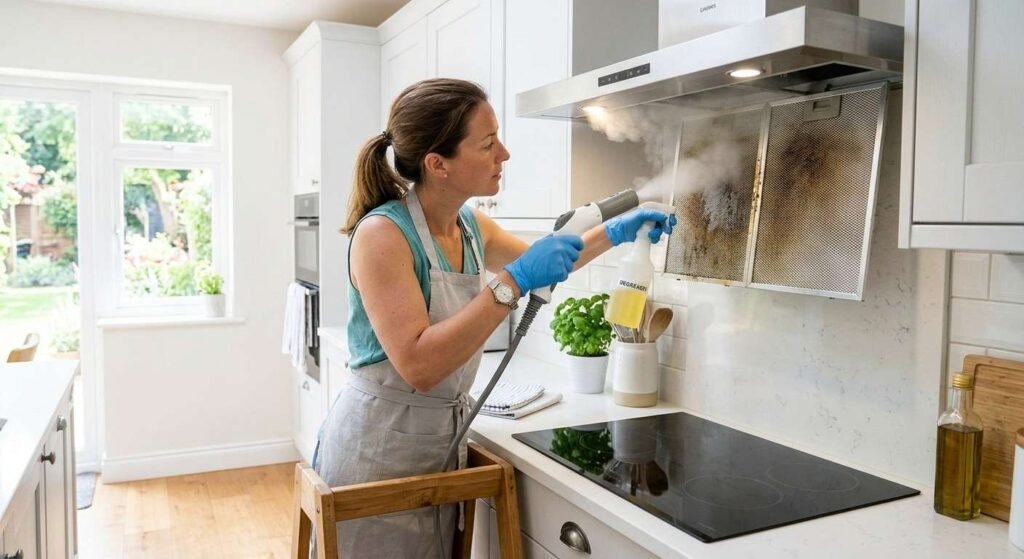
Quick Answer: To clean a greasy range hood filter without removing it, switch off the hood and let it cool, cover the stovetop, then simmer a pot of water under the hood for 10 to 15 minutes to soften the grease with steam. Spray the filter with a hot mix of degreasing dish soap, baking soda and water, wait 10 minutes, scrub gently with a soft brush, and wipe it clean with a hot damp cloth. Repeat until the mesh looks clear.
Key Points
- Steam first: Simmering water under the hood loosens sticky grease so it wipes off instead of smearing.
- Best in-place cleaner: Hot water, degreasing dish soap and baking soda in a spray bottle. It is safe for aluminum and stainless steel.
- Protect the stove: Cover the cooktop with old towels or foil to catch greasy drips.
- Safety: Turn the hood off at the switch or breaker, never spray the fan motor or lights, and never use oven cleaner on aluminum filters.
- Charcoal filters cannot be cleaned: Black carbon filters must be replaced, not washed.
- How often: Clean every month if you fry or cook daily, and every 2 to 3 months for light cooking.
A greasy range hood filter is one of those kitchen jobs most people put off. The usual advice is to pull the filter out and soak it in the sink. That is a good method, but it does not always work in real life. Some filters are stuck in place by years of baked-on grease. Some have tight clips that bend easily. Some hoods sit so high that climbing up to unclip a heavy, dripping filter feels unsafe. And sometimes you simply want a quick clean between deep cleans.
The good news is that you can clean a range hood filter in place and still get great results. This guide shows you the exact steam-and-spray method, the safest cleaners for each filter type, and how to stop grease from building up again.
Why Your Range Hood Filter Gets So Greasy
Every time you fry, sauté or boil, tiny droplets of oil rise with the steam. The range hood pulls that air through the filter, and the metal mesh or baffles trap the grease before it reaches the fan and ductwork. That is exactly what the filter is meant to do. Over weeks, the grease cools, thickens and turns into a sticky, brown layer that also collects dust.
When a kitchen exhaust fan filter is clogged, you will usually notice a few signs:
- Smoke and cooking smells linger in the kitchen.
- The fan sounds louder but pulls less air.
- The filter feels tacky to the touch or looks dark brown.
- Grease drips onto the stovetop when the hood is running.
A blocked filter is more than a cleaning problem. Built-up grease is flammable, and a hot pan flare-up near a grease-soaked hood is a real fire risk. Regular cleaning keeps the air fresher and the kitchen safer.
First, Check Which Filter You Have
Before you start, look closely at the filter. The type decides how you should clean it.
| Filter Type | How to Spot It | Can You Clean It in Place? |
|---|---|---|
| Aluminum mesh | Silver, light, layered metal mesh | Yes, with mild soap and baking soda only |
| Stainless steel baffle | Heavy, shiny, angled metal panels | Yes, handles stronger degreasers well |
| Charcoal (carbon) | Black, solid pad, common in over-the-range microwaves | No, replace it every 3 to 6 months |
If your hood has both a metal grease filter and a charcoal filter behind it, clean the metal one and replace the charcoal one on schedule.
What You Need
- A large pot of water
- Degreasing dish soap
- Baking soda
- White vinegar (optional, for a final wipe)
- A spray bottle that can handle hot water
- A soft nylon brush or an old toothbrush
- Microfiber cloths and paper towels
- Old towels or aluminum foil to cover the stove
- Rubber gloves
How to Clean a Greasy Range Hood Filter Without Removing It
Step 1: Turn Off the Hood and Let It Cool
Switch off the fan and lights. If your hood is hardwired and you will be spraying close to the controls, turn off its circuit breaker for extra safety. Make sure the filter and stovetop are completely cool before you begin.
Step 2: Cover the Stovetop
Lay old towels or a sheet of foil over the burners and cooktop, leaving one burner open for the pot. Grease will drip as it loosens, and this step saves you a second cleaning job. This is the easiest way to clean a range hood filter without making a mess.
Step 3: Steam the Grease Loose
Place a large pot of water on the open burner and bring it to a gentle simmer for 10 to 15 minutes. Keep the hood fan off so the steam rises straight into the filter instead of being pulled away. The heat and moisture soften hardened grease, which makes the next steps far easier. Turn off the burner when you are done and move the pot aside carefully.
Step 4: Mix a Hot Degreasing Spray
Fill your spray bottle with very hot tap water, add about one tablespoon of degreasing dish soap and one tablespoon of baking soda, then shake gently until the baking soda dissolves. The soap breaks down oil, while the baking soda adds mild alkaline cleaning power without scratching metal.
Step 5: Spray and Let It Sit
Spray the underside of the filter evenly until it is fully wet. Avoid the fan motor, lights and control panel. Let the solution sit for about 10 minutes so it can work into the mesh. For a thick layer of grease, spray again halfway through.
Step 6: Scrub Gently
Wearing gloves, scrub the filter with a soft brush or toothbrush in small circles. Follow the direction of the mesh or baffle lines so you push grease out of the gaps rather than deeper in. Do not use steel wool or harsh scouring pads, as they scratch the finish and can tear thin aluminum mesh.
Step 7: Wipe, Rinse and Repeat
Soak a microfiber cloth in hot water, wring it out and wipe the filter to lift the loosened grease and soap. Rinse the cloth often. For heavy buildup, repeat the steam, spray and scrub cycle two or three times. A final wipe with a cloth dampened in a 50/50 mix of white vinegar and hot water removes leftover soap film and helps the metal shine.
Step 8: Dry Fully Before Use
Pat the filter dry with paper towels and leave it to air dry for at least 30 minutes. Remove the towels or foil from the stove, wipe the hood’s outer surface, then switch the power back on and test the fan.
Extra Tips for Very Thick or Stuck Grease
- Baking soda paste: For stubborn spots, mix baking soda with a little dish soap into a paste, dab it on with a toothbrush, wait 10 minutes and wipe away.
- Stuck range hood filter: If a filter will not come out because grease has glued it in place, use this in-place method first. Once the grease softens, it often slides out easily for a deeper soak.
- Stainless steel baffles: These can handle a commercial kitchen degreaser. Always check the label says it is safe for stainless steel and rinse well afterward.
- Know when to soak: If the filter is still dark after three rounds, removing it and soaking it in boiling water with dish soap and baking soda is the better choice for that one clean.
What Not to Use on a Range Hood Filter
- Oven cleaner on aluminum: Its harsh chemicals can darken, stain and corrode aluminum mesh.
- Bleach or ammonia: They do little against grease, and mixing them creates toxic fumes.
- Steel wool: It scratches metal and leaves tiny fibers that can rust.
- Soaking water near electrics: Spray lightly and wipe, never pour water up into the hood.
The same gentle approach works on the rest of your kitchen, too. If grease has spread beyond the hood, follow our guide on how to remove grease from kitchen cabinets and appliances.
How Often Should You Clean a Range Hood Filter?
How often you clean depends on how you cook:
- Daily cooking, frying or wok cooking: Every month.
- Regular home cooking: Every 2 to 3 months.
- Light cooking: Every 3 to 4 months.
- After a big meal or holiday cooking: Give it a quick in-place clean straight away.
A five-minute monthly wipe with the hot soap spray takes far less effort than scraping off a year of baked-on grease.
Simple Habits to Keep Your Hood Filter Clean
- Turn the hood fan on before you start cooking and leave it running for 10 minutes after.
- Use lids on frying pans to cut down on airborne oil.
- Wipe the filter surface with a hot soapy cloth once a week while it is still lightly greasy.
- Clean the stove right after cooking, because fresh grease wipes off easily.
- Set a phone reminder for your monthly filter check.
Vinegar is a useful helper across the whole house. See how the same kitchen staple tackles mineral buildup in our guide to removing hard water stains from bathroom tiles and glass, and for floors, try these natural ways to make marble and tile floors shine.
Frequently Asked Questions
Can I clean a range hood filter without taking it out?
Yes. Steam the filter with a simmering pot of water, spray it with hot water mixed with dish soap and baking soda, let it sit for 10 minutes, scrub gently and wipe it clean. This works well for light to moderate grease.
What is the best degreaser for a range hood filter?
For most homes, a mix of hot water, degreasing dish soap and baking soda is the best and safest choice. It cuts grease on both aluminum and stainless steel without damaging the finish.
Does vinegar clean a greasy range hood filter?
Vinegar alone does not cut thick grease well. It works best as a final wipe after dish soap, because it removes soap residue and leaves the metal shiny.
Can I put a range hood filter in the dishwasher?
Many metal mesh and baffle filters are dishwasher-safe, but check your manual first. Clean off heavy grease by hand before using the dishwasher so the grease does not clog it.
How do I know if my range hood filter needs replacing?
Replace a metal filter if the mesh is torn, bent out of shape or stays dark and sticky after deep cleaning. Charcoal filters cannot be cleaned and should be replaced every 3 to 6 months.
Final Thoughts
You do not need to wrestle a greasy filter out of the hood every time it gets dirty. With a pot of steam, a hot soap and baking soda spray, a soft brush and a few minutes of patience, you can clean a range hood filter without removing it and keep your kitchen air fresh and safe. Make it a monthly habit, and the job will never feel big again.
Have a Question? Ask Us
Type your question below and get an instant answer.
Questions From Readers

Muhammad Amjad Butt
Founder of HomeKiTips
Muhammad Amjad Butt is the founder of HomeKiTips. He writes practical guides on home repair, maintenance, cleaning and decor. Each guide is built from manufacturer instructions, building standards and current cost data, then turned into clear steps that anyone can follow. For structural work, he always recommends a qualified tradesperson.
You may also like
15-Minute Kitchen Closing Shift Routine (2026 Guide)
Learn the 15-minute kitchen closing shift routine. Clean counters, reset your sink, stop morning odors, and wake up to a…

How to Choose the Best Riobel Kitchen Faucet for Your Sink
Choose the right Riobel kitchen faucet for your sink. Check holes, deck thickness, clearance and reach, then compare types, collections…

How Do You Decorate a Blue and White Kitchen? 24 Pieces You Need
Blue and white kitchen decor works best when you build it in layers: one matching floral fabric set (window curtains,…