How to Pack Clothes for Moving Without Boxes (8 Easy Ways)
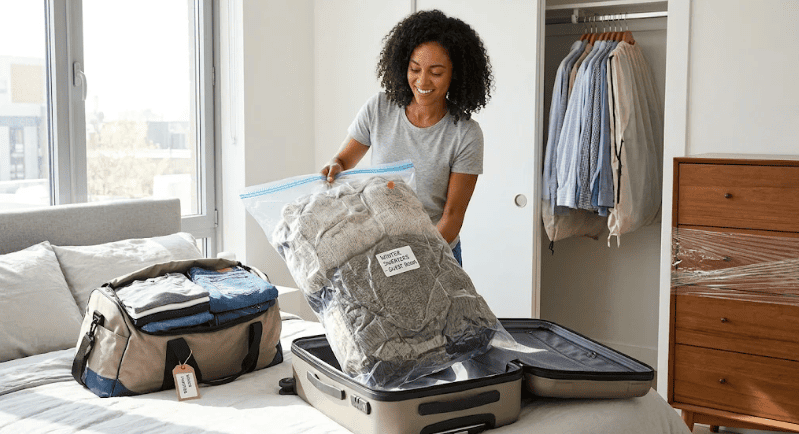
The easiest way to pack clothes for moving without boxes is to use what you already own: suitcases for heavy folded clothes, large bags pulled over hangers for hanging clothes, dresser drawers wrapped shut, and vacuum bags for bulky items. Sort and declutter first, pack a 3-day essentials bag, and label every bag by room. This saves money and you can unpack in minutes.
In this article
- Why Pack Clothes Without Boxes?
- What Should You Do Before Packing Clothes?
- 8 Ways to Pack Clothes for Moving Without Boxes
- How Do You Move Hanging Clothes Without a Wardrobe Box?
- Which Method Is Best for Each Type of Clothing?
- Should You Roll or Fold Clothes When Moving?
- What Goes in a Moving Essentials Bag?
- What Mistakes Ruin Clothes During a Move?
- Real-Life Examples
- FAQs
- Start Packing Your Clothes Now
Picture this: it is the night before your move, the truck comes at 8 a.m., and you have run out of boxes. Your closet is still full. This happens to many people, and the good news is that you do not need a single box to move your clothes safely. Knowing how to pack clothes for moving without boxes saves money and time, and it also cuts down on waste. Clothes are soft, light and flexible, so they fit into bags, suitcases, baskets and even the furniture you are already moving.
This guide covers 8 tested methods, the best option for each type of clothing, a simple hack for hanging clothes, and a 10-step action plan you can follow today.
Why Pack Clothes Without Boxes?
Cardboard boxes are made for hard, breakable items. Clothes do not need that much protection. Here is why many people skip boxes for their wardrobe:
- It saves money: wardrobe boxes are among the most expensive moving boxes, and a family can need 4 to 8 of them.
- It saves time: hanging clothes go from the closet rod to the new rod in under 2 minutes per bundle.
- It saves space: soft bags squeeze into gaps in the truck where rigid boxes cannot go.
- It cuts waste: a box-free move means less cardboard and tape in the trash.
Waste matters more than most people think. According to the U.S. Environmental Protection Agency, landfills received 11.3 million tons of textiles in 2018, and only 14.7% of textiles were recycled that year. Moving is the perfect time to donate clothes instead of throwing them away.
Clothes do not need cardboard. They need to stay clean, dry and sorted.
What Should You Do Before Packing Clothes?
Declutter with the 12-month rule
Pull everything out and ask yourself one question: “Have I worn this in the last 12 months?” If the answer is no, put it in a donate, sell or recycle pile. Most people cut 20% to 30% of their wardrobe this way, which means 20% to 30% less to carry.
Wash everything first
Never pack dirty clothes. Sweat and food stains set over time, and damp fabric packed in plastic can grow mildew in as little as 24 to 48 hours. Wash and fully dry every item 2 to 3 days before moving day.
Sort into 4 groups
- Hanging: shirts, dresses, suits, coats
- Folded: jeans, T-shirts, sweaters, gym wear
- Off-season: winter coats or summer clothes you will not need for months
- Essentials: what you will wear in the first 3 days
Start packing off-season clothes 2 to 3 weeks before the move, everyday clothes 2 to 3 days before, and essentials the night before.
8 Ways to Pack Clothes for Moving Without Boxes
1. Use suitcases for heavy folded clothes
Suitcases are the most underused moving tool. Fill rolling suitcases with heavy items like jeans, hoodies and sweaters, so the wheels do the hard work. Use duffels and backpacks for lighter items. Keep each suitcase under about 20 kg (44 lb) so the handle and wheels do not break.
2. Try the hanger bag hack for hanging clothes
Group 8 to 12 hangers, pull a large drawstring bag up from the bottom, and tie it around the hooks. Your clothes stay on hangers, stay clean, and go straight back into the closet. Step-by-step details are in the section below.
3. Leave clothes inside dresser drawers
If your mover or friends can lift the dresser, leave folded clothes inside. Wrap the whole dresser in plastic stretch wrap so the drawers cannot slide open. Avoid packing tape directly on wood, because it can pull off the finish. For heavy solid-wood dressers, take the drawers out, carry them separately, and wrap each one.
4. Shrink bulky items with vacuum-seal bags
Vacuum bags can cut the size of puffers, sweaters, blankets and duvets by roughly half or more. They are ideal for off-season clothes. Do not vacuum-seal leather, suede, wool suits or down jackets for long periods, because tight compression can crease leather and flatten down filling. A few days is fine; a few months is not.
5. Fill laundry baskets and hampers
Plastic laundry baskets are open boxes with handles. Fill them with folded clothes, lay a towel on top, and wrap the basket in stretch wrap. Nothing falls out, and the basket is useful again on day one.
6. Turn duvet covers and pillowcases into bags
This is a smart trick few guides mention. A king-size duvet cover holds a large pile of folded clothes. Fill it, button or tie the opening, and it becomes a big soft bag that also cushions furniture in the truck. Pillowcases work well for small sorted bundles like socks, underwear or kids’ clothes.
7. Use reusable totes and duffel bags
Large reusable shopping totes and sports duffels have strong handles and are easy to carry upstairs. They are perfect for shoes, belts, scarves and gym clothes.
8. Use heavy-duty trash bags (as a last resort)
Thick contractor-grade bags work in an emergency, but they tear easily and look exactly like real trash. Use only clear bags or tie a colored ribbon on each one, so nobody throws your clothes away by mistake. Never put trash bags of clothes at the bottom of a stack.
A suitcase full of jeans is easier to move than a box full of jeans because it has wheels.
How Do You Move Hanging Clothes Without a Wardrobe Box?
The hanger bag method, also called the garbage bag hack, is the fastest way to move hanging clothes. Here is how to do it right:
- Group 8 to 12 hangers of similar length. Wrap a rubber band or zip tie around the hooks so they do not tangle.
- Pull a large drawstring bag up from the bottom of the clothes, the same way you would put on a sock.
- Tie the drawstring around the hooks, leaving the hooks outside so you can hang the bundle right away.
- Lay the bundles flat in the car or on top of the load. Never put heavy boxes on top of them.
For suits, wedding dresses and formal wear, use a zippered garment bag instead. Breathable fabric bags protect better than plastic for anything you care about.
Which Method Is Best for Each Type of Clothing?
| Clothing type | Best box-free method | Why it works |
|---|---|---|
| Suits and dresses | Garment bag on hangers | No creases, ready to hang |
| Shirts and blouses | Hanger bag hack | Fast, clean, no ironing later |
| Jeans, T-shirts, gym wear | Rolled in suitcases | Heavy items on wheels |
| Winter coats and sweaters | Vacuum bags (short term) | Saves up to half the space |
| Underwear and socks | Left in drawers or pillowcases | Zero effort, already sorted |
| Shoes | Totes, each pair bagged | Keeps dirt off clothes |
| Delicates and silk | Wrapped in a pillowcase or tissue | Prevents snags |
| Jewelry and watches | Pill organizer, carried with you | No tangles, no loss |
How do you pack shoes for moving without boxes?
Stuff each shoe with socks to hold its shape, then put each pair in a plastic grocery bag or shower cap so dirt from the soles does not touch other items. Pack shoes in a tote or at the bottom of a suitcase, heaviest pairs first.
Should You Roll or Fold Clothes When Moving?
Roll casual clothes and fold structured ones. Rolling T-shirts, jeans, leggings and pajamas saves space and cuts deep creases. Folding is better for collared shirts, blazers and stiff fabrics, which can wrinkle when rolled. Secure big rolls with a hair tie so they stay tight in the bag.
What Goes in a Moving Essentials Bag?
Your essentials bag is the one bag that travels with you, not in the truck. Delivery can be late by a day or more, especially on long-distance moves. The U.S. Federal Motor Carrier Safety Administration’s Protect Your Move guide advises keeping valuables and important items with you. Pack:
- 3 complete outfits (one per day)
- Sleepwear plus 4 days of socks and underwear
- 1 work or school outfit, already ironed, on a hanger
- Toiletries, medicines, phone chargers and documents
What Mistakes Ruin Clothes During a Move?
- Packing damp clothes: plastic traps moisture and causes mildew smell.
- Overfilling bags: bags over 20 kg rip, and clothes end up on the street.
- Using black trash bags with no marks: they get thrown out with real garbage.
- Stacking heavy items on hanging clothes: this undoes all your work and creates deep creases.
- Not labeling: you spend the first week searching for a single shirt.
- Long-term vacuum sealing: leather and down get damaged when compressed for months.
Real-Life Examples
The student move: Sara moved out of her dorm with 2 suitcases, 3 duffels and 4 hanger bundles. She used zero boxes, made only one car trip, and unpacked her closet in 25 minutes.
The family move: A family of four left all folded clothes in their 3 dressers, stretch-wrapped each one, and used 9 hanger bundles for the closets. They saved the cost of 6 wardrobe boxes and had beds dressed and closets full by the first evening.
The last-minute move: Ali ran out of boxes at 11 p.m. He filled 2 duvet covers and 5 pillowcases with folded clothes and used them to pad his TV and mirror in the truck. Nothing broke and nothing got wrinkled.
Once your clothes are in your new home, plan your bedroom layout with our free bedroom decorator tool. You can also read our guide to organizing a small closet before you unpack, and our moving house checklist to stay on track.
FAQs
How do you pack clothes for moving without boxes?
Use suitcases for heavy folded clothes, the hanger bag hack for hanging clothes, dresser drawers for small folded items, and vacuum bags for bulky off-season clothes. Label every bag by room.
Can I leave clothes in my dresser when moving?
Yes, if the dresser is not too heavy to lift safely. Wrap it in stretch wrap to keep the drawers closed. For heavy wooden dressers, remove the drawers and carry them separately.
Are trash bags safe for moving clothes?
They work for short local moves if you use thick bags, mark them clearly, and keep them on top of the load. For long-distance moves, suitcases and garment bags are safer.
How do you keep clothes from wrinkling when moving?
Keep shirts and dresses on hangers in bags, roll casual items, and never stack heavy things on top of clothes. Unpack hanging clothes first.
How far in advance should I pack clothes?
Pack off-season clothes 2 to 3 weeks early, everyday clothes 2 to 3 days early, and your essentials bag the night before.
Start Packing Your Clothes Now
Packing clothes for moving without boxes is cheaper, faster and easier on the planet. Follow these 10 steps:
- Declutter using the 12-month rule.
- Donate or recycle what you will not keep.
- Wash and fully dry everything.
- Sort clothes into hanging, folded, off-season and essentials.
- Vacuum-seal off-season clothes 2 to 3 weeks early.
- Fill suitcases with heavy folded items.
- Bag hanging clothes in bundles of 8 to 12.
- Stretch-wrap dressers or drawers with clothes inside.
- Pack a 3-day essentials bag and keep it with you.
- Label every bag by room and type.
Pick one closet tonight and finish it in an hour. Start this week.

Muhammad Amjad Butt
Founder of HomeKiTips
Muhammad Amjad Butt is the founder of HomeKiTips. He writes practical guides on home repair, maintenance, cleaning and decor. Each guide is built from manufacturer instructions, building standards and current cost data, then turned into clear steps that anyone can follow. For structural work, he always recommends a qualified tradesperson.
You may also like

How to Estimate Moving Boxes Room by Room Without Guessing
Accurately estimating moving supplies requires counting actual items room by room, matching carton dimensions to item weight, and adding a…

Computer Associates Santa Clara: From Offices to Homes
Computer Associates Santa Clara once leased offices at Freedom Circle. See how the area is turning into homes, rents in…

Moving in Winter: Tips for a Safe Move
Moving in winter? Use these expert tips to plan around snow, protect cold-sensitive items, drive safely and keep your family…