How to Estimate Moving Boxes Room by Room Without Guessing
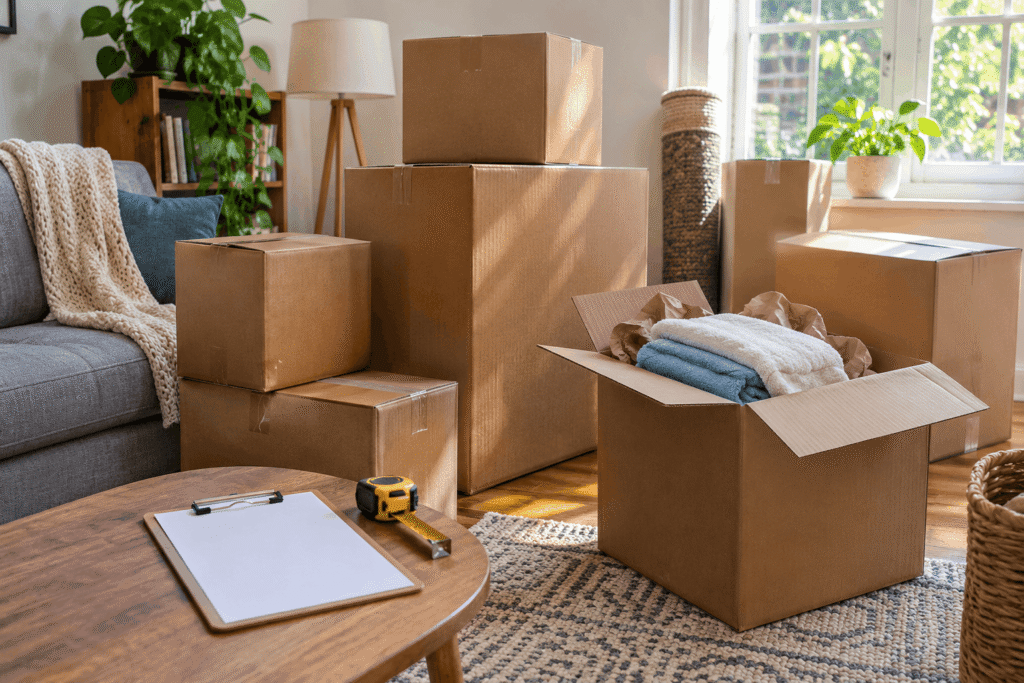
Accurately estimating moving supplies requires counting actual items room by room, matching carton dimensions to item weight, and adding a 10% safety buffer for overlooked items rather than relying solely on home square footage.
Running out of cardboard mid-move—or realizing you bought ten giant cartons that are far too heavy to lift—is one of the most common headaches on moving day. Generic “boxes per bedroom” rules often fail because a minimalist spare room requires far fewer supplies than a space packed with hardcover books, hobby gear, and seasonal storage.
Step 1: Audit Your Contents, Not Your Floor Plan
Two homes with identical layouts can require drastically different amounts of packing material. Before purchasing a single roll of tape, inspect every storage zone in your home rather than judging a room from the doorway. Be sure to check overlooked areas like medicine cabinets, hallway closets, under-stair storage, attics, sheds, and garages.
The 3-Category Sorting Method
- Standard Box Items: Everyday goods like folded clothing, pantry staples, books, and kitchenware.
- Specialty Protection Items: Fragile or oversized pieces like flat-screen TVs, large mirrors, framed artwork, and hanging garments.
- Non-Boxed Items: Furniture, items you plan to donate or discard, and personal suitcases or duffel bags you intend to pack.
Pro Tip: Declutter before counting. Paying for boxes, tape, and moving labor for items you plan to throw away is an easy expense to avoid.
Step 2: Build a Room-by-Room Tracking Sheet
Create a simple checklist with one row for each room and four columns: Small, Medium, Large, and Specialty. Jot down rough estimates as you walk through—you can easily tweak the numbers once packing begins.
- Kitchen: Picture everything inside your cabinets spread across the countertops. Wrapped plates and glassware take up much more room than stacked dishes, and awkwardly shaped pots and lids do not always nest neatly. Kitchens almost always need more cartons than expected.
- Bedrooms: Dedicate suitcases, vacuum bags, and laundry baskets to your wardrobe first—check out our guide on how to pack clothes for moving without boxes to cut down your cardboard count. Subtract those clothes from your estimate, then tally spare bedding and closet linens.
- Home Offices & Kids’ Rooms: While desks and cribs travel on their own, bookshelves, filing cabinets, tangles of cords, toys, and craft bins quickly consume small and medium boxes.
Write a short note beside any uncertain number (for example, “Garage: +3 boxes if keeping camping gear”). If your plans change, you will know exactly which line item to update without recounting the whole house.
Step 3: Match Moving Box Sizes to Weight and Fragility
Buying exclusively large boxes feels efficient until someone tries to hoist one filled with paperbacks and canned goods. Always match box dimensions to the density of the contents inside:
- Small Boxes: Best for dense, heavy items like books, tools, pantry jars, and small appliances so weight stays manageable.
- Medium Boxes: The workhorse size for pots, pans, toys, and general household clutter.
- Large Boxes: Strictly for bulky, lightweight items such as comforters, throw pillows, winter coats, and bath towels.
- Specialty Boxes: Dedicated dish packs, wardrobe boxes, and telescoping picture or TV cartons for fragile, awkward items.
For a detailed breakdown of standard dimensions and weight capacities, review The Home Depot’s guide on the best boxes for moving.
Example: Moving Box Breakdown for a 1-Bedroom Apartment
To see how a room-by-room count works in practice, consider a moderately furnished 1-bedroom apartment where the resident uses personal luggage for clothes and moves furniture separately:
| Room / Area | Small | Medium | Large | Specialty | Room Total |
|---|---|---|---|---|---|
| Kitchen | 4 | 4 | 0 | 2 (Dish Packs) | 10 |
| Bedroom | 2 | 4 | 2 | 0 | 8 |
| Living Room | 2 | 2 | 1 | 0 | 5 |
| Bathroom | 1 | 1 | 0 | 0 | 2 |
| Hallway & Closets | 2 | 1 | 0 | 0 | 3 |
| Base Total | 11 | 12 | 3 | 2 | 28 Boxes |
Step 4: Add a 10% Safety Buffer (And Check Fit)
Even a thorough walk-through will miss a few random items tucked in the back of a cupboard. Adding a 10% reserve buffer gives you breathing room without leaving you buried in leftover cardboard. Using the 28-box example above, a 10% buffer adds roughly 3 extra boxes (1 small and 2 medium), bringing the final shopping list to 31 boxes.
If you live near a supply store and are packing gradually, buy your base list first and pick up extras only if needed. If you are ordering in bulk or working on a tight deadline, buy the 10% buffer upfront—just verify the retailer’s return policy on unused, flattened cartons.
Remember secondary supplies like heavy-duty packing tape, markers, labels, and cushioning wrap. If you are packing oddly shaped electronics or heirlooms, measure the item plus its padding and use a box size calculator like CartonVista’s tool to confirm a snug fit before purchasing specialty cartons.
Step 5: Track Progress and Pack an “Open First” Kit
Treat your initial checklist as a living document. As you seal each carton, update your tally and label both the top and side with the destination room and a brief content summary (such as “Kitchen 3/10 – Coffee mugs & glassware”). If you have hired movers, notify them right away if your box count jumps significantly, as extra cartons affect truck space and final quotes.
If you are relocating during colder months, review our checklist for moving in winter safely so cold-sensitive items and packed cartons stay protected from snow and moisture. Finally, keep one clearly labeled “Open First” essentials bag—containing medications, phone chargers, keys, pet food, and basic toiletries—completely separate from your moving boxes so you are not tearing through sealed cardboard on your first night.
Frequently Asked Questions
How many moving boxes do I need for a 1-bedroom apartment?
A moderately furnished 1-bedroom apartment typically requires 25 to 35 moving boxes—usually a mix of 10–12 small boxes, 12–14 medium boxes, 3–4 large boxes, and 2 specialty dish packs, assuming you pack clothes in suitcases and move furniture separately.
What size moving boxes should I buy the most of?
Medium moving boxes should make up the largest portion of your supply list. They hold everyday household items, kitchenware, and toys without becoming too heavy to lift safely.
How many extra moving boxes should I buy just in case?
Buy a 10% buffer of extra boxes on top of your room-by-room estimate. For example, if your checklist totals 30 boxes, purchase 3 extra cartons (1 small and 2 medium) to cover overlooked items.

Muhammad Amjad Butt
Founder of HomeKiTips
Muhammad Amjad Butt is the founder of HomeKiTips. He writes practical guides on home repair, maintenance, cleaning and decor. Each guide is built from manufacturer instructions, building standards and current cost data, then turned into clear steps that anyone can follow. For structural work, he always recommends a qualified tradesperson.
You may also like

Computer Associates Santa Clara: From Offices to Homes
Computer Associates Santa Clara once leased offices at Freedom Circle. See how the area is turning into homes, rents in…
How to Pack Clothes for Moving Without Boxes (8 Easy Ways)
Learn how to pack clothes for moving without boxes using suitcases, hanger bags, drawers and vacuum bags. Save money, avoid…

Moving in Winter: Tips for a Safe Move
Moving in winter? Use these expert tips to plan around snow, protect cold-sensitive items, drive safely and keep your family…