How to Bring Potted Plants Indoors for Winter (Safely)
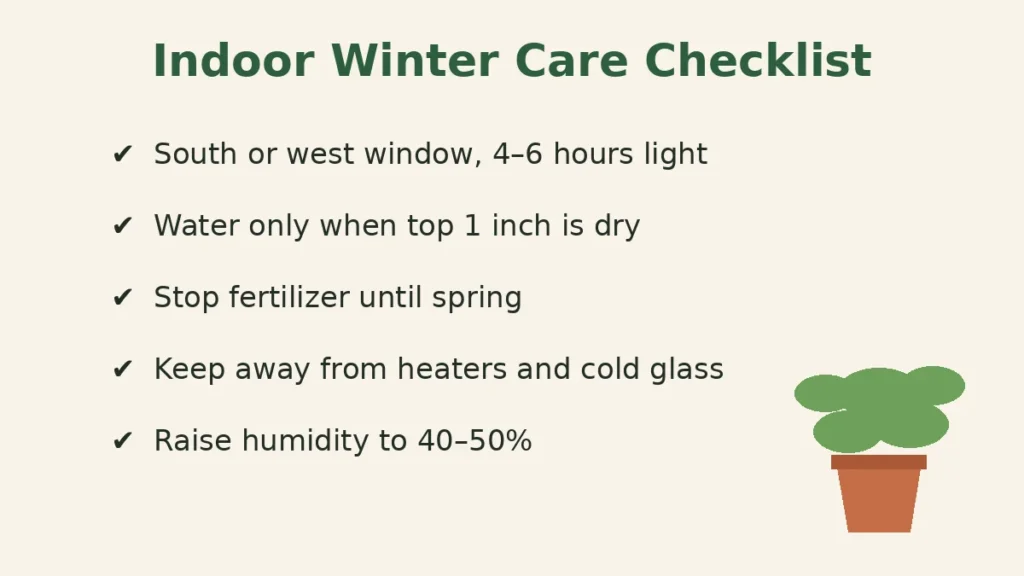
Bring potted plants indoors for winter when night temperatures fall to about 50°F (10°C). Start 1–2 weeks early. Check every plant for pests, rinse the leaves, and move it into shade a little at a time so it gets used to lower light. Once inside, place it in your brightest window, water less, and stop fertilizing until spring.
You carry your big, healthy hibiscus inside on the first cold evening. One week later it has dropped half its leaves, and tiny white bugs are flying around your kitchen window. The plant was healthy before the move, so the cold isn’t what hurt it. The move itself did. This guide shows you how to avoid that.
In this article
- When Should You Bring Potted Plants Indoors?
- Which Plants Need to Come Inside?
- How Do You Debug Plants Before Bringing Them In?
- How Do You Acclimate Plants to Indoor Conditions?
- Where Should You Place Plants Indoors in Winter?
- How Should You Water and Feed Plants Indoors?
- Why Do Plants Drop Leaves After Coming Inside?
- What Mistakes Should You Avoid?
- FAQ
- Start Your Move-In Plan Now
Many houseplants spend summer on a balcony or patio. Moving them back inside is the stressful part. If you bring potted plants indoors for winter at the right time and in the right order, you can keep the same plants for many years and save the cost of buying new ones every spring. The steps below cover timing, a pest check, a short acclimation plan, and care through the winter, with real numbers for each.
When Should You Bring Potted Plants Indoors?
Watch the night temperature, not the daytime high. Iowa State University Extension advises bringing houseplants back indoors once night temperatures dip consistently to around 50°F. The reason is that most common houseplants come from tropical regions and cannot handle cold.
Penn State Extension adds that it is unwise to wait until temperatures actually reach 50°F before you start, because by then cold damage may already have begun.
Here are the temperatures to keep in mind:
- 60°F (16°C) at night: start moving plants into shade to get them ready.
- 50°F (10°C) at night: tropical plants should be inside now.
- 45°F (7°C): many houseplants start to show chill damage, such as dark patches and limp leaves.
- 40°F (4°C): the last safe point for most succulents, according to University of Minnesota Extension.
Plan by the coldest hour of the night, not by the warmest hour of the afternoon.
Real example: In a city where October afternoons reach 68°F but nights drop to 48°F, a pothos left outside “because it still feels warm” can get chill spots within a few nights. A peace lily that came inside two weeks earlier often shows no stress at all.
Which Plants Need to Come Inside?
Not every pot needs a spot on your windowsill. Sort your plants into three groups:
- Must come in: tropical houseplants (pothos, monstera, peace lily, philodendron, spider plants), hibiscus, citrus, mandevilla, and most herbs such as basil.
- Can come in for a second season: geraniums, coleus, begonias and fuchsias. You can also take cuttings instead of moving the whole plant.
- Can stay out: hardy shrubs and perennials rated for your climate zone. Their roots may still need protection, such as grouping the pots against a wall or wrapping them.
Roots in a container are more exposed to cold than roots in the ground, because the soil in a pot freezes much faster. A plant that survives winter in a garden bed may die in a pot in the same yard.
Key insight: A plant that is hardy in the ground is often not hardy in a pot. If you aren’t sure, bring it in or move it next to the house wall.
How Do You Debug Plants Before Bringing Them In?
Pests are the biggest risk of the move. University of Minnesota Extension lists fungus gnats, aphids, spider mites, mealybugs and scale as common pests that come indoors on plants. Indoors there are no natural predators, so pests can spread from one plant to your whole collection.
What is the 5-step pest check?
- Inspect closely: look at leaf undersides, stem joints and the soil surface. Sticky leaves, fine webbing or white cottony spots all mean pests.
- Rinse the foliage: spray the leaves with a garden hose and let them dry completely before moving the plant.
- Soak the pot: put the pot in a bucket of lukewarm water for about 15 minutes to push out insects living in the soil. Skip this for cacti and succulents.
- Treat if needed: use insecticidal soap or neem oil on any plant that had pests, and repeat after 7–10 days to catch any eggs that hatch.
- Quarantine: Iowa State Extension recommends keeping returning plants away from other houseplants for 3 to 4 weeks.
Real example: One aphid-covered basil pot placed next to six healthy houseplants can spread aphids to all of them in about two weeks. With a quarantine shelf in a spare room, the problem stays on one plant.
Quick win this week: Turn over five leaves on every plant you plan to bring in. It takes 10 minutes and finds most pest problems before they get inside.
How Do You Acclimate Plants to Indoor Conditions?
Outdoors, a plant may get 6–10 hours of strong light. A bright window indoors gives far less. A sudden drop in light is the main cause of leaf drop after the move. University of Illinois Extension advises reducing light gradually over about a week by moving plants into shadier spots.
What does a 14-day acclimation plan look like?
- Day 1–3: move pots from full sun into bright shade, for example on the north side of the house.
- Day 4–7: move them into deeper shade, under a tree or on a covered porch.
- Day 8–10: do the full pest check and rinse.
- Day 11–14: bring them inside and place them by your brightest window.
Michigan State University Extension also suggests moving plants indoors before daytime temperatures drop below 60°F. This keeps the temperature change between outside and inside small.
A slow change means less shock. Two weeks of planning can save a whole season of growth.
Where Should You Place Plants Indoors in Winter?
Light is short in winter, so the best spot is the brightest one you have:
- South-facing windows (north-facing in the Southern Hemisphere) give the most light. Citrus, hibiscus and succulents should go here.
- East or west windows suit pothos, philodendron and spider plants.
- Keep plants 12 inches (30 cm) away from heaters, radiators and vents. Hot, dry air burns the edges of leaves.
- Keep leaves from touching cold glass on frosty nights. They can get chill spots.
If your rooms are dark, a simple LED grow light running 10–12 hours a day can stand in for the missing sun. Grouped plants also look great as part of your decor. You can plan their spots with our bedroom decorator tool before you move any pots.
How Should You Water and Feed Plants Indoors?
Most plants grow slowly in winter, so they use less water and almost no fertilizer.
- Water by touch, not by calendar: water only when the top 1 inch (2.5 cm) of soil is dry. For many plants this means once every 7–14 days instead of every 2–3 days in summer.
- Stop fertilizing from late fall until new growth appears in spring. Feeding a resting plant leads to salt buildup and weak, stretched growth.
- Raise humidity: heated homes often fall to 20–30% humidity, while most tropical plants prefer 40–50%. Group plants together, use a pebble tray, or run a small humidifier.
- Don’t repot now: wait until spring, when roots are actively growing.
Real example: A monstera watered on its usual summer schedule of every 3 days, in a cool room in December, often develops yellow lower leaves and root rot within a month. Cutting back to a “finger test” every 10 days usually stops the yellowing.
Why Do Plants Drop Leaves After Coming Inside?
Some leaf drop in the first 2–3 weeks is normal. The plant is getting rid of leaves it grew for strong outdoor light. Ficus trees are well known for this. Common causes are:
- Light shock: the plant went from full sun to dim light too quickly.
- Overwatering: wet, cold soil with less light leads to rot.
- Drafts: cold air from doors, or hot air from vents.
- Hidden pests: spider mites do well in dry indoor air.
As long as new leaves stay firm and green, the plant is adjusting. If the stems turn soft or black, check the roots for rot.
What Mistakes Should You Avoid?
- Waiting for the first frost before moving plants.
- Skipping the pest check because a plant “looks fine.”
- Putting every plant in the same dim corner.
- Keeping the summer watering and feeding schedule.
- Repotting or pruning heavily right after the move.
For outdoor beds and tools, see our Fall Garden Checklist. If you grew herbs to keep bugs away this summer, read whether mosquito repellent plants really work before you bring them in.
FAQ
What is the 50-50 rule for bringing plants inside?
Bring plants inside about 50 days before your first expected frost, or when night temperatures are consistently near 50°F (10°C), whichever comes first.
Can I bring plants inside straight from full sun?
You can, but expect leaf drop. Moving them through shade over 7–14 days first greatly reduces shock.
How long should new plants be quarantined?
Keep them apart from your other houseplants for 3–4 weeks so any hidden pests show up before they spread.
Should I cut back plants before bringing them indoors?
Light trimming of leggy or damaged stems is fine and makes large plants easier to move. Avoid cutting off more than about one-third of the plant.
When can I move plants back outside?
In spring, once night temperatures stay above 50°F (10°C) and frost risk is over. Acclimate them in reverse: shade first, then sun.
Start Your Move-In Plan Now
- Check your 10-day forecast for night temperatures.
- List every pot and mark it “must come in,” “optional” or “can stay out.”
- Move tropical plants into shade today.
- Inspect, rinse and soak each plant within the next week.
- Set up a quarantine spot for 3–4 weeks.
- Place plants by your brightest windows, away from heaters.
- Switch to finger-test watering and stop fertilizer until spring.
When you bring potted plants indoors for winter the right way, they reach spring healthy and ready to grow again. Start this week.

Muhammad Amjad Butt
Founder of HomeKiTips
Muhammad Amjad Butt is the founder of HomeKiTips. He writes practical guides on home repair, maintenance, cleaning and decor. Each guide is built from manufacturer instructions, building standards and current cost data, then turned into clear steps that anyone can follow. For structural work, he always recommends a qualified tradesperson.
You may also like
Small Balcony Garden Ideas for Apartments: Zone-by-Zone Guide
Small balcony garden ideas for apartments, sorted by zone: railing, wall, ceiling and corner. Includes a sunlight test, 3 starter…
Do Spider Plants Like to Be Root Bound? (When to Repot and When to Wait)
Spider plants tolerate being root bound and often thrive snug. Learn the signs it is time to repot, healthy vs…

Do Mosquito Repellent Plants Really Work? The Truth
Do mosquito repellent plants really work? Science says a potted plant gives little protection. Learn which plants help a bit…