The Easy Way to Remove Hard Water Stains from Bathroom Tiles and Glass
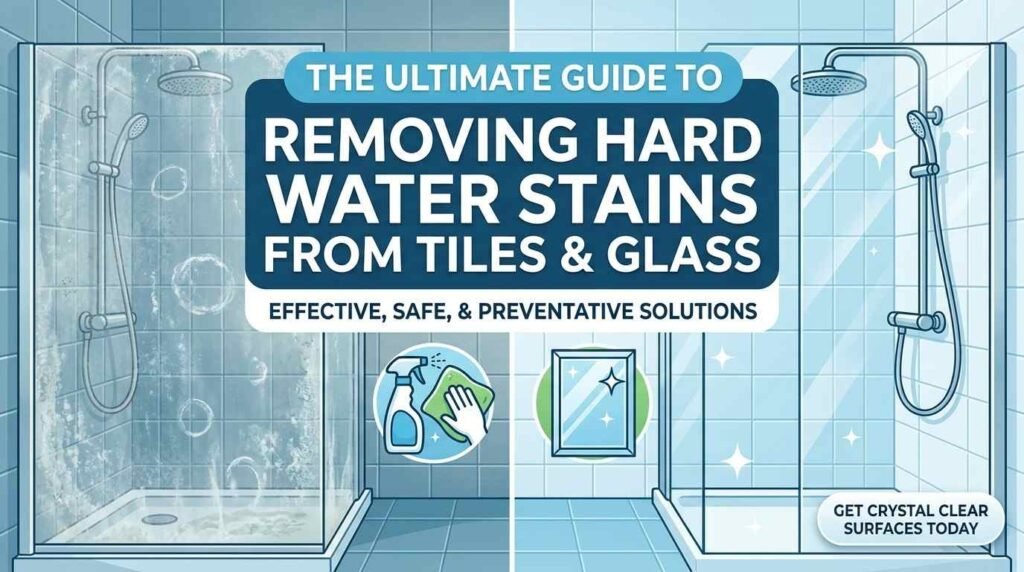
The easiest way to remove hard water stains from bathroom tiles and glass is to spray them with a 50/50 mix of white vinegar and warm water, leave it for 10 to 15 minutes, then scrub gently and rinse. For thick buildup, follow with a baking soda paste. To stop the stains coming back, squeegee the glass and wipe the tiles dry after every shower.
Those chalky white spots on your shower screen and the dull, cloudy film on your tiles are not dirt. They are minerals left behind when water dries. Scrubbing harder with regular bathroom spray rarely works, because ordinary cleaners are not designed to dissolve minerals.
This guide shows you how to identify the stain, choose a cleaner that is safe for your surface, and remove even old limescale without scratching tiles or damaging glass.
What Causes Hard Water Stains on Tiles and Glass?
Hard water contains dissolved calcium and magnesium. Every time a drop of water dries on a surface, those minerals stay behind. One drop leaves a tiny white ring. Hundreds of showers later, those rings merge into a hazy layer called limescale.
Bathrooms suffer the most because surfaces get wet several times a day and often dry slowly. Glass shows the stains first, since every spot is visible against a clear surface. Glossy tiles come next, followed by grout lines, taps and shower heads.
Hard Water Stain or Soap Scum? A 1-Minute Test
Before you start cleaning, check what you are dealing with. Hard water stains and soap scum look similar but need different treatment.
- Put a few drops of white vinegar on the stain.
- Wait one minute, then rub with your finger.
- If the spot softens or disappears, it is a mineral (hard water) stain.
- If it feels greasy and stays put, it is mostly soap scum. Use warm water and dish soap first, then treat any minerals left underneath.
Most bathrooms have both, layered together. Removing the soap scum first lets the vinegar reach the minerals much faster.
What You Need
- White vinegar (5% acidity is standard)
- Baking soda
- A spray bottle
- Non-scratch sponge and a soft nylon brush
- An old toothbrush for grout and corners
- Microfiber cloths and a squeegee
- Rubber gloves
- Lemon juice (optional, for taps)
How to Remove Hard Water Stains from Bathroom Tiles
- Rinse first. Run warm water over the tiles to loosen surface grime.
- Spray the vinegar mix. Fill a spray bottle with equal parts white vinegar and warm water. Spray the stained area until it is fully wet.
- Let it work. Leave it for 10 to 15 minutes. Do not let it dry; spray again if needed. This dwell time does most of the work for you.
- Scrub gently. Use a non-scratch sponge in small circles. Use the toothbrush along grout lines.
- Treat stubborn patches. Mix 3 parts baking soda with 1 part water into a thick paste. Spread it on the remaining stains, leave for 10 minutes, then scrub and rinse.
- Rinse and dry. Rinse with clean water and dry the tiles with a microfiber cloth so no new spots form.
Important: Do not use vinegar, lemon or any acid on marble, travertine, limestone or other natural stone. Acid etches stone and leaves permanent dull marks. Use a pH-neutral stone cleaner instead.
How to Remove Hard Water Stains from Shower Glass
- Warm the glass. Run the shower for a minute. Warm glass helps the cleaner act faster.
- Spray undiluted vinegar. For glass, plain white vinegar works better than a diluted mix. Spray the whole panel.
- Cover vertical areas. Vinegar runs off glass quickly. Press paper towels soaked in vinegar onto the worst spots so they stay wet.
- Wait 15 to 20 minutes, then remove the towels.
- Scrub with baking soda. Sprinkle baking soda on a damp non-scratch sponge and wipe the glass in overlapping strokes.
- Rinse and squeegee. Rinse well, then squeegee from top to bottom and buff with a dry microfiber cloth.
For very heavy buildup, repeat the process once more rather than scrubbing harder. Abrasive pads and steel wool will scratch glass permanently.
Still Cloudy? Your Glass May Be Etched
If the glass looks clear while wet but turns cloudy again once it dries, even after a thorough clean, the minerals may have etched the surface. Etching is damage to the glass itself, not a stain on top of it.
No cleaner can wash etching away. A glass polishing compound such as cerium oxide can reduce light etching. For deep etching, replacing the panel is often the only fix. This is why removing hard water stains early matters so much.
Which Cleaner Is Safe for Your Surface?
| Surface | Vinegar | Baking Soda Paste | Best Option |
|---|---|---|---|
| Glazed ceramic tiles | Safe | Safe | Vinegar spray, then paste if needed |
| Porcelain tiles | Safe | Safe | Vinegar spray |
| Glass shower doors | Safe | Safe (gently) | Undiluted vinegar with soaked towels |
| Cement-based grout | Short contact only | Safe | Baking soda paste and toothbrush |
| Marble, travertine, natural stone | Not safe | Use with care | pH-neutral stone cleaner |
| Chrome taps | Safe | Safe | Vinegar-soaked cloth wrapped around the tap |
| Brass or matte black fixtures | Diluted only | Avoid | Mild soap and water |
How to Clean Hard Water Stains from Grout
Grout is porous, so minerals settle deep inside it. Long soaks in vinegar can weaken cement-based grout over time, so keep acid contact short.
Apply baking soda paste along the grout lines, scrub with a toothbrush, then mist lightly with vinegar for one or two minutes only. Rinse well. Once the grout is clean and fully dry, apply a grout sealer. Sealed grout absorbs far fewer minerals.
Removing Limescale from Taps and Shower Heads
Soak a cloth in white vinegar and wrap it around the tap, or fill a small plastic bag with vinegar and tie it over the shower head with a rubber band. Leave it for 30 to 60 minutes, then scrub with an old toothbrush and rinse. Rubbing a cut lemon over chrome also works well for light spots.
Safety Rules You Should Not Skip
- Never mix vinegar with bleach. Together they release toxic chlorine gas.
- Do not mix vinegar and hydrogen peroxide in the same container. Use them separately and rinse between them.
- Open a window or run the extractor fan while cleaning.
- Wear gloves; vinegar and limescale removers can irritate skin.
- Test any cleaner on a small hidden spot first, especially on coloured grout or special finishes.
How to Prevent Hard Water Stains from Coming Back
Cleaning removes the minerals that are already there. Prevention stops new ones from building up, and it takes less than a minute a day.
- Squeegee after every shower. This one habit prevents most glass stains.
- Wipe tiles dry around the shower and basin with a microfiber cloth.
- Improve ventilation. Run the fan for 15 to 20 minutes after showering so surfaces dry faster.
- Use a water-repellent glass coating. It makes water bead and slide off instead of drying in spots.
- Do a weekly vinegar mist. A light spray once a week stops thin films from hardening.
- Treat the water. A shower filter or whole-house water softener reduces the minerals that cause stains in the first place.
Simple Weekly Routine
| How Often | Task | Time Needed |
|---|---|---|
| After every shower | Squeegee the glass and wipe wet tiles | 1 minute |
| Once a week | Vinegar spray on glass and tiles, then rinse | 10 minutes |
| Once a month | Baking soda scrub on grout; descale taps and shower head | 20 to 30 minutes |
| Once a year | Reseal grout and reapply glass coating | 1 hour |
Frequently Asked Questions
What is the best homemade hard water stain remover?
A 50/50 mix of white vinegar and warm water is the best homemade remover for tiles and glass. For thick limescale, follow it with a paste of baking soda and water.
How long should vinegar sit on hard water stains?
Leave it for 10 to 15 minutes on tiles and 15 to 20 minutes on glass. Keep the surface wet during that time so the vinegar can dissolve the minerals.
Can vinegar damage bathroom tiles?
Vinegar is safe on glazed ceramic and porcelain tiles. It can damage marble and other natural stone, and long soaks can weaken cement grout.
Why do hard water stains keep coming back?
Every time hard water dries, it leaves new minerals behind. Drying surfaces after each shower, improving ventilation or softening your water is the only way to stop them returning.
Can I use a magic eraser on shower glass?
Yes, a melamine sponge can remove light spots on glass when used with water and light pressure. Avoid it on coated or tinted glass, as it can wear the coating away.
How do I know if my shower glass is etched?
If the glass looks clear when wet but cloudy when dry, even after cleaning, it is likely etched. Etching is surface damage and cannot be removed with cleaners.
Is hard water bad for my bathroom?
Hard water is not harmful to your health, but it causes limescale on glass, tiles, taps and shower heads, and can reduce water flow over time.
Final Thoughts
Hard water stains look stubborn, but they give way to a simple routine: vinegar to dissolve, baking soda to lift, and a squeegee to prevent. Match the cleaner to your surface, give it time to work, and dry everything after each shower. With a few minutes a week, your tiles and glass can stay clear and shiny all year.

Muhammad Amjad Butt
Founder of HomeKiTips
Muhammad Amjad Butt is the founder of HomeKiTips. He writes practical guides on home repair, maintenance, cleaning and decor. Each guide is built from manufacturer instructions, building standards and current cost data, then turned into clear steps that anyone can follow. For structural work, he always recommends a qualified tradesperson.
You may also like
How Much Baking Soda for Trash Can Odor Should You Use?
Use 2 tbsp for small bins, ½ cup for kitchen bins, and 1–1½ cups for outdoor bins. Get exact baking…
How to Clean a Washing Machine
Learn how to clean a washing machine step by step: door seal, detergent drawer, tub clean cycle and drain filter,…
How to Clean a Mattress at Home
Learn how to clean a mattress at home in 6 steps: vacuum, treat stains, deodorise with baking soda and keep…
Questions and tips from readers (3)