How Much Baking Soda for Trash Can Odor Should You Use?
 By
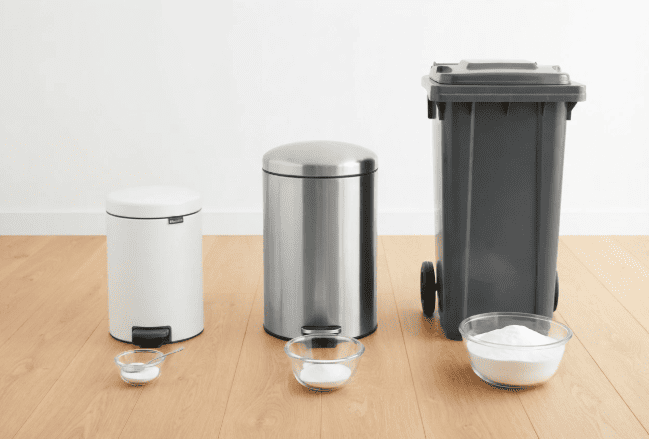
To control trash can odor with baking soda, use 2 tablespoons in a small 8L–12L bin, ½ cup in a 30L–50L kitchen bin, and 1 to 1½ cups in a 120L+ outdoor bin.
Most people either use too little baking soda or dump half a box into the bin and wonder why it still smells. We tested different amounts across bathroom, kitchen, and outdoor bins in our own homes, and the amount matters more than you would think.
This guide gives you exact measurements, the mistakes that make odors worse, and a simple weekly routine.
How Much Baking Soda Should I Put in a Trash Can?
The right amount depends on your bin’s capacity. A bigger bin has more air and more waste, so it needs more baking soda. More is not always better, though, as you will see below.
Use the chart in the next section as your starting point. We found these amounts held up well in real daily use.
What Is the Right Baking Soda Amount for Each Bin Size?
| Bin Type | Capacity | Baking Soda Amount | Replace Every |
|---|---|---|---|
| Small bathroom bin | 8L–12L | 2 tablespoons | 7 days |
| Standard kitchen bin | 30L–50L | ½ cup | 3–5 days |
| Large outdoor wheelie bin | 120L+ | 1 to 1½ cups | 7–14 days (every 7 days in hot weather) |
Kitchen bins need the shortest replacement window because food scraps and moisture use up baking soda fastest.
Can Too Much Baking Soda Make Trash Smell Worse?
Yes. This is the mistake we see most often. It is easy to assume that more baking soda means more odor control.
Baking soda is mildly alkaline. When you pile on too much in a damp bin, the environment can climb above pH 9.0. At that level, the ammonium from rotting food converts more easily into ammonia gas, which is the sharp, stinging smell you notice when you lift the lid.
So an over-applied bin can smell worse than a lightly treated one. Stick to the measurements in the chart and add more only if the bin is truly large.
Why Does Baking Soda Need to Be Spread Evenly?
Baking soda only works where it touches something. It neutralizes acidic gases and liquids by direct contact.
If you dump it in one corner, most of it sits in a pile and the powder underneath never reacts. The rest of the bin gets no protection at all.
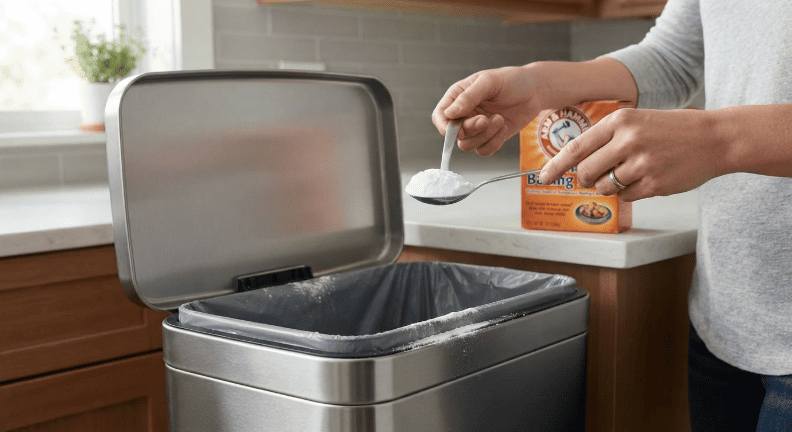
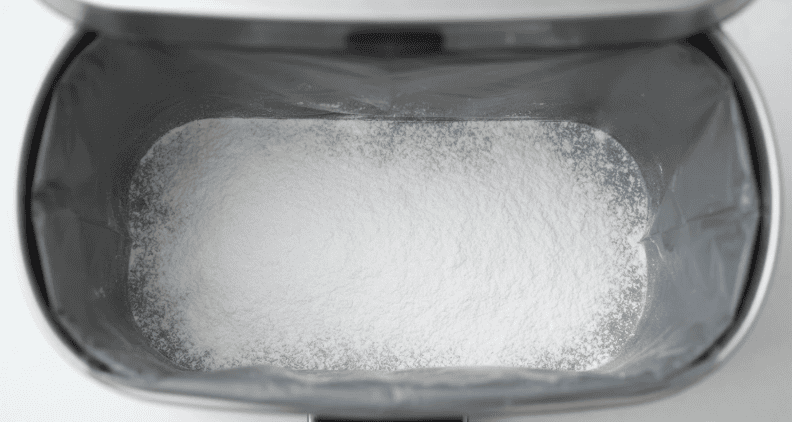
Shake it across the base in a thin, even layer, like lightly dusting a baking tray with flour. The whole bottom surface should be covered, with no thick piles.
Is Baking Soda Safe in Metal and Stainless Steel Trash Cans?
Not when sprinkled loose. Never pour baking soda directly onto bare metal or stainless steel bins.
Baking soda draws in moisture. That trapped moisture sits against the metal and can cause corrosion and pitting over time.
Use one of these safer options instead:
- Coffee filter pouch: Put 2–4 tablespoons in a coffee filter, fold it closed, and tuck it in the corner or tape it under the lid. It stays breathable and keeps powder off the metal.
- Small open jar: Fill a small jar with baking soda and set it at the bottom of the bin or on the lid’s inner ledge.
Should Baking Soda Go Inside the Bag or Under the Bag?
It depends on what is going in the bin.
- Inside the liner (2 tablespoons): Use this when you are throwing out wet food scraps, meat packaging, or anything leaky. Sprinkle it right over the wet waste so it makes direct contact.
- Under the liner (½ cup): Use this for general odor control. Spread it across the dry base of a 30L–50L bin, then fit the bag on top.
You can do both in a busy kitchen. For the best results, combine this habit with our 15-minute kitchen closing shift routine so wet food scraps never sit overnight.
How Do You Know When Baking Soda Stops Working?
Baking soda has a limit. Once it has absorbed enough moisture and odor, it stops helping. Replace it when you notice any of these:
- It looks clumpy or damp.
- It feels hard or has formed a crust.
- The smell is coming back.
- You have reached the 3–5 day mark in a kitchen bin.
When you replace it, wipe out the old powder first. Do not add fresh baking soda on top of old, clumpy baking soda.
What Mistakes Should You Avoid When Using Baking Soda in a Trash Can?
Mixing baking soda and vinegar at the same time
Baking soda and vinegar fizz when combined, and it looks like cleaning. In reality, they cancel each other out and leave you with mostly salt water.
Do it in order instead. Clean the bin with vinegar first, rinse if needed, and dry it completely. Then add baking soda to the dry bin.
If your bin needs a full reset alongside your sink and counters, follow our step-by-step kitchen deep cleaning checklist before adding fresh powder.
Adding essential oils around pets
Some people add drops of essential oil to baking soda for a fresh scent. If you have cats or dogs, skip it. Tea tree, citrus, and peppermint oils can be toxic to pets, and they can sniff around or get into the bin.
If you want a scent, leave the lid open to air out the bin after cleaning, or use a pet-safe option.
Wrong Way vs. Right Way
| Wrong Way | Right Way | Why It Matters |
|---|---|---|
| Pouring a pile into one corner | Spreading a thin, even layer across the base | Baking soda only works on what it touches |
| Adding a huge amount “to be safe” | Using the measured amount for your bin size | Too much can push pH above 9.0 and increase ammonia smell |
| Sprinkling loose powder on stainless steel | Using a coffee filter pouch or open jar | Prevents moisture-related corrosion and pitting |
| Mixing vinegar and baking soda together | Vinegar first, dry fully, then baking soda | Together they neutralize each other into salt water |
| Topping up old, clumpy baking soda | Wiping it out and starting fresh | Clumpy baking soda is already used up |
| Using essential oils around pets | Skipping oils or using pet-safe options | Tea tree, citrus, and peppermint can be toxic to cats and dogs |
Weekly Trash Can Odor Prevention Checklist
Copy this into your notes app or print it and stick it inside a cupboard door.
WEEKLY TRASH CAN ODOR PREVENTION CHECKLIST

Take out the trash before it overflows
Remove the liner and check the base for leaks
Wipe out old baking soda (do not top up clumpy powder)
Clean the bin with vinegar and a cloth
Dry the bin completely
Add fresh baking soda in a thin, even layer:
Bathroom bin (8L-12L): 2 tablespoons
Kitchen bin (30L-50L): 1/2 cup
Outdoor bin (120L+): 1 to 1 1/2 cups
Metal or stainless steel bin? Use a coffee filter pouch or open jar instead
Wet food scraps today? Add 2 tablespoons inside the liner
Kitchen bin: replace baking soda every 3-5 days
Pets at home? Skip essential oils
Frequently Asked Questions
Can I put baking soda directly in the trash can?
Yes, in plastic bins. Spread a thin, even layer across the dry base before adding the liner. For metal or stainless steel bins, use a coffee filter pouch or an open jar instead, so moisture does not cause corrosion.
How often should I change baking soda in the trash can?
Every 3 to 5 days in a kitchen bin, about every 7 days in a small bathroom bin, and every 1 to 2 weeks in an outdoor bin. Replace it sooner if it turns clumpy or hard.
Can I mix baking soda and vinegar in my trash can?
No. Together they fizz and cancel each other out into mostly salt water. Clean with vinegar first, dry the bin completely, then add baking soda.
Is baking soda with essential oils safe around pets?
Plain baking soda in small amounts, kept out of reach, is generally fine. Essential oils like tea tree, citrus, and peppermint can be toxic to cats and dogs, so skip them if you have pets.

David Hansanny
David Hansanny is a professional content writer and publisher with over 6 years of experience in practical home care and improvement. At HomeKiTips, he shares easy, budget-friendly guides across cleaning, kitchen organization, electricity and water saving, pest control, gardening, child and elder safety, moving, and everyday home repairs. His focus is on tested, step-by-step solutions that help homeowners maintain a safe, efficient, and comfortable living space.
You may also like
How to Clean a Washing Machine
Learn how to clean a washing machine step by step: door seal, detergent drawer, tub clean cycle and drain filter,…
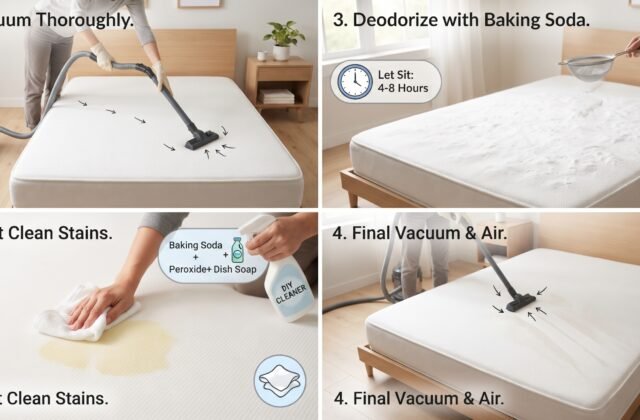
How to Clean a Mattress at Home
Learn how to clean a mattress at home in 6 steps: vacuum, treat stains, deodorise with baking soda and keep…
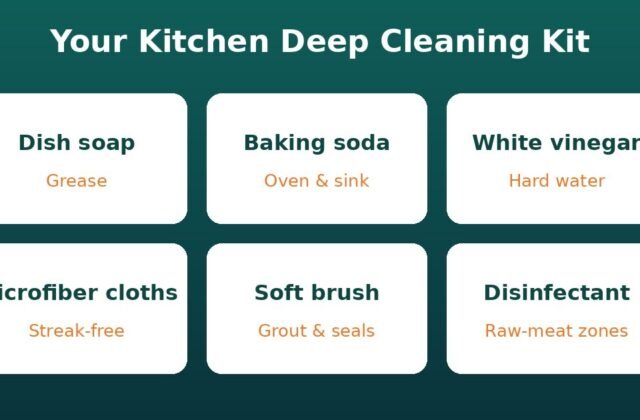
Kitchen Deep Cleaning Checklist: Fridge to Sink (Step by Step)
Deep clean your kitchen in 3–4 hours with this step-by-step checklist. Covers the fridge, oven, sink and floors, plus a…