Why Your Electricity Bill Is Rising in 2026 (and 12 Ways to Cut It)
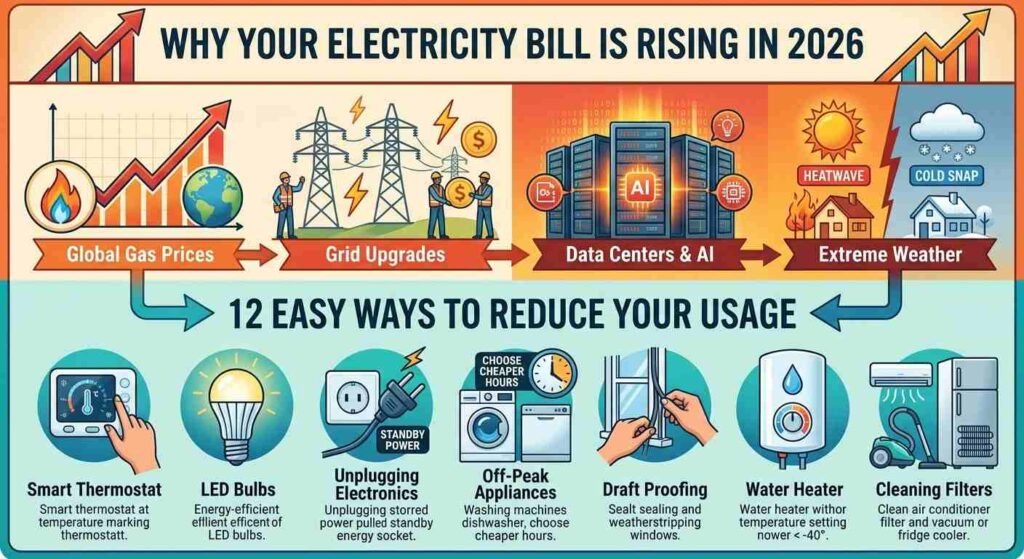
Quick Answer: Your electric bill is so high in 2026 for two reasons: power itself costs more, and most homes waste more electricity than they realise. Prices are rising because of higher natural gas costs, expensive grid upgrades, extreme weather and fast-growing demand from data centers. At home, standby power, old appliances, peak-hour usage and poor insulation push the bill even higher. You cannot control electricity prices, but you can control how much you use and when you use it. The 12 tips in this guide can cut a typical bill by 10 to 30 percent.
If you opened your latest electricity bill and felt a shock, you are not alone. Households around the world are paying more for power this year, even when they feel they are using the same amount. The good news is that a rising bill is not something you have to simply accept. Once you understand what is driving the cost, you can take small, smart steps that add up to real savings every month.
Are Electricity Prices Really Rising in 2026?
Yes, and the increase is showing up in many countries at once. In the United States, the Energy Information Administration expects the average home to pay about 18.2 cents per kilowatt-hour (kWh) in 2026, nearly 5 percent more than in 2025. In the UK, the energy price cap rose by 4 percent from October 2026, taking a typical dual-fuel household to £1,723 a year. Similar increases are being reported across Europe, Australia and parts of Asia.
In other words, even if your usage stays exactly the same, your bill is likely to grow. That is why reducing waste matters more now than ever.
Why Is My Electric Bill So High? 6 Main Reasons
1. Higher Fuel Costs
Natural gas is still used to generate a large share of the world’s electricity, and in many markets it sets the price of power. When global gas prices jump because of conflicts, supply problems or cold winters, electricity prices follow. Ofgem, the UK energy regulator, named volatile global gas markets as the main driver of its latest price rise.
2. Grid Upgrades and Repairs
Much of the world’s power grid is old. Utilities are spending heavily on new power lines, substations and storm-proofing to keep the lights on. These costs are usually passed on to customers through higher rates and fixed charges on your bill.
3. Data Centers and AI
Data centers that power AI tools, cloud storage and streaming use enormous amounts of electricity. Energy analysts say they are not the main cause of today’s price rises, but their fast-growing demand could push prices higher in some regions unless new power supply is built quickly. It is a real factor, just not the whole story.
4. Extreme Weather
Hotter summers and sharper cold snaps mean air conditioners and heaters run longer. Heating and cooling are already the biggest energy users in most homes, so a tough season can raise your bill even when rates do not change.
5. Tiered and Peak-Hour Rates
Many utilities now charge more per unit once you pass a certain usage level, or charge more during busy hours, usually late afternoon and early evening. If your household is home, cooking and running appliances at that time, you pay the highest price for every unit.
6. Hidden Waste Inside Your Home
This is the part you can fix. Devices left on standby, old fridges, dirty air filters, leaky windows and inefficient lighting quietly waste electricity every hour of the day. Research from Lawrence Berkeley National Laboratory shows that standby power alone can make up as much as 10 percent of a home’s electricity use.
Why Is My Electric Bill Suddenly Higher Than Usual?
If your bill jumped from one month to the next, check these common causes before anything else:
- Seasonal use: heating, cooling or longer lighting hours in winter.
- A rate change: your fixed-rate plan may have ended or your utility may have raised prices.
- Estimated readings: if the meter was not read, the bill may be a guess. Submit a real reading.
- More people at home: guests, work from home, or someone new moving in.
- A faulty appliance: a fridge with a worn door seal, a stuck water heater element or a pool pump running nonstop can quietly double your use.
- A longer billing period: some bills cover 33 or 35 days instead of 30.
How to Read Your Electricity Bill
Before you start saving, spend five minutes reading your bill properly. It tells you exactly where your money goes.
- Compare kWh, not just the total. If your units used went up, the problem is usage. If units stayed the same but the bill rose, the problem is your rate.
- Look for peak charges. A large peak-hour line means shifting usage to cheaper hours will save money quickly.
- Check fixed charges. These are paid no matter how little you use, so they are a good reason to compare plans.
- Find your rate plan name. You will need it to compare tariffs with other suppliers.
12 Ways to Lower Your Electric Bill
Start with the free changes first. They cost nothing and many take less than a minute. Then move on to low-cost upgrades that pay for themselves within months.
1. Adjust Your Thermostat by a Few Degrees
Heating and cooling make up the largest part of most bills. The U.S. Department of Energy says you can save up to 10 percent a year by turning your thermostat back 7 to 10°F (about 4 to 6°C) for eight hours a day, such as while you sleep or are at work. In summer, set the AC to around 24 to 26°C (75 to 78°F) and use fans to feel cooler. Every degree counts.
2. Stop Standby (Phantom) Power
TVs, game consoles, set-top boxes, chargers, microwaves and computers keep drawing power even when switched off. Plug groups of devices into a power strip and switch the strip off at night. A quick test: walk around your home in the dark and count the glowing lights. Each one is costing you money.
3. Run Big Appliances During Off-Peak Hours
If your utility uses time-of-use pricing, the same washing machine cycle can cost much less late at night than at 6 pm. Shift your dishwasher, washing machine, dryer, iron and EV charging to off-peak hours.
Peak hours differ by country and utility, so check your own provider’s times. Most programmable appliances have a delay-start button that makes this effortless.
4. Wash Clothes in Cold Water
Most of the energy a washing machine uses goes into heating water, not spinning the drum. Modern detergents work well in cold water for everyday loads. Save hot washes for bedding, towels and heavily soiled clothes. Also, run full loads and choose a high spin speed so clothes dry faster.
5. Lower Your Water Heater Temperature
Many electric water heaters are set higher than needed. Setting yours to about 49 to 50°C (120°F) keeps water comfortable while cutting waste and reducing the risk of scalding. Insulating the first few metres of hot water pipe also helps. If you live in a hard water area, scale build-up makes heaters work harder, and the same minerals cause the marks covered in our guide to removing hard water stains.
6. Compare Your Electricity Plan or Tariff
In many places you can switch suppliers or plans. A cheaper fixed rate, a time-of-use plan that suits your routine, or a plan with a lower daily charge can save money without changing a single habit. Check comparison sites or your utility’s website at least once a year.
7. Clean Filters, Vents and Fridge Coils
A dirty AC or heat pump filter makes the system work harder and use more power. Clean or replace filters every one to three months during heavy use. Dust on the coils behind or under your fridge has the same effect, so vacuum them twice a year. Our tips on cleaning grease from kitchen appliances help keep everything running efficiently.
8. Switch Every Bulb to LED
LED bulbs use at least 75 percent less energy than old incandescent bulbs and last many times longer. Start with the lights you use most, such as the kitchen, living room and outdoor lights. Add motion sensors outside and in hallways so lights never stay on in empty spaces.
9. Seal Drafts and Gaps
Cold air in winter and hot air in summer leak through gaps around doors, windows and electrical outlets. Weatherstripping, door sweeps and thick curtains are cheap and easy to fit. Closing curtains on sunny summer afternoons and opening them on sunny winter days can noticeably reduce heating and cooling needs.
10. Use a Smart Thermostat and Smart Plugs
A smart thermostat learns your schedule and avoids heating or cooling an empty house. Smart plugs let you schedule devices to switch off automatically and show how much power each device uses. Together, they turn good habits into automatic ones.
11. Track Your Usage With an Energy Monitor
You cannot cut what you cannot see. Many utilities offer free apps that show hourly use from your smart meter. A plug-in or whole-home energy monitor goes further and shows which appliances are the biggest energy users. Many people discover one old freezer or heater is responsible for a large part of their bill.
12. Replace Old, Inefficient Appliances
Fridges, freezers, air conditioners and dryers that are more than 10 to 15 years old often use far more electricity than modern models. When it is time to replace them, choose energy-efficient models with a high efficiency label, such as Energy Star in the US or an A-rated product on the UK and EU energy label. According to the US Environmental Protection Agency, Energy Star appliances use 10 to 50 percent less energy than standard models.
Quick Savings Checklist
| Action | Cost | Time Needed | Savings Potential |
|---|---|---|---|
| Adjust thermostat | Free | 1 minute | High |
| Switch off standby devices | Free | Daily habit | Medium |
| Use off-peak hours | Free | Habit | Medium to High |
| Cold water washing | Free | Habit | Medium |
| Lower water heater temperature | Free | 10 minutes | Medium |
| Switch to LED bulbs | Low | 1 hour | Medium |
| Seal drafts | Low | Weekend | Medium |
| Smart thermostat or plugs | Medium | 1 hour | Medium to High |
| Upgrade old appliances | Higher | When replacing | High |
Is Solar or a Battery Worth It?
If you own your home and get good sunshine, rooftop solar can protect you from future price rises because you produce part of your own power. Battery storage lets you use cheap or solar power during expensive peak hours. For renters and flat owners, small plug-in balcony solar panels are becoming legal and popular in more countries. These options cost more upfront, so do the free and low-cost steps first. A lower baseline usage also means you need a smaller, cheaper system later.
Frequently Asked Questions
Why is my electric bill so high when I am not using more electricity?
Your rate has probably increased, your fixed-rate plan may have ended, or your bill may include an estimated reading. Compare the kWh used with the same month last year. If usage is similar but the bill is higher, the cause is price, not your habits.
Does unplugging appliances really save money?
Yes. Many devices draw standby power around the clock. Unplugging them or using a switched power strip can reduce a meaningful part of your bill, especially in homes with lots of electronics.
What uses the most electricity in a home?
Heating and cooling usually use the most, followed by water heating, refrigeration, laundry, cooking, lighting and electronics. Electric heaters, air conditioners and water heaters are often the biggest single items.
What is the cheapest time to use electricity?
On time-of-use plans, the cheapest hours are usually late at night and early morning, and often weekends. Peak hours are typically late afternoon to evening. Your utility’s website lists the exact times.
Why did my electric bill double?
A doubled bill usually points to a seasonal heater or AC, a faulty appliance, an estimated reading being corrected, or a billing period that covers more days. If none of these explain it, ask your utility to check your meter.
Will electricity prices go down in 2027?
Most forecasts expect prices to stay high or keep rising slowly because grid investment and demand are both growing. Lowering your own usage is the most reliable way to protect your household budget.
Final Thoughts
Electricity is getting more expensive in 2026 because of fuel prices, grid costs, extreme weather and rising demand, and none of those are likely to disappear soon. What you can control is the waste inside your own home. Start today with the free steps: adjust your thermostat, switch off standby devices, wash in cold water and move big jobs to off-peak hours. Then add LEDs, draft sealing and smarter controls. Small changes made together can cut your bill noticeably every single month, no matter where in the world you live.

Muhammad Amjad Butt
Founder of HomeKiTips
Muhammad Amjad Butt is the founder of HomeKiTips. He writes practical guides on home repair, maintenance, cleaning and decor. Each guide is built from manufacturer instructions, building standards and current cost data, then turned into clear steps that anyone can follow. For structural work, he always recommends a qualified tradesperson.
You may also like
Best Thermostat Temperature to Save Electricity in Winter & Summer (Plus 7 Hacks)
Set 19–20°C (66–68°F) in winter and 24–26°C (75–78°F) in summer. Learn the best thermostat temperature to save electricity, plus 7…
Best Fridge Temperature to Save Electricity (Plus 7 Easy Hacks)
Find the best fridge temperature to save electricity: 4°C fridge, -18°C freezer. See what dial 1–7 means and try 7…

How to Reduce Moisture in Your Home
Learn how to reduce moisture in your home to stop hidden leaks, cockroaches and dust mites, with safe humidity levels…
Questions and tips from readers (4)