How to Make a Bathroom Safe for Elderly Family Members
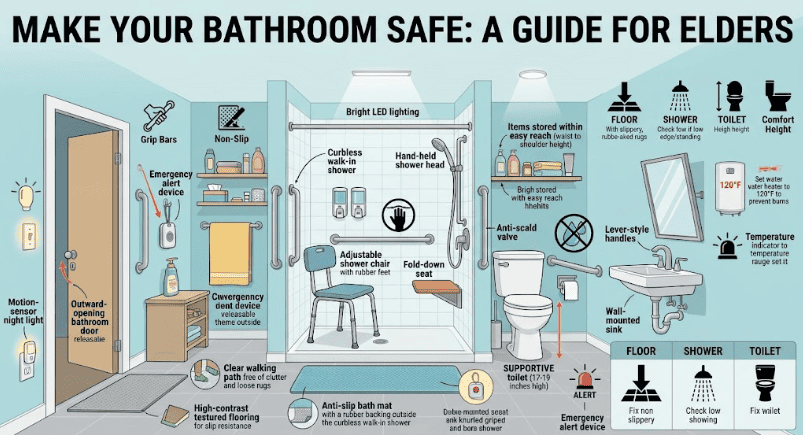
Quick answer: To make a bathroom safe for elderly family members, install grab bars next to the toilet and inside the shower, put non-slip mats or slip-resistant flooring on every wet surface, add a shower chair and a hand-held shower head, raise the toilet seat, improve lighting with night lights, and remove clutter and loose rugs. For long-term safety, replace a high-sided bathtub with a curbless walk-in shower and set the water heater to 120°F (49°C) to prevent scalding.
Key Points at a Glance
- Falls are the biggest risk: wet floors, high tub edges and low toilets cause most bathroom accidents for seniors.
- Grab bars matter most: they must be screwed into wall studs, never replaced by towel racks.
- Sit, don’t stand: a shower chair or transfer bench removes the need to balance on a wet surface.
- Light the path: motion-sensor night lights prevent falls during night-time trips.
- Control the water: anti-scald valves and lever handles protect weak or arthritic hands.
- Start cheap: many of the best fixes cost less than a family dinner; a full remodel can come later.
Why the Bathroom Is the Riskiest Room for Seniors
The bathroom combines everything that makes a fall more likely: hard tiles, water, soap, small spaces and movements that need strength and balance, such as sitting down, standing up and stepping over a tub wall. According to the CDC, more than one in four adults aged 65 and older fall each year, and most of these falls happen at home.
A fall also has a hidden cost. Many older adults who fall once become afraid of falling again. They move less, lose muscle strength and balance, and that weakness raises their risk even further. A safer bathroom breaks this cycle and helps your parents or grandparents stay confident and independent for longer. This is the core idea behind an aging in place bathroom: a space that adapts to the person, rather than forcing the person to struggle with the space.
Step 1: Walk Through the Bathroom With Your Loved One
Before you buy anything, watch how your family member actually uses the bathroom. Ask them to show you how they get on and off the toilet, how they step into the shower and where they put their towel. You will quickly see the weak points: a wobbly hand on the sink edge, a long reach for the shampoo, or a dark corridor at night.
Ask simple questions: “Which part feels hardest?” and “Have you ever slipped or nearly slipped here?” Their answers tell you where to spend money first. If they use a walker, cane or wheelchair, measure the door width and the clear floor space so your changes fit their equipment.
Step 2: Make the Floor Slip-Resistant
Wet floors cause more bathroom falls than anything else, so non-slip bathroom flooring is your first line of defence.
- Inside the tub or shower: use a suction-cup rubber mat or adhesive anti-slip strips.
- Outside the shower: place an absorbent mat with a rubber backing, so wet feet land on grip, not tile.
- Remove loose rugs: thin rugs with curled edges are one of the most common trip hazards.
- Consider new flooring: during a remodel, choose textured tiles, small mosaic tiles (more grout lines mean more grip) or slip-resistant vinyl.
- Try anti-slip floor treatment: a clear coating can add grip to existing tiles without replacing them.
Step 3: Install Grab Bars in the Right Places
Grab bars for seniors are the single most effective safety upgrade. They give a firm handhold during the moments when balance is weakest: sitting, standing and stepping.
Where to put them
- Beside the toilet (one side or both sides)
- On the shower or tub wall, both horizontal and vertical
- At the entrance to the shower or tub
- Near the bathroom door if the person needs support entering
How to install them safely
Mount grab bars into wall studs or use proper heavy-duty wall anchors. A well-installed bar should hold at least 250 lbs (about 113 kg). Horizontal bars are usually placed 33–36 inches (84–91 cm) above the floor. Choose a textured or knurled finish so wet hands don’t slide. Never let your loved one rely on towel racks, toilet roll holders or soap dishes; they are not built to take body weight. Suction-cup grab bars are fine for travel, but they are not a safe permanent solution.
Step 4: Make the Toilet Easier to Use
A standard toilet seat sits around 15 inches (38 cm) from the floor, which is low for anyone with stiff knees, hip problems or weak legs. Lowering down and pushing back up puts a lot of strain on the joints.
- Raised toilet seat: a clip-on or lock-on seat adds 2–5 inches of height. Make sure it locks firmly in place.
- Comfort-height toilet: if you are replacing the toilet, choose one with a seat height of 17–19 inches (43–48 cm).
- Toilet safety frame: a frame with armrests gives support on both sides when wall bars are not possible.
- Bidet seat or hygiene spray: reduces twisting and reaching, which helps people with limited shoulder movement.
Step 5: Make the Shower or Tub Safe
Getting in and out of the bath is the moment many seniors fear most. These changes make bathing safer, from the cheapest to the most complete.
Low-cost upgrades
- Shower chair for elderly users: pick one with rubber feet, adjustable legs and a backrest.
- Tub transfer bench: it sits half inside and half outside the tub, so the person sits down outside and slides across, instead of stepping over the edge.
- Hand-held shower head: lets your loved one wash while seated and control where the water goes.
- Long-handled sponge or brush: reaches feet and back without bending.
- Wall-mounted dispensers or a shower caddy at chest height: no bending or overreaching for soap.
Bigger upgrades
- Walk-in shower: replaces the tub with a low or zero step.
- Curbless shower or wet room: no lip at all, ideal for walkers and wheelchairs, and easier to clean.
- Fold-down shower seat: fixed to the wall and folds away when other family members shower.
- Walk-in tub: a door on the side and a built-in seat for people who still want to soak.
Step 6: Prevent Burns and Make Controls Easy
Older skin is thinner and burns faster, and reaction time slows with age. Protect your loved one from hot water and fiddly controls:
- Set your water heater to 120°F (49°C) or lower.
- Install an anti-scald valve or thermostatic mixer that keeps the temperature steady even if someone flushes elsewhere.
- Replace round knobs with lever handles; they are much easier for arthritic hands.
- Mark hot and cold clearly with red and blue colours.
- Place shower controls near the entrance so they can be reached before stepping under the water.
Step 7: Improve Lighting, Day and Night
Eyes adjust more slowly with age, and a sudden bright light in a dark room can be disorienting. Many falls happen during night-time bathroom trips.
- Add motion-sensor night lights from the bedroom to the bathroom.
- Use bright, even LED lighting with no dark corners, especially inside the shower.
- Install rocker or illuminated light switches that are easy to find in the dark.
- Place a light switch at the bathroom entrance so no one walks in the dark.
Step 8: Clear Space and Reduce Reaching
Clutter on the floor and items on high shelves both cause falls. Keep the walking path wide, ideally around 36 inches (91 cm), especially if your loved one uses a walker. Move bins, scales and laundry baskets out of the way. Store daily items such as toothbrush, medicine, towels and soap between waist and shoulder height. A pull-out drawer works far better than a deep cupboard that needs bending.
Step 9: Plan for Emergencies
Even a safe bathroom cannot remove every risk, so plan for what happens if a fall does occur.
- Door that opens outward or a sliding door, so no one is blocked by a person lying on the floor.
- Lock that can be opened from outside, in case help is needed quickly.
- Medical alert pendant or smartwatch with fall detection that is waterproof and can be worn in the shower.
- Phone or smart speaker within reach so they can call for help by voice.
Special Tips for Wheelchair Users and People With Dementia
Wheelchair or walker users
Doorways should be at least 32 inches (81 cm) wide, and there should be a turning circle of about 5 feet (152 cm). A wall-mounted sink with open space underneath allows a wheelchair to roll in. A tilted mirror helps seated users see themselves.
Family members with dementia
Use contrast colours so key items stand out: a coloured toilet seat on a white toilet, or a dark grab bar on a light wall. Remove mirrors if reflections cause confusion. Keep cleaning products and razors locked away, and put a simple picture sign on the bathroom door so it is easy to find.
Bathroom Safety Checklist for Seniors
| Area | What to Check | Simple Fix |
|---|---|---|
| Floor | Slippery tiles, loose rugs | Non-slip mats, rubber-backed rugs, anti-slip coating |
| Toilet | Too low, nothing to hold | Raised seat, safety frame, grab bar |
| Shower / Tub | High edge, standing to wash | Transfer bench, shower chair, hand-held shower |
| Water | Very hot water, hard knobs | 120°F heater setting, anti-scald valve, lever handles |
| Lighting | Dark path at night | Motion night lights, bright LEDs |
| Storage | Items too high or too low | Shelves at waist-to-shoulder height |
| Door | Opens inward, locks from inside | Outward or sliding door, outside-release lock |
| Emergency | No way to call for help | Waterproof alert device, phone within reach |
How Much Does It Cost to Make a Bathroom Senior-Friendly?
You don’t need a big budget to start. Non-slip mats, night lights, a shower chair and a raised toilet seat together cost very little and already remove many hazards. Professionally installed grab bars and a hand-held shower are a moderate cost. A full remodel with a curbless walk-in shower, comfort-height toilet and new flooring is the biggest investment, but it adds long-term value to the home. Prices vary widely by country, so get two or three local quotes. In some countries, health insurance, government grants or local councils help pay for elderly bathroom modifications, so it is worth asking.
If you are planning a larger change across the house, our room decorator tool can help you plan a safer, clearer layout. You can also read our guides on how to make a home safe for seniors and small bathroom storage ideas.
Frequently Asked Questions
What is the most important bathroom safety item for the elderly?
Grab bars are the most important single item, because they give support during the riskiest moments: sitting on the toilet, standing up and stepping in or out of the shower. Combine them with non-slip mats for the best protection.
Is a walk-in shower safer than a bathtub for seniors?
Yes. A walk-in or curbless shower removes the high tub edge, which is a major cause of falls. If replacing the tub is not possible, a tub transfer bench is a safe and low-cost alternative.
What height should a toilet be for an elderly person?
A seat height of 17–19 inches (43–48 cm) is comfortable for most seniors. A raised toilet seat can add this height to an existing toilet.
Where should grab bars be installed in a bathroom?
Install them beside the toilet, on the shower or tub walls and at the shower entrance. Horizontal bars are usually placed 33–36 inches above the floor and must be fixed into studs or strong anchors.
How can I make my elderly parent’s bathroom safer without remodelling?
Add non-slip mats, a shower chair, a hand-held shower head, a raised toilet seat, motion-sensor night lights and clip-on lever handles. Remove loose rugs and clutter, and move daily items within easy reach.
Should a bathroom door open in or out for elderly people?
Outward-opening or sliding doors are safer. If someone falls against an inward-opening door, it can block helpers from getting in.
Final Thoughts
Making a bathroom safe for elderly family members is one of the kindest and most practical things you can do for them. Start with the low-cost basics today: grab bars, non-slip surfaces, a shower chair and good lighting. Then plan bigger changes, such as a walk-in shower, as their needs grow. Most importantly, involve your loved one in every decision. When they help choose the changes, they are more likely to use them, and they keep their dignity, comfort and independence at home.

Muhammad Amjad Butt
Founder of HomeKiTips
Muhammad Amjad Butt is the founder of HomeKiTips. He writes practical guides on home repair, maintenance, cleaning and decor. Each guide is built from manufacturer instructions, building standards and current cost data, then turned into clear steps that anyone can follow. For structural work, he always recommends a qualified tradesperson.
You may also like

How to Childproof Sharp Brick Hearth Edges Without Drilling
Worried about toddlers falling on sharp fireplace bricks? Learn how to childproof sharp brick hearth edges without drilling using heat-safe…
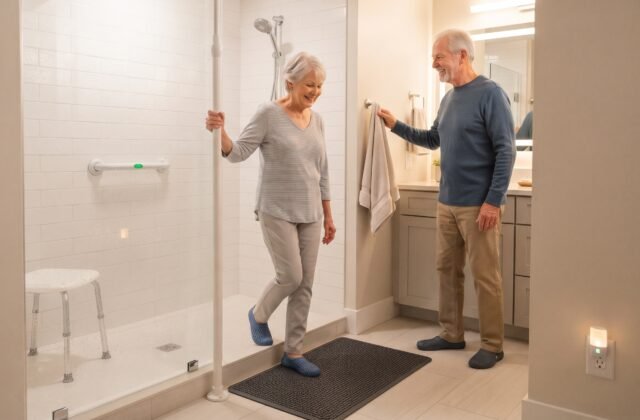
How to Make a Bathroom Slip-Proof for Seniors Without Remodeling
Learn how to make a bathroom slip-proof for seniors without remodeling. Discover budget-friendly anti-slip tile sprays, zero-drill grab bars, dark…

How to Prevent Falls at Home for Seniors
Learn how to prevent falls at home for seniors with a room-by-room checklist, CDC-backed numbers, simple balance tests and a…
Questions and tips from readers (2)