How to Reduce Moisture in Your Home
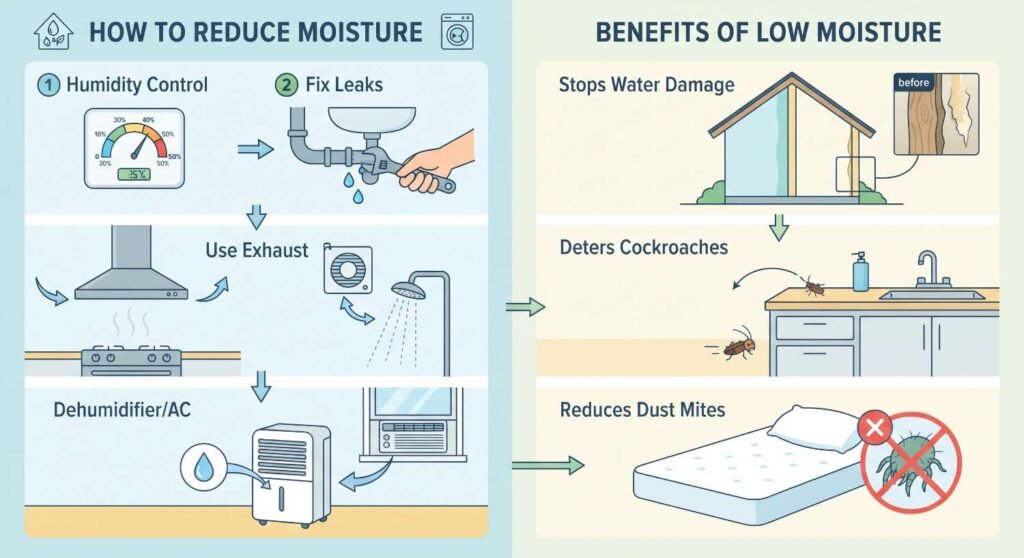
To reduce moisture in your home, keep indoor humidity between 30% and 50%, fix leaks fast, run exhaust fans when cooking and showering, and use a dehumidifier or air conditioner in damp seasons. Lower moisture does three jobs at once: it stops hidden water damage, takes away the water cockroaches need, and makes your mattress a poor home for dust mites.
In this article
- Why One Damp Home Leads to Three Problems
- What Humidity Level Is Safe Indoors?
- What Are the Signs of Too Much Moisture?
- How Do Leaks Add Moisture You Cannot See?
- Why Does Moisture Attract Cockroaches?
- How Does Humidity Feed Dust Mites in Your Bed?
- How to Reduce Moisture Room by Room
- Do You Need a Dehumidifier?
- The 15-Minute Weekly Dry Home Routine
- FAQs About Home Moisture
- Start Drying Out Your Home Now
Bilal thought he had three separate problems. His water bill was creeping up every month. He kept finding cockroaches under the kitchen sink no matter how much he sprayed. And his son woke up sneezing every morning, even though the sheets were washed every week. He bought roach spray, allergy tablets and a new pillow. Nothing worked for long.
Then a plumber found the real culprit: a slow leak under the kitchen sink and a bathroom with no working fan. The whole flat was damp. The leak raised the bill, the wet cabinet fed the cockroaches, and the humid air let dust mites multiply in the bedding. One cause, three problems. Once Bilal learned how to reduce moisture in his home, all three started to fade.
This guide connects the dots. You will learn the safe humidity range, how to spot hidden dampness, and a simple room-by-room plan to dry out your home, with links to our detailed guides on leaks, cockroaches and mattress cleaning when you need to go deeper.
This guide connects three of our most popular articles:
Why One Damp Home Leads to Three Problems
Water is the hidden link between many common household headaches. Moisture does not stay in one place. It soaks into wood, rises into the air and settles in fabrics. Here is how it spreads:
- Leaks put water into walls, floors and cabinets, where it raises humidity in the surrounding rooms.
- Cockroaches need a steady water source. Damp cabinets, dripping pipes and wet sinks give them one.
- Dust mites do not drink. They absorb moisture from the air, so humid bedrooms let them breed in mattresses and pillows.
The U.S. Environmental Protection Agency makes this link directly. In its guidance on mould and moisture, the EPA notes that low humidity may also discourage pests such as cockroaches and dust mites. In other words, drying out your home is pest control, allergy control and water saving all at once.
Fix the moisture, and you fix more than one problem at a time.
What Humidity Level Is Safe Indoors?
Humidity is measured as relative humidity (RH), the amount of water vapour in the air compared with the most the air could hold at that temperature. 100% RH means the air is completely saturated, which is when condensation forms.
The EPA recommends keeping indoor relative humidity below 60%, ideally between 30% and 50%. The American Lung Association calls humidity the most important factor in whether a house has high levels of dust mites and advises keeping your home below 50% humidity.
| Indoor humidity | What it means |
|---|---|
| Below 30% | Too dry: dry skin, sore throat, static shocks |
| 30% to 50% | Ideal: comfortable, and hard for mould, mites and roaches |
| 50% to 60% | Caution: dust mites start to multiply, watch damp rooms |
| Above 60% | Risk: condensation, mould, musty smells and pests |
How to measure it: buy a digital hygrometer (humidity meter). The EPA notes that combined temperature and humidity monitors are generally available for under $50, and many cost less than $15. Place one in the bedroom and one in the kitchen or bathroom, and check the readings morning and evening for a week.
Key insight: Your home does not have one humidity level. A hallway may read 45% while the cabinet under the sink or the bed by a cold wall stays damp. Check the problem spots, not just the living room.
What Are the Signs of Too Much Moisture?
- Water droplets on the inside of windows in the morning
- A musty or earthy smell in cupboards, wardrobes or the bedroom
- Black or green spots on bathroom grout, ceilings or window frames
- Peeling paint, bubbling wallpaper or swollen wooden doors that stick
- Clothes or towels that never feel fully dry
- Cockroaches, silverfish or other moisture-loving insects near sinks and drains
- Morning sneezing, a blocked nose or itchy eyes that ease when you leave home
If you notice three or more of these, measure your humidity and start looking for the source.
How Do Leaks Add Moisture You Cannot See?
A leak is the most direct source of indoor dampness, and many leaks are invisible. EPA WaterSense estimates that household leaks can waste nearly 10,000 gallons of water a year in the average home. That water does not just disappear down the drain. Some of it soaks into cabinet bases, walls and subfloors, where it evaporates slowly and keeps the surrounding air humid for weeks.
The fastest way to check is the 2-hour water meter test: turn off every tap, note the meter reading, wait 2 hours without using water, and read it again. If the number has moved, you have a leak. Follow that with a 10-minute food colouring test in every toilet tank.
For the full step-by-step method, including how to find leaks behind walls and under floors, read our guide on how to find a hidden water leak at home.
Real example: In Bilal’s flat, the leak was a loose fitting on the sink waste pipe. It dripped only when the sink was used, but the particle board under the sink stayed soft and wet. Fixing it cost less than a takeaway dinner and took 20 minutes.
Why Does Moisture Attract Cockroaches?
Cockroaches can live for weeks without food but only a few days without water. That is why kitchens and bathrooms are their favourite rooms, and why the cabinet under the sink is often the centre of an infestation. A drip, a wet sponge, condensation on cold pipes or a damp drain is enough to keep a colony alive.
Cutting off water makes every other treatment work better. When roaches are thirsty, they are more likely to feed on gel baits, and they find your kitchen far less inviting:
- Fix dripping taps and leaking pipes under sinks.
- Dry the sink and counters before bed.
- Put stoppers in drains overnight.
- Do not leave pet water bowls out all night in infested areas.
- Wrap sweating cold-water pipes with foam insulation.
To clear an existing infestation, follow the 30-day plan in our guide on how to get rid of cockroaches in the kitchen, which covers cleaning, gel baits, boric acid and sealing gaps.
How Does Humidity Feed Dust Mites in Your Bed?
Dust mites are microscopic relatives of spiders that feed on the skin flakes we shed. They live in mattresses, pillows, carpets and soft furniture. Because they absorb water through their bodies instead of drinking, humidity controls how fast they multiply.
University of Kentucky entomologists report that dust mites grow best at around 75 to 80°F (24 to 27°C) and 70% to 80% relative humidity, and that they cannot survive well below 50%. A bed is a perfect micro-climate: every night we release sweat and warm, moist breath right into it.
To make your bed a poor home for mites:
- Keep bedroom humidity below 50%.
- Air the bed each morning by folding back the covers for 30 minutes before making it.
- Wash sheets and pillowcases weekly on the hottest safe setting (54°C or 130°F kills mites).
- Use zippered, allergen-proof covers on the mattress and pillows.
- Deep clean the mattress every 6 months with vacuuming and baking soda.
Our step-by-step guide on how to clean a mattress at home shows you exactly how to vacuum, remove sweat and urine stains, and get rid of musty smells.
Quick win this week: Buy a low-cost hygrometer and place it beside your bed. If it reads above 50% most mornings, open the window for 15 minutes after waking and run a fan or dehumidifier in the evening.
How to Reduce Moisture Room by Room
Kitchen
- Run the range hood or open a window every time you boil, fry or steam.
- Cover pots with lids to cut steam.
- Fix drips under the sink and dry the sink at night.
- Keep the cabinet under the sink empty enough to spot water quickly.
Bathroom
- Run the exhaust fan during showers and for about 20 minutes afterwards.
- Squeegee shower tiles and glass after use.
- Hang towels to dry fully, ideally outside the bathroom.
- Test the toilet for silent leaks every few months.
Bedroom
- Keep humidity below 50%, especially in humid or rainy seasons.
- Leave a small gap between the bed, wardrobes and outside walls so air can circulate.
- Avoid drying laundry in the bedroom.
- Air the mattress weekly when you change the sheets.
Laundry area
- Vent the tumble dryer to the outdoors.
- Check washing machine hoses for bulges and drips.
- Leave the washer door open after use so the drum dries.
- Dry clothes outside or in a well-ventilated room.
Outside the house
- Clean gutters and make sure downpipes send rainwater away from the walls.
- Make sure soil slopes away from the foundation.
- Fix outdoor taps and sprinklers that splash against the walls.
- Seal cracks where water and pests can get in. See how to seal cracks and gaps to stop pests.
Do You Need a Dehumidifier?
Ventilation and fixing leaks are often enough. Consider a dehumidifier if:
- Your hygrometer stays above 55% to 60% for days at a time.
- You live in a humid climate or have a long rainy or monsoon season.
- You have a basement, ground-floor flat or a room with no window.
- Someone at home has asthma or a dust mite allergy.
Choose a size that matches the room, set it to around 45% to 50%, and empty or drain the tank daily. An air conditioner also removes some moisture while it cools. Both use electricity, so set a target humidity rather than running them non-stop. For more ways to keep cooling costs down, see how to stay cool without a high electricity bill.
Real example: A family in a ground-floor apartment measured 68% humidity in their children’s bedroom during the rainy season. With a small dehumidifier set to 50% and the window opened for 15 minutes each morning, the reading fell to 48% within a week, and the musty smell in the wardrobe was gone by the end of the month.
The 15-Minute Weekly Dry Home Routine
| Time | Task | Problem it prevents |
|---|---|---|
| 2 minutes | Read your hygrometers and note the numbers | Early warning for damp |
| 3 minutes | Open the cabinet under each sink and feel for damp | Leaks and cockroaches |
| 2 minutes | Check the toilet for running water or ghost flushing | Silent water waste |
| 3 minutes | Fold back bedding and air the mattress while you change sheets | Dust mites and odours |
| 3 minutes | Wipe window condensation and check corners for mould spots | Mould and damp walls |
| 2 minutes | Empty the dehumidifier and clean bathroom fan grilles | Poor ventilation |
FAQs About Home Moisture
What is the best humidity level for a home?
Between 30% and 50% relative humidity. The EPA advises staying below 60%, and the American Lung Association recommends below 50% to control dust mites.
Can high humidity cause cockroaches?
Humidity alone does not create cockroaches, but damp conditions and water sources help them survive and breed. The EPA notes that low humidity may discourage cockroaches and dust mites.
How do I know if my house has too much moisture?
Look for window condensation, musty smells, mould spots, peeling paint and damp cabinets, then confirm with a hygrometer reading above 60%.
Does opening windows reduce humidity?
Yes, when the air outside is drier than inside. On very humid or rainy days, opening windows can add moisture, so use fans, air conditioning or a dehumidifier instead.
Can a damp home affect my mattress?
Yes. Humidity and night-time sweat make mattresses a home for dust mites and can cause musty smells and mould. Keep bedroom humidity below 50% and deep clean the mattress every 6 months.
Start Drying Out Your Home Now
Learning how to reduce moisture in your home is one of the smartest fixes you can make, because it tackles leaks, pests and allergens together. Follow this action plan:
- Buy a hygrometer and measure humidity in the bedroom, kitchen and bathroom for one week.
- Aim for 30% to 50% and treat anything above 60% as a problem.
- Run the 2-hour meter test and fix any leaks you find.
- Use exhaust fans for every shower and every cooking session.
- Dry out the kitchen at night to take water away from cockroaches.
- Air and protect your mattress and wash bedding hot every week.
- Add a dehumidifier if humidity stays above 55% to 60%.
- Repeat the 15-minute routine every week.
Then go deeper with our three connected guides: find a hidden water leak, get rid of kitchen cockroaches and clean your mattress.
Put a hygrometer by your bed tonight and take the first step to a drier, healthier home.

Muhammad Amjad Butt
Founder of HomeKiTips
Muhammad Amjad Butt is the founder of HomeKiTips. He writes practical guides on home repair, maintenance, cleaning and decor. Each guide is built from manufacturer instructions, building standards and current cost data, then turned into clear steps that anyone can follow. For structural work, he always recommends a qualified tradesperson.
You may also like
Best Thermostat Temperature to Save Electricity in Winter & Summer (Plus 7 Hacks)
Set 19–20°C (66–68°F) in winter and 24–26°C (75–78°F) in summer. Learn the best thermostat temperature to save electricity, plus 7…
Best Fridge Temperature to Save Electricity (Plus 7 Easy Hacks)
Find the best fridge temperature to save electricity: 4°C fridge, -18°C freezer. See what dial 1–7 means and try 7…
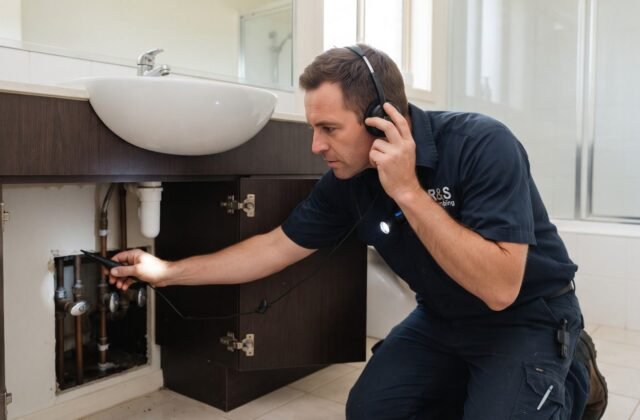
How to Find a Hidden Water Leak at Home
Find a hidden water leak at home with 5 simple tests: water meter, toilet dye, bill check, sounds and room…
Questions and tips from readers (5)