How to Get Rid of Cockroaches in the Kitchen
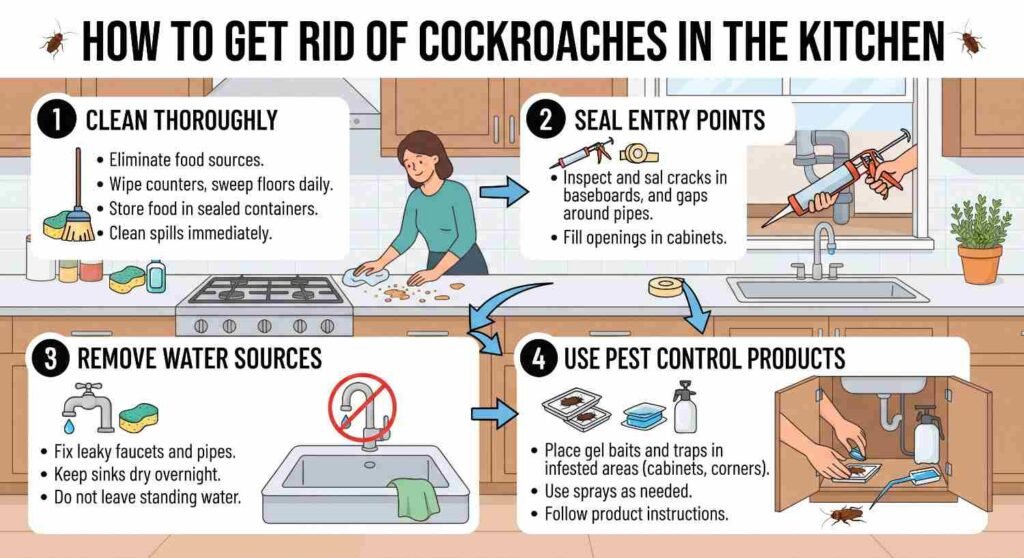
To get rid of cockroaches in the kitchen, first remove their food and water by deep cleaning grease, crumbs and leaks. Then place gel baits in cracks near the sink, stove and fridge instead of spraying, and seal gaps so new roaches cannot get in. Most homes see a big drop within 2 weeks and are roach-free in about 30 days.
In this article
- Why Cockroaches Love Your Kitchen
- Which Cockroach Do You Have?
- What Are the Signs of a Cockroach Problem?
- Where Do Cockroaches Hide in the Kitchen?
- How to Starve Cockroaches Out
- Do Baits Work Better Than Sprays?
- How to Use Boric Acid Safely
- How to Stop Cockroaches Coming Back
- Your 30-Day Cockroach-Free Plan
- When Should You Call a Pest Control Expert?
- FAQs About Kitchen Cockroaches
- Start Your Roach-Free Kitchen Now
You switch on the kitchen light for a glass of water at midnight, and something brown races under the fridge. Your heart sinks. Maria, a mother of two, had exactly this moment. She bought the strongest spray in the shop and emptied half a can behind the stove. For a few days the kitchen looked clear. Two weeks later there were more roaches than before.
Maria’s mistake is one of the most common ones. If you want to get rid of cockroaches in the kitchen for good, spraying the ones you can see is not enough. You need to cut off their food and water, kill the hidden colony with baits, and close the doors they use to get in. This guide shows you exactly how to do that, step by step, using methods recommended by university pest experts and the U.S. Environmental Protection Agency (EPA).
Why Cockroaches Love Your Kitchen
Cockroaches need three things to survive: food, water and a warm hiding place. A kitchen offers all three in one room. Grease on the stove, crumbs under the toaster, a dripping tap and the warm motor behind the fridge make it the perfect home.
They also breed very fast. According to the University of California Statewide IPM Program, a single female German cockroach and her offspring can produce more than 30,000 cockroaches in one year. Each egg case holds about 30 young, and a female can make a new one every few weeks.
One roach you see usually means dozens you do not.
Cockroaches are not just unpleasant. The EPA notes that their droppings, saliva and shed skins contain allergens that can trigger asthma, especially in children. They also walk through drains and rubbish and then across your counters, which can spread germs onto food.
Which Cockroach Do You Have?
Identifying the species matters because the best treatment changes with the type. UC IPM experts say to identify the cockroach first, before you take action.
- German cockroach: about 1/2 inch (1.3 cm) long, light brown with two dark stripes behind the head. This is the most common kitchen roach worldwide. It lives indoors, near food and moisture.
- American cockroach: large, about 1.5 inches (4 cm) or more, reddish-brown. It usually comes in from drains, sewers or outdoors.
- Oriental cockroach: dark brown to black, likes cool, damp places such as basements and drains.
- Brownbanded cockroach: small with light bands across the wings. It prefers warmer, drier spots like high cupboards and behind picture frames.
If you see small, fast, light-brown roaches in kitchen cabinets, you almost certainly have German cockroaches. Most of this guide focuses on them because they cause most kitchen infestations. Large roaches that appear near drains are usually outdoor invaders, so sealing entry points matters most for them.
What Are the Signs of a Cockroach Problem?
Cockroaches are active at night, so you may notice the signs before you see the insects:
- Droppings: tiny black specks like ground pepper or coffee grounds in drawers, on shelves and along cabinet edges.
- Egg cases: small brown capsules, about 1/4 inch (6 mm) long, stuck in corners or hinges.
- Shed skins: pale, papery shells left behind as young roaches grow.
- A musty, oily smell: large infestations give off a strong, unpleasant odour.
- Smear marks: dark streaks where walls meet floors or around damp areas.
- Daytime sightings: seeing roaches in daylight often means the population is large and hiding spaces are full.
Key insight: Cockroach control is not about killing the roaches you see. It is about making your kitchen a place where hidden roaches cannot eat, drink or breed.
Where Do Cockroaches Hide in the Kitchen?
Cockroaches love tight spaces where their bodies touch surfaces on both sides. UC IPM notes that an adult German cockroach can squeeze into a crack only 1/16 inch (1.5 mm) wide, about the thickness of a coin. Check these spots with a torch at night:
- Under the sink, especially around pipes and damp cabinet floors
- Behind and under the fridge, near the warm motor
- Inside and behind the stove and microwave
- Around the dishwasher seal and kickplate
- Cabinet hinges, corners and the gaps behind drawers
- Inside toasters, coffee makers and other small appliances
- Cardboard boxes and paper bags, where they eat the glue and lay eggs
Real example: James had roaches for months even though his counters were spotless. When he finally pulled out his fridge, he found a layer of crumbs, a sticky spill and dozens of egg cases under the drip tray. One hour of cleaning behind that single appliance removed the colony’s main food source.
How to Starve Cockroaches Out
Sanitation is the base of every successful treatment. UC IPM states clearly that good sanitation and exclusion are important, and that pesticides alone will not solve cockroach problems. Follow this cleaning routine:
Daily habits
- Wash dishes before bed. Never leave dirty plates in the sink overnight.
- Wipe the stove and counters to remove grease and crumbs.
- Empty kitchen bins every night, or use a bin with a tight lid.
- Do not leave pet food out overnight.
- Dry the sink and wipe up any standing water.
One-time deep clean
- Pull out the fridge and stove and clean behind and under them.
- Empty every cabinet, vacuum corners and wipe shelves.
- Vacuum droppings and egg cases. A vacuum with a HEPA filter also removes allergens.
- Store dry foods such as flour, rice, cereal and sugar in airtight glass or hard plastic containers.
- Recycle cardboard boxes and stop storing food in paper bags.
Remove water
Cockroaches can live for weeks without food but only a few days without water. Fix dripping taps and leaking pipes, put a stopper in sink drains at night, and keep the cabinet under the sink dry. If you suspect a hidden leak, our guide on how to find a hidden water leak at home shows you how to check in minutes.
Do Baits Work Better Than Sprays?
Yes. This is the most important point in this guide. UC IPM advises that when you use insecticides, baits provide better control than sprays.
Here is why. A gel bait mixes food with a slow-acting insecticide. A roach eats it, goes back to its hiding spot and dies there. Other roaches then feed on its droppings and body, so the bait spreads through the colony, reaching roaches you will never see. Sprays only kill roaches they touch directly, and many sprays and foggers simply chase roaches deeper into walls and cabinets.
How to place gel bait the right way
- Clean first. Baits work best when roaches have no other food.
- Use small dots, about the size of a pea or smaller, rather than large blobs.
- Put them where roaches hide, not in open spaces: inside cabinet hinges, under the sink, behind the fridge, near the stove legs and along the dishwasher edge.
- Place 15 to 20 dots in a typical small kitchen, focusing on spots where you saw droppings.
- Do not spray near baits. Spray and cleaning chemicals can make baits unattractive.
- Check every 7 days and add fresh bait where it has been eaten.
Bait stations (small plastic boxes) are a good option in homes with children and pets because the bait is enclosed. Always read and follow the product label.
Sticky traps are useful too. Place them along walls and under the sink to see where roaches travel. Count the roaches caught each week to know if your plan is working.
Quick win this week: Put away the spray can. Clean behind your fridge and stove tonight, then place pea-size gel bait dots in cabinet hinges and under the sink.
How to Use Boric Acid Safely
Boric acid is a low-cost powder that has been used against cockroaches for decades. When roaches walk through it, the powder sticks to their legs and bodies, and they swallow it while cleaning themselves.
- Apply a very thin, almost invisible layer. Roaches avoid thick piles.
- Use it only in dry, hidden areas: behind appliances, under the sink base, inside wall voids and along the back of cabinets.
- Never put it on counters, food surfaces or anywhere children and pets can reach.
- Keep it dry. Damp boric acid stops working.
- Choose a product labelled for cockroach control and follow its directions.
Boric acid works slowly, often over 1 to 2 weeks, so combine it with baits and cleaning for the best results.
How to Stop Cockroaches Coming Back
Once the numbers drop, close the doors they use. The EPA recommends sealing cracks and openings around or inside cabinets to keep cockroaches out.
- Caulk gaps along backsplashes, skirting boards and cabinet edges.
- Fill holes around pipes under the sink with sealant or expanding foam.
- Fit drain covers and keep drains clean, especially if you see large roaches.
- Fix loose tiles and seal cracks around window frames.
- Check grocery bags, delivery boxes and second-hand appliances before bringing them inside. German cockroaches often arrive hidden in cardboard.
For a complete step-by-step guide on closing entry points, read how to seal cracks and gaps to stop pests. The same work also helps you keep mice out this winter.
Your 30-Day Cockroach-Free Plan
Here is a simple timeline you can follow:
| When | What to do | Goal |
|---|---|---|
| Day 1 | Deep clean the kitchen, behind appliances and inside cabinets | Remove food sources |
| Day 2 | Fix drips, dry the sink, cover drains at night | Remove water |
| Day 3 | Place gel bait dots and sticky traps | Kill the hidden colony |
| Days 4 to 7 | Seal cracks and gaps; apply boric acid in dry voids | Block hiding spots and entry |
| Day 14 | Count trapped roaches; refresh eaten bait | Track progress |
| Day 30 | No new roaches or droppings for 2 weeks | Confirm success |
Real example: Priya followed this plan in her apartment kitchen. In week one her sticky traps caught 22 roaches. In week two they caught 6. By week four the traps were empty, and she kept a few bait stations under the sink as a safety net.
When Should You Call a Pest Control Expert?
Home methods work for most kitchens, but get professional help if:
- You still see roaches every day after 4 weeks of following the plan.
- You see roaches during the day in several rooms.
- You live in a flat or apartment building where roaches move between units. Building-wide treatment works much better.
- Someone at home has asthma or allergies and you need fast results.
Choose a company that uses Integrated Pest Management (IPM). IPM means combining cleaning, sealing, monitoring and targeted baits rather than spraying everything. You can learn more from the EPA’s Integrated Pest Management guidance.
FAQs About Kitchen Cockroaches
How long does it take to get rid of cockroaches in the kitchen?
With cleaning, gel baits and sealing, most homes see far fewer roaches in 1 to 2 weeks and are clear in about 30 days. Heavy infestations can take 6 to 8 weeks.
Why do I see more cockroaches after putting out bait?
This is normal for a few days. Baits draw roaches out of hiding to feed. Keep the bait in place and do not spray, and the numbers will drop.
Do natural remedies like bay leaves or vinegar work?
Smells such as bay leaves or vinegar may make an area less pleasant for roaches, but they do not kill the colony. Vinegar is great for cleaning grease, which helps, but baits and sealing do the real work.
Can one cockroach mean an infestation?
Not always, but often. Roaches hide during the day, so one sighting can mean many more are hidden. Set sticky traps for a week to find out.
Are cockroaches dangerous to health?
They can be. Their droppings and shed skins can trigger asthma and allergies, and they can carry germs from drains onto food surfaces.
Start Your Roach-Free Kitchen Now
You do not need harsh sprays to get rid of cockroaches in the kitchen. You need a clean, dry, sealed kitchen and the right bait in the right places. Use this action list:
- Identify the roach: small and light brown usually means German cockroach.
- Deep clean behind the fridge, stove and inside every cabinet.
- Store food in airtight containers and empty bins every night.
- Remove water by fixing leaks and drying the sink.
- Place gel bait in pea-size dots in cracks and hinges.
- Stop spraying near bait so roaches keep eating it.
- Seal cracks and gaps around pipes and cabinets.
- Monitor with sticky traps and refresh bait every 7 days.
- Call an IPM professional if roaches remain after 4 weeks.
Looking for more seasonal pest advice? See fall pests invading your home and how to stop them.
Clean tonight, bait tomorrow, and take your kitchen back this month.
Related: Damp homes cause leaks, cockroaches and dust mites together. Learn how to reduce moisture in your home to tackle all three at once.

Muhammad Amjad Butt
Founder of HomeKiTips
Muhammad Amjad Butt is the founder of HomeKiTips. He writes practical guides on home repair, maintenance, cleaning and decor. Each guide is built from manufacturer instructions, building standards and current cost data, then turned into clear steps that anyone can follow. For structural work, he always recommends a qualified tradesperson.
You may also like

How to Get Rid of Pantry Moths in Flour Containers Naturally (Fast & Safe)
Found tiny moths or webbing in your flour? Learn how to get rid of pantry moths in flour containers naturally…
How to Seal Cracks and Gaps to Stop Pests
Learn how to seal cracks and gaps to stop pests entering your home. Find entry points, pick the right sealant,…
How to Keep Mice Out This Winter
Learn how to keep mice out this winter. Seal entry points, store food safely, fix your yard and spot early…
Questions and tips from readers (1)