How to Prevent Falls at Home for Seniors
To prevent falls at home for seniors, remove trip hazards (loose rugs, cords, clutter), add grab bars and stair rails on both sides, light every path from bed to bathroom, and build leg strength and balance with exercise 2–3 times a week. Pair those home fixes with a yearly medicine review, an eye exam, and sturdy non-slip shoes — together they cut fall risk far more than any single change.
It usually happens at 3 a.m. A grandparent gets up for the bathroom, the room is dark, one foot catches the edge of a rug, and in two seconds a healthy, independent person becomes a hip-fracture patient. Most families only start thinking about fall safety after that night. This guide is about doing it before.
In this article
- Why Are Falls at Home So Dangerous for Seniors?
- What Causes Seniors to Fall at Home?
- How Do You Fall-Proof a Home Room by Room?
- Which Health Changes Lower Fall Risk?
- How Can You Test Fall Risk at Home in 30 Seconds?
- What Should a Senior Do After a Fall?
- Frequently Asked Questions
- Start Fall-Proofing Your Home Now
Learning how to prevent falls at home for seniors is one of the most valuable things any family can do. The good news is that most falls are not random bad luck. They follow predictable patterns — dark hallways, slippery bathrooms, weak legs, new medicines — and almost every one of those patterns can be fixed with low-cost changes and a few minutes of daily exercise. Whether you are a senior living alone, an adult child caring for a parent, or a family sharing a home with an elderly relative, this guide gives you a clear, practical plan for senior fall prevention and home safety for elderly family members.
Why Are Falls at Home So Dangerous for Seniors?
Falls are not a minor problem of old age. They are the number one cause of injury for older adults. According to the CDC’s Older Adult Falls data, more than 14 million adults aged 65 and older — about 1 in 4 — report falling every year.
Here is what the numbers tell us:
- 1 in 4 adults over 65 falls each year, and the rate rises to about 2 in 5 (40%) for people aged 85 and older.
- Falling once doubles the chance of falling again, according to the CDC’s falls fact page.
- Less than half of older adults who fall ever tell their doctor.
- About 3 million older adults are treated in emergency departments for fall injuries every year.
- The age-adjusted fall death rate for adults 65+ rose by about 21% since 2018, and medical costs for falls are around $50 billion a year in the US alone.
Falls are common, but they are not a normal part of aging. They can be prevented.
These numbers come from the United States, but the pattern is the same worldwide: as populations age, falls at home are becoming one of the biggest threats to independence. A single bad fall often leads to a broken hip or wrist, a hospital stay, and then a fear of falling that makes the person move less — which weakens their legs and makes the next fall more likely.
What Causes Seniors to Fall at Home?
Doctors divide fall causes into two groups. Understanding both is the key to real fall prevention for elderly people.
What are “environmental” fall risks?
These are hazards in the home itself: loose rugs, clutter on the floor, electric cords across walkways, poor lighting, slippery bathroom floors, stairs without handrails, and items stored too high or too low. Experts estimate that a large share of falls happen inside or right outside the home, which is why a home safety check matters so much.
What are “personal” fall risks?
These come from the body: weak leg muscles, poor balance, blurry vision, certain medicines (especially sleeping pills, sedatives and some blood-pressure drugs), dizziness when standing up, foot pain, and unsafe footwear such as loose slippers or socks on hard floors.
Example from everyday life: A 76-year-old who has lived in the same house for 40 years “knows every step.” But after starting a new blood-pressure tablet, she feels light-headed when she stands up quickly at night. The rug she has walked over for decades is suddenly a hazard. Neither the rug nor the medicine alone caused the fall — the combination did. That is why the best plan fixes both the house and the person.
💡 Key insight: Most falls have more than one cause. Fixing just one thing (like adding a grab bar) helps, but combining 3–4 changes — home hazards, exercise, a medicine review and better shoes — gives the biggest drop in risk.
How Do You Fall-Proof a Home Room by Room?
The easiest way to make a home safer is to walk through it room by room, the same way the CDC’s “Check for Safety” home fall prevention checklist does. Take this list, walk the house slowly, and fix each item you find.
How do you make stairs safe for seniors?
- Install sturdy handrails on both sides, running the full length of the stairs.
- Put a light switch at the top and bottom of every staircase (or use motion-sensor lights).
- Fix any broken or uneven steps immediately.
- Add high-contrast anti-slip tape on the edge of each step so it is easy to see.
- Never leave shoes, bags, books or laundry on the stairs — not even “for a minute.”
How do you remove trip hazards from floors?
- Remove loose throw rugs, or secure them with double-sided rug tape or a non-slip pad.
- Keep electrical and phone cords along walls, never across walkways.
- Rearrange furniture so there is a clear, wide path through every room — about 90 cm (3 feet) is a good target.
- Pick up pet toys, newspapers and boxes every evening.
- Wipe spills right away, and avoid shiny floor polish.
How should a kitchen be set up for an older person?
- Move everyday items (plates, cups, rice, tea) to shelves between waist and shoulder height.
- Avoid step stools. If one is truly needed, use a sturdy step stool with a grab bar — never a chair.
- Use a non-slip mat in front of the sink where water often drips.
What bedroom changes prevent night-time falls?
The bedroom-to-bathroom trip at night is one of the most common fall moments. Make it safe:
- Place a lamp within reach of the bed so the light goes on before feet touch the floor.
- Add plug-in night lights along the full path from bed to bathroom.
- Make sure the bed height lets the person sit with feet flat on the floor and knees at about 90 degrees.
- Keep a phone (or a medical alert button) next to the bed.
How do you make a bathroom safer for elderly family members?
Wet floors and hard surfaces make the bathroom the riskiest room in the home. Add grab bars next to the toilet and inside the tub or shower, use a non-slip mat, and consider a shower chair and raised toilet seat. We cover every detail in our full guide on how to make a bathroom safe for elderly family members.
Towel racks are not grab bars. A properly mounted grab bar can hold body weight; a towel rail cannot.
What outdoor areas need attention?
- Repair cracked steps and uneven paving at the entrance.
- Light the path from the gate or car to the front door.
- Add a handrail to outdoor steps, even if there are only two or three.
- In rainy or icy weather, keep salt, sand or a non-slip mat at the door.
Example from everyday life: One family spent less than an afternoon and a small budget fixing their father’s house: three night lights, rug tape, a second stair rail and moving his tea and sugar down to the counter. The changes were small, but they removed the four places he had already stumbled in the past year.
✅ Quick win this week: Buy 3–4 plug-in motion-sensor night lights and place them from the bed to the bathroom. It takes 10 minutes and fixes the single most common night-time fall path.
Which Health Changes Lower Fall Risk?
A safe house is only half of the plan. The other half is making the body stronger and steadier.
Why is exercise the strongest fall-prevention tool?
Weak legs and poor balance are among the biggest fall risks — and they can improve at any age. The CDC suggests older adults aim for about 150 minutes a week of moderate activity such as brisk walking, plus strength and balance work. Tai chi, simple chair exercises, heel-to-toe walking and standing on one leg (while holding a counter) are all great options. Start with 10 minutes a day and build up.
Can medicines cause falls?
Yes. Sleeping pills, anxiety medicines, some antidepressants, and blood-pressure drugs can cause drowsiness or dizziness. Taking four or more medicines also raises risk. Ask a doctor or pharmacist for a full medication review at least once a year, and every time a new medicine is added.
How do vision and footwear affect balance?
- Get an eye exam every 1–2 years and update glasses. Be extra careful with bifocals or varifocals on stairs.
- Wear closed-back shoes with thin, non-slip soles at home. Socks on tile and backless slippers are common fall causes.
- See a foot specialist if foot pain changes the way someone walks.
What is “orthostatic hypotension”?
This is a simple idea with a long name: blood pressure drops when you stand up, causing a moment of dizziness. The fix is easy — sit on the edge of the bed for 10–15 seconds, move the ankles, then stand up slowly while holding something stable.
Do bone health and vitamin D matter?
Strong bones don’t stop a fall, but they make a fall far less likely to end in a fracture. Ask a doctor whether a bone density check or vitamin D test is right for you.
How Can You Test Fall Risk at Home in 30 Seconds?
Here is a simple tool most families have never heard of. The CDC’s STEADI program uses the 30-Second Chair Stand Test to measure leg strength, which is closely linked to fall risk.
- Use a straight-backed chair without arms, placed against a wall so it cannot slide.
- Sit in the middle of the seat, feet flat, arms crossed over the chest.
- Stand up fully, then sit back down. Count how many times you can do this in 30 seconds.
- Have someone stand nearby for safety.
As a rough guide, many healthy adults in their late 60s and 70s manage around 10–12 or more stands; lower scores (for their age) suggest weaker legs and a higher fall risk. Repeat the test every month — it is a great way to see whether exercise is working. If the score is low, share it with a doctor.
Example from everyday life: A retired teacher scored only 7 stands on her first try. After six weeks of daily chair exercises and short walks, she reached 11 — and said the biggest change was that she felt confident on the stairs again.
What Should a Senior Do After a Fall?
Even with every precaution, falls can still happen. Knowing what to do — and practicing it — can prevent a fall from becoming an emergency.
How do you get up safely after a fall?
- Stay still for a moment. Breathe and check for pain.
- If nothing is badly hurt, roll onto your side, then onto your hands and knees.
- Crawl slowly to a sturdy chair or bed.
- Place both hands on the seat, bring one foot forward flat on the floor, push up, turn and sit.
- Rest before doing anything else, and tell your family and doctor — even if you feel fine.
When should you call for help instead?
Do not try to get up if there is severe pain, a possible broken bone, a head injury, or confusion. Call emergency services or use a medical alert device, and try to stay warm with a blanket or clothing until help arrives.
Is a medical alert device worth it?
For seniors who live alone, yes. A wearable button or a smartwatch with fall detection means help can be called even if the person cannot reach a phone. Lying on the floor for hours after a fall is linked with more serious complications, so fast help matters.
Caring for an elderly parent often goes hand in hand with caring for young children in the same home. Many of the same habits — keeping floors clear and storing hazards safely — protect kids too. See our guides on button batteries and magnets as a hidden danger to kids and Halloween safety tips for kids.
Frequently Asked Questions
What is the most common cause of falls in the elderly at home?
Most falls come from a mix of causes, but the most common are tripping over rugs or clutter, slipping in the bathroom, poor lighting at night, and weak legs or poor balance.
Which room do most elderly falls happen in?
The bathroom and bedroom are high-risk rooms, especially at night, along with stairs. The path from the bed to the toilet deserves the most attention.
How much does it cost to fall-proof a home?
Many fixes are cheap: night lights, rug tape and moving items to lower shelves cost very little. Grab bars and extra stair rails cost more but are still far cheaper than a single hospital stay.
Can exercise really prevent falls in seniors?
Yes. Strength and balance exercise, such as tai chi, is one of the most proven ways to reduce falls. Results often show within 6–12 weeks of regular practice.
Should seniors wear slippers at home?
Backless, loose slippers and socks on hard floors are risky. Closed-back shoes or slippers with firm, non-slip soles are much safer.
How often should a home be checked for fall hazards?
Do a full walk-through once every 6 months, and again after any change — a new medicine, an illness, a hospital stay, or new furniture.
Start Fall-Proofing Your Home Now
You don’t need a full renovation to prevent falls at home for seniors. You need a plan and a weekend. Use this 10-step action list:
- Walk through every room with the checklist above and write down each hazard.
- Remove or tape down all loose rugs.
- Move cords, clutter and furniture to create clear walking paths.
- Add night lights from the bedroom to the bathroom.
- Install handrails on both sides of every staircase.
- Fit grab bars by the toilet and in the shower or tub.
- Move daily kitchen items to waist-to-shoulder height.
- Replace loose slippers with closed-back, non-slip shoes.
- Book a medicine review and an eye exam.
- Start 10 minutes of daily balance and strength exercise, and repeat the 30-second chair test each month.
Every item you tick off makes the next fall less likely. Pick the three easiest steps and do them today — start this week.

Muhammad Amjad Butt
Founder of HomeKiTips
Muhammad Amjad Butt is the founder of HomeKiTips. He writes practical guides on home repair, maintenance, cleaning and decor. Each guide is built from manufacturer instructions, building standards and current cost data, then turned into clear steps that anyone can follow. For structural work, he always recommends a qualified tradesperson.
You may also like

How to Childproof Sharp Brick Hearth Edges Without Drilling
Worried about toddlers falling on sharp fireplace bricks? Learn how to childproof sharp brick hearth edges without drilling using heat-safe…
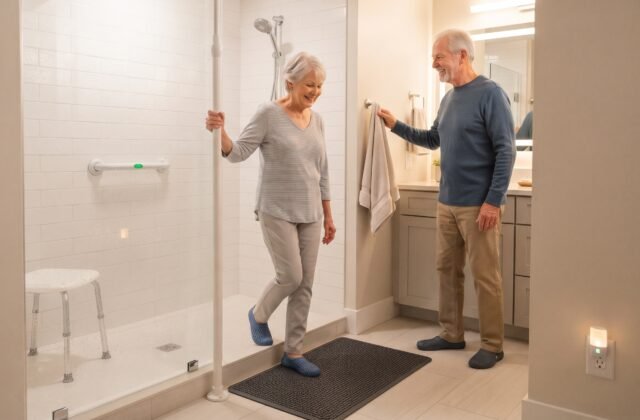
How to Make a Bathroom Slip-Proof for Seniors Without Remodeling
Learn how to make a bathroom slip-proof for seniors without remodeling. Discover budget-friendly anti-slip tile sprays, zero-drill grab bars, dark…
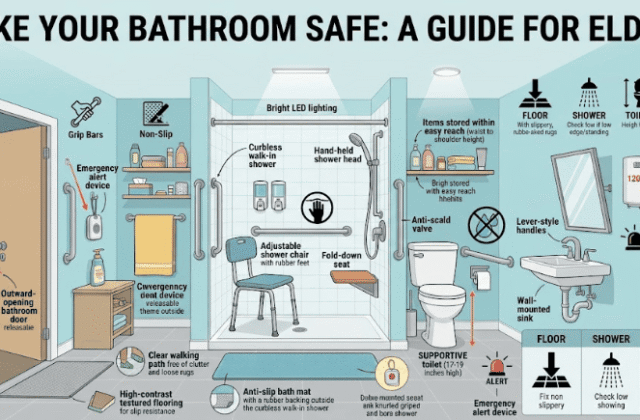
How to Make a Bathroom Safe for Elderly Family Members
Learn how to make a bathroom safe for elderly family members with grab bars, non-slip floors, shower chairs, better lighting…
Questions and tips from readers (2)